Common A-Level Chemistry Mistakes To Avoid
Discover the most common A-level chemistry mistakes and how to avoid them. Boost your exam performance with practical, exam-focused tips.
Discover the most common A-level chemistry mistakes and how to avoid them. Boost your exam performance with practical, exam-focused tips.

Learn how to decode A-level chemistry command words like explain, suggest, and deduce to avoid losing marks and improve exam answers.
Struggling with A-level chemistry required practicals? Learn what examiners really test and how to secure full marks on practical questions.

Avoid losing easy marks on A-level chemistry calculation questions. Master units, sig figs, and method marks with this practical exam guide.
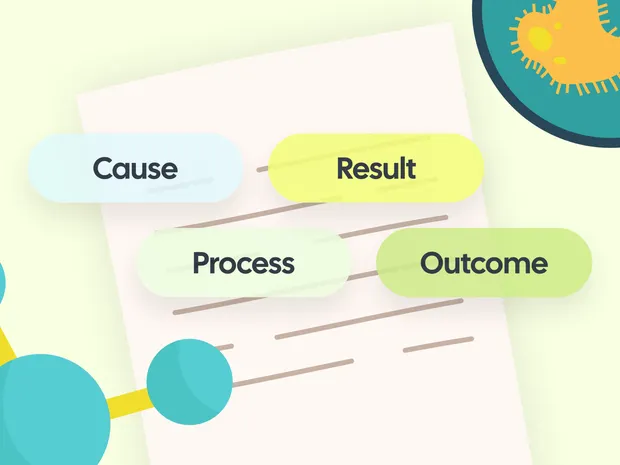
Learn how to answer A-level Chemistry “Explain” questions clearly and score full marks with structured answers, examples, and exam tips.
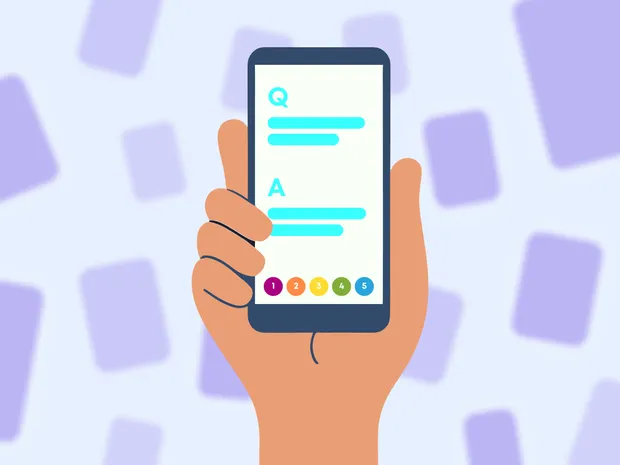
Why digital flashcards deserve a place in every classroom: improve retention, reduce workload, and support effective, evidence-based revision habits.

Confused by the difference between Brazilian & European Portuguese? Discover how they vary in accent, grammar, slang, and which one you should learn.
Free katakana practice sheets for beginners and JLPT N5 prep. Download printable katakana writing practice worksheets and master stroke order fast.
Free hiragana writing practice sheets for beginner Japanese learners and JLPT N5 prep. Download printable hiragana practice worksheets and master stroke order fast.

Explore our best tips for quickly learning beginner Japanese, from digital flashcards to JLPT N5 prep strategies and daily immersion techniques that actually work!
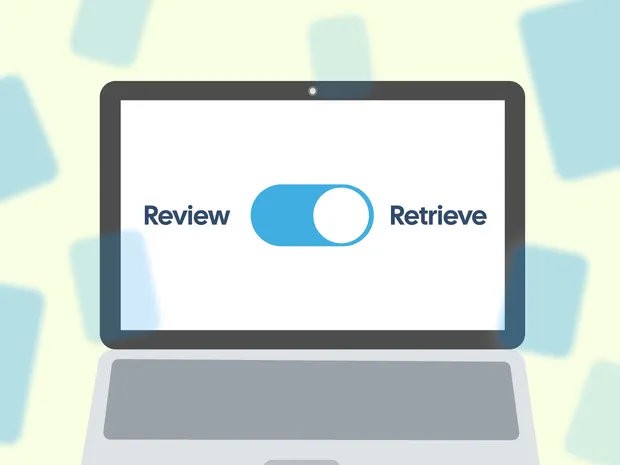
Discover how educators can turn homework into powerful retrieval practice, boosting memory, motivation, and learning with simple, research-backed strategies.
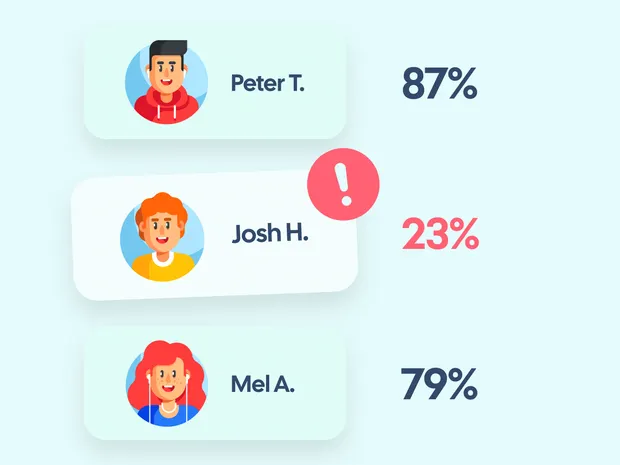
Learn how teachers can use Brainscape analytics to identify struggling students early, diagnose study problems, and intervene before small gaps become big ones.
Discover creative, classroom-ready ways to use digital flashcards like Brainscape for retrieval practice, collaboration, and engagement that’s adaptable for any K–12 classroom.
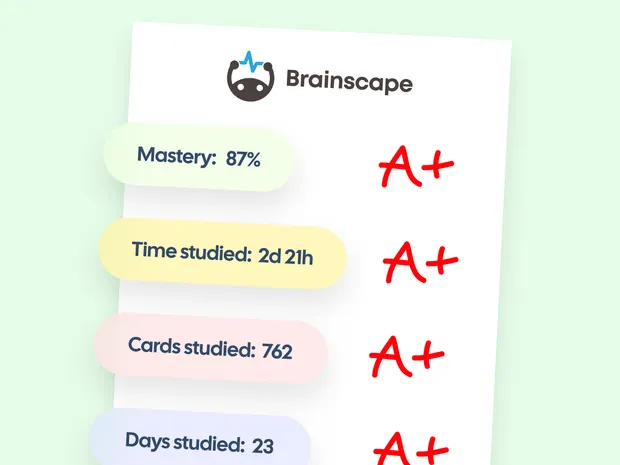
Learn how to grade students on their flashcard study habits with Brainscape. Use participation-based grading to motivate consistent studying and better retention.
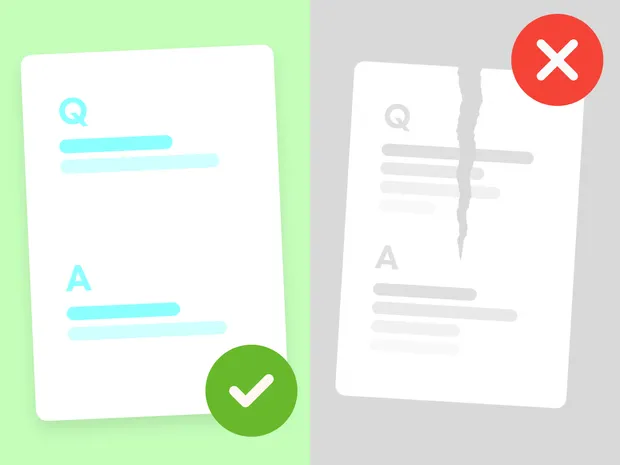
Avoid the most common flashcard mistakes teachers make. Learn simple fixes for better card design, accountability, and access, using digital cards or paper.
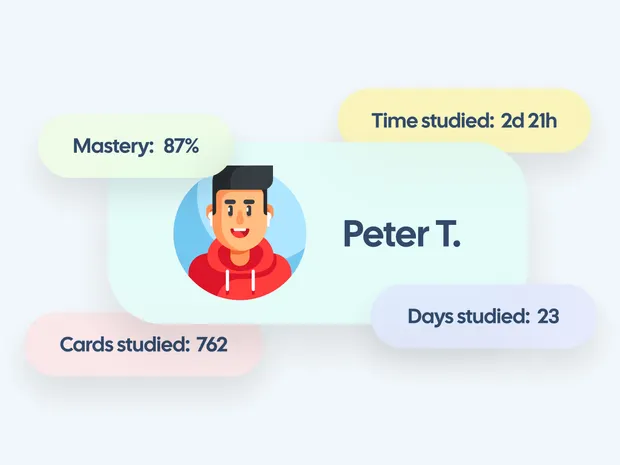
Learn how teachers can use Brainscape study analytics and exam data to demonstrate real learning outcomes and prove the impact of retrieval practice.
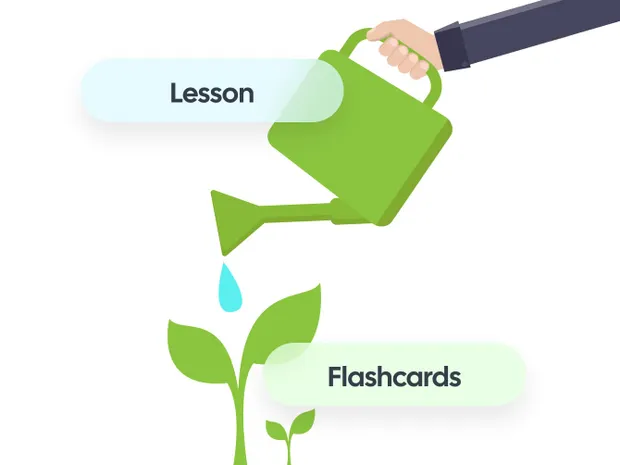
Discover why assigning flashcards before class primes student learning, boosts engagement, and makes lessons stick using cognitive science–backed strategies.
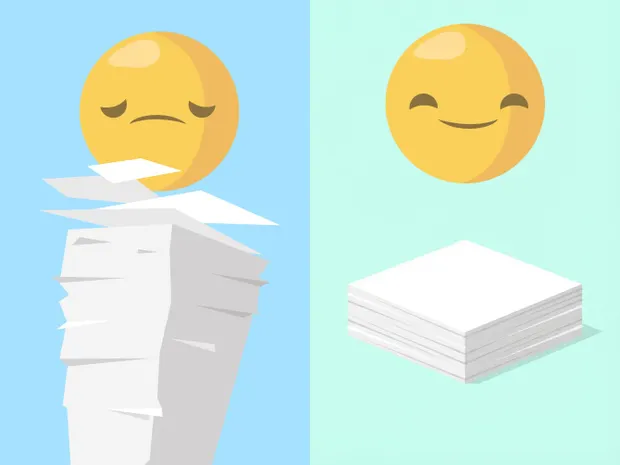
Help students stop cramming and start studying consistently using incentives, spaced repetition, and classroom systems grounded in cognitive science.
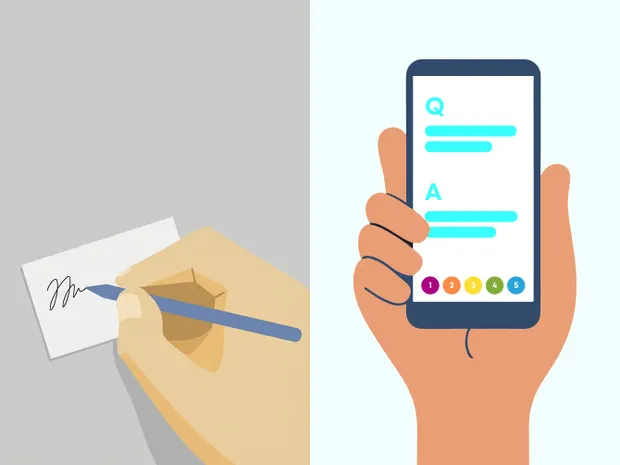
Should students study premade flashcards or create their own? Educators explore the tradeoffs between generative learning, time, and spaced retrieval.
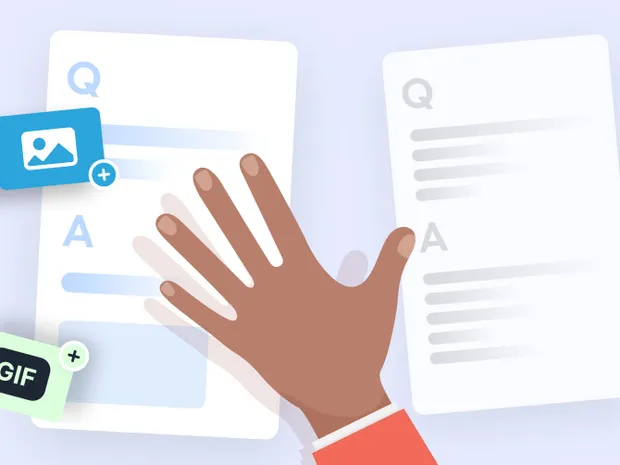
Learn how educators can design flashcards students actually enjoy studying: using motivation science, cognitive load principles, and smart flashcard design.
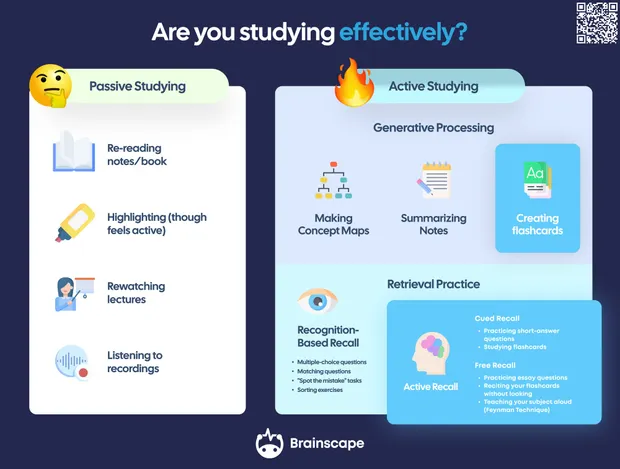
Passive vs. active studying explained. Download a free classroom poster that teaches students how to learn using cognitive science!
Flashcards work… So then why do students quit? In this teacher-focused guide, we’ll explore how educators can sustain motivation, build habits, and help effective learning strategies stick.
AI can speed up studying or quietly sabotage it. Here’s why Brainscape built an AI assistant that improves flashcards, without replacing thinking.
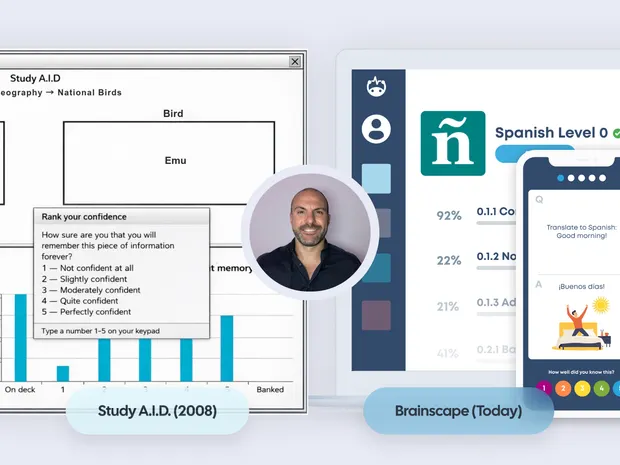
How a Columbia master’s thesis and a small experiment led Brainscape founder to risk everything to build a study tool that would help people learn twice as fast.
Discover how principles like retrieval practice, spaced repetition, and metacognition can help you learn faster and remember longer.