For the past few years, AI has been marketed as the ultimate academic shortcut.
Upload your notes.
Generate a summary.
Auto-create flashcards.
Done studying… right?
But here’s the uncomfortable question the team here at Brainscape couldn’t shake: what if AI isn’t just saving students time… but quietly gutting the learning process itself?
That question is exactly what led Brainscape to build Flashcard Copilot, a new AI feature designed not to replace learner thinking, but to support it.
The reason we’re confident this distinction matters has everything to do with what we discovered when we investigated how students actually behave when AI does too much of the work for them.
When AI Does the Work, Students Often Do Less Studying
Like many learning platforms, Brainscape introduced AI tools to help students create flashcards faster. The logic seemed airtight: if students spend less time creating study materials, they’ll reinvest that time into studying them.
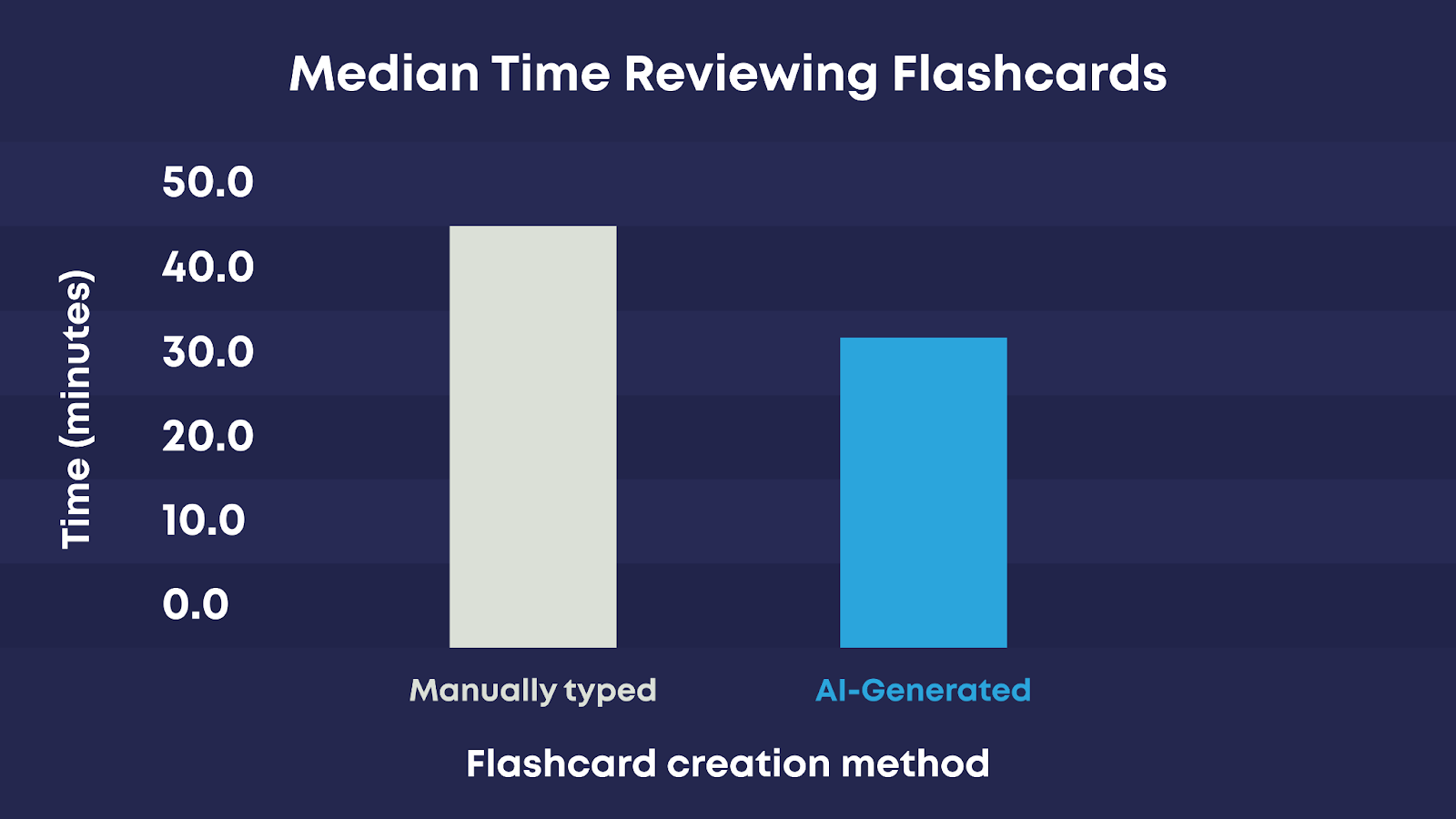
To test that assumption, Brainscape partnered with Dr. Michelle Miller to analyze real usage data from over 20,000 flashcard creators.
We compared two groups:
- Students who typed their own flashcards manually
- Students who used AI to auto-generate flashcards from their notes
We then tracked how those students studied afterward: how long they studied, how deeply they engaged with each card, and how often they revisited the material.
The results frankly shocked us.
Students who created flashcards manually:
- Spent 39% more total time studying
- Spent more than twice as long on each flashcard
- Reviewed their cards nearly 3× as often
Meanwhile, students using AI-generated flashcards tended to move quickly, rate themselves as confident sooner, and disengage earlier. (Here’s the full study.)
We’d just invested many months building this bulk flashcard creation feature, only to realize it was being used by the laziest of students to do what they do best…
Avoid the hard work of studying.
While this wasn’t a controlled experiment measuring exam scores, it was a clear behavioral signal, and it raised a bigger question about effort, motivation, and learning. Check out this video...
Learning Happens During Creation (Not Just Review)
Cognitive science has a name for what was missing when AI took over the flashcard creation step: elaborative interrogation. (For the cog sci nerds out there, this is a form of generative processing.)
When students create flashcards themselves, they do so much more than just copy/paste information. They:
- Decide what matters
- Translate ideas into their own words
- Break complex concepts into atomic questions and answers
- Confront what they don’t yet understand
And when they elaborate on ideas in their own words, generate explanations, or justify answers to themselves, they form stronger and more durable memories. (Moreover, accepting or rejecting AI suggestions forces metacognitive judgment.)
That friction—the mental effort of interrogation, generation, and reflection—is a desirable difficulty. It strengthens memory, sharpens understanding, and lays the groundwork for effective retrieval later.
In other words, making flashcards creates valuable learning, even before students start studying their flashcards. But when AI auto-generates everything in bulk, all of this valuable learning disappears. And for many students, it turns out that less effort upfront leads to less engagement later.
This doesn’t mean AI is “bad for learning.” It means how AI is used matters… immensely.
And that realization forced us to expand our product philosophy from flashcard autopilot to flashcard copilot.
Why Brainscape Didn’t Double Down on Autopilot
After seeing the data, we realized there were two paths to take.
We can keep optimizing AI tools that make flashcard creation easier AND we can build AI that respects the role of effort in learning.
Flashcard Copilot achieves a synergy between these two goals.
But instead of bulk-generating dozens of flashcards at once, Flashcard Copilot works one flashcard at a time, directly inside the editor, as you’re creating cards yourself.
You stay in control and you decide what goes on the card.
Flashcard Copilot simply helps you make better, and more effective flashcards.
Meanwhile, responsible students and educators still have the option of using Brainscape’s bulk AI creation features, when they need them.
What Flashcard Copilot Actually Does (& Why That Matters)
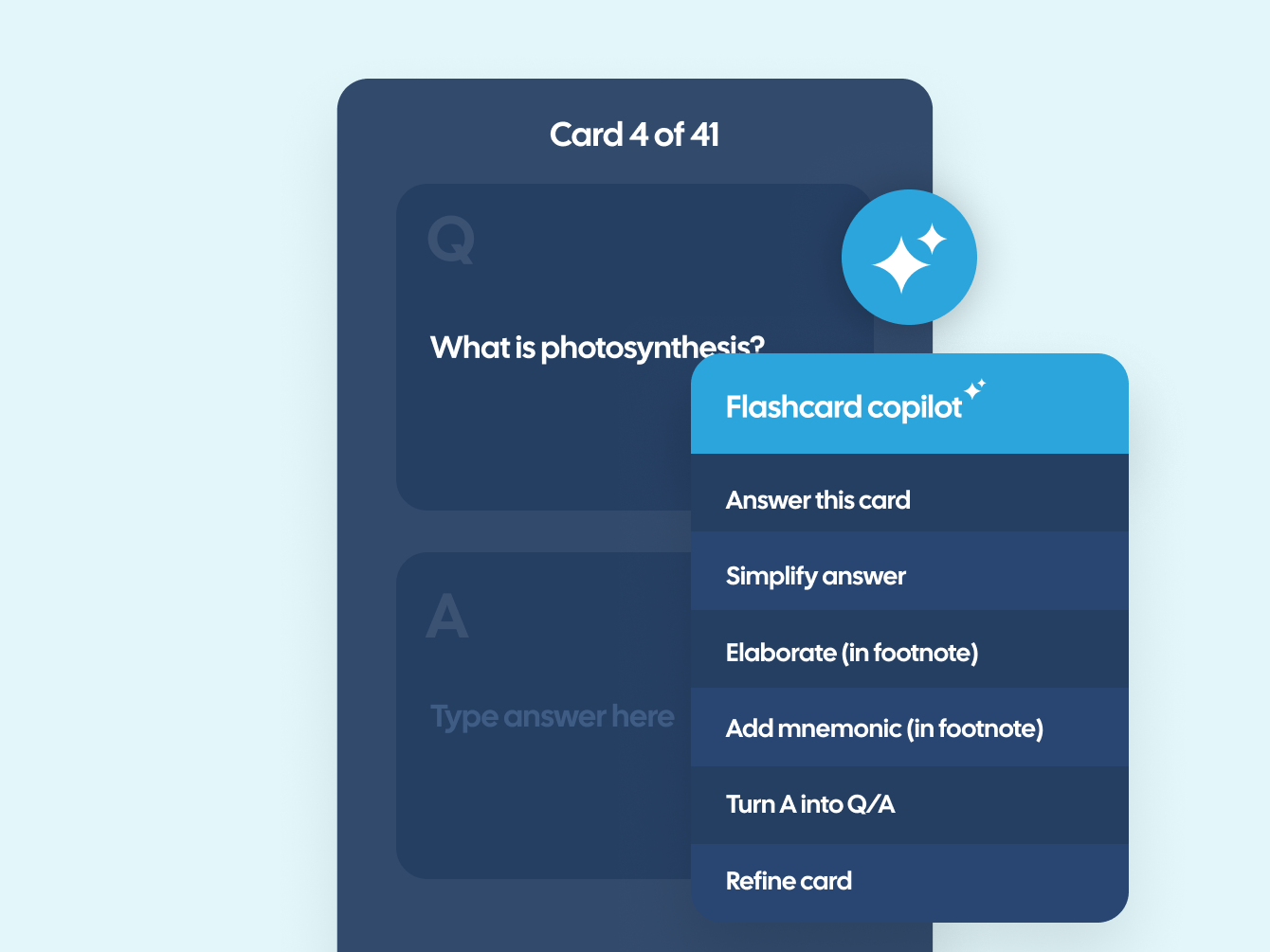
Flashcard Copilot is best thought of as a writing and pedagogy assistant, not a content replacement engine.
As you build a flashcard, it can help you:
- Clarify or simplify a question
- Generate a precise answer from your prompt
- Turn a rough idea into a clean Q&A pair
- Add examples, explanations, hints, or mnemonics in footnotes
- Refine wording so each card stays focused and atomic
(Check out our best practices for using each prompt here.)
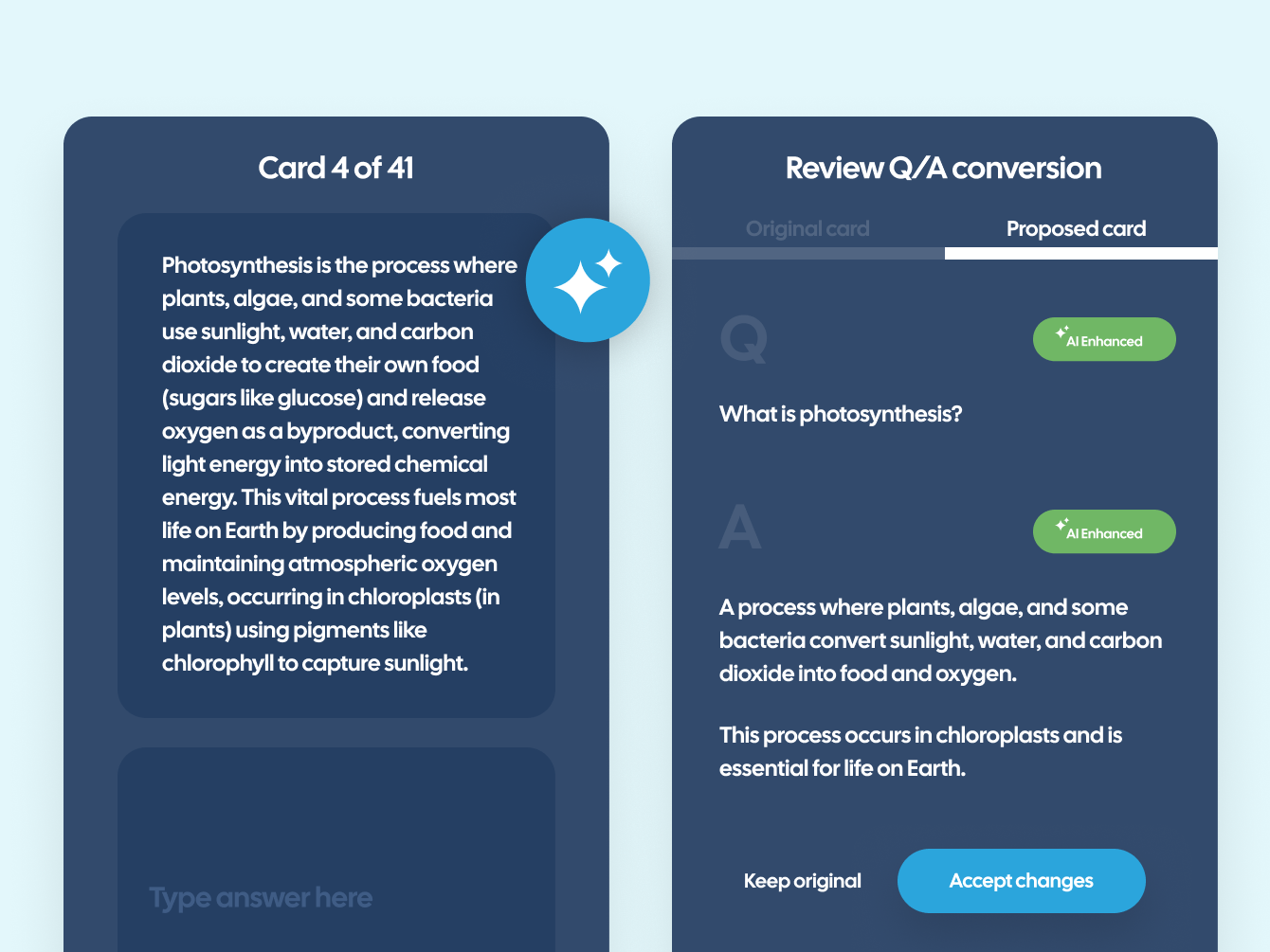
Crucially, every suggestion is optional. You can accept it, reject it, or refine it further. Nothing is added to your deck unless you approve it.
That accept-or-reject moment is pedagogical by design. It forces engagement, reflection, and decision-making. In other words, it preserves generative processing instead of erasing it.
Check out Brainscape’s Help Center article for a more detailed explanation of how Flashcard Copilot works.
The Copilot Metaphor Is Intentional
There’s a reason we didn’t call this “Flashcard Autopilot.”
A copilot doesn’t fly the plane for you. They assist, check, suggest, and correct. You’re still the pilot. And that’s the philosophy behind this feature.
Flashcard Copilot helps serious learners:
- Avoid overloaded cards with too much information
- Write better questions that promote more seamless learning
- Enrich existing cards with context or examples
- Create study materials aligned with how memory actually works
But it never pretends that learning can be outsourced.
Why This Is a Leap Forward (Not Just a Feature)
Flashcard Copilot represents a deeper shift in Brainscape’s approach to AI.
Instead of asking: “How can AI do more for students?”, we asked: “How can AI help students think better?”
For learners and educators who care about retention—not just convenience—that difference really matters because, in the end, AI can easily generate study assets like notes and flashcards. But that just puts students on autopilot.
Learning will always require effort. And Flashcard Copilot makes sure that effort is well spent.
Flashcard Copilot is available to Brainscape Pro users, with a free trial for all users. Additional details about how it works can be found in our Help Center.