Osteoarthritis: number of joints affected? inflammatory vs non? timing? distribution?
- could be mono, oligo, or polyarticular
- non-inflammatory
- chronic
- symmetrical
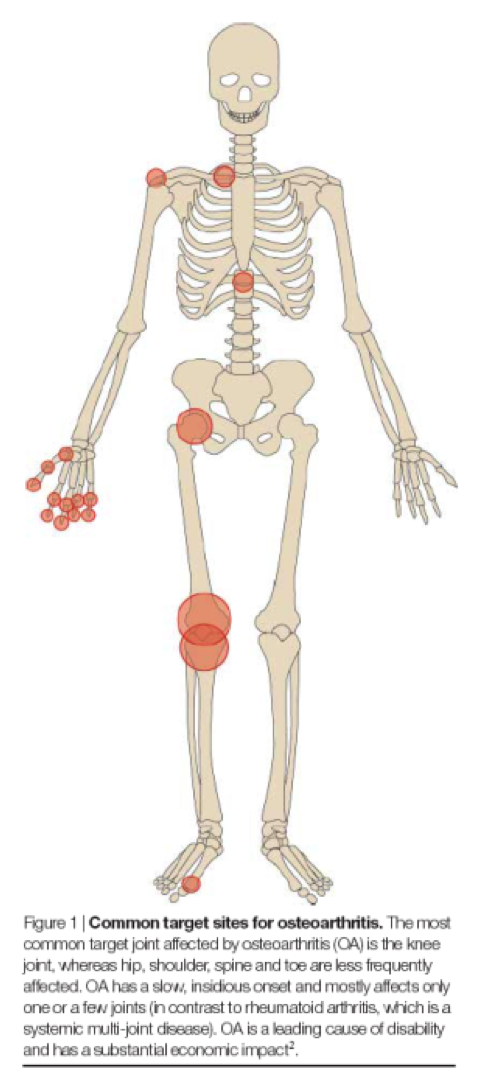
osteoarthritis: general features? (progression, cause, age of patients, morning stiffness, appearance of joints?)
slowly progressive, disintegration of cartilage. cause unknown. generally age >50, morning stiffness < 30 min, crepitus, no inflammation, bony enlargement/tenderness can cause secondary damage to surrounding structures
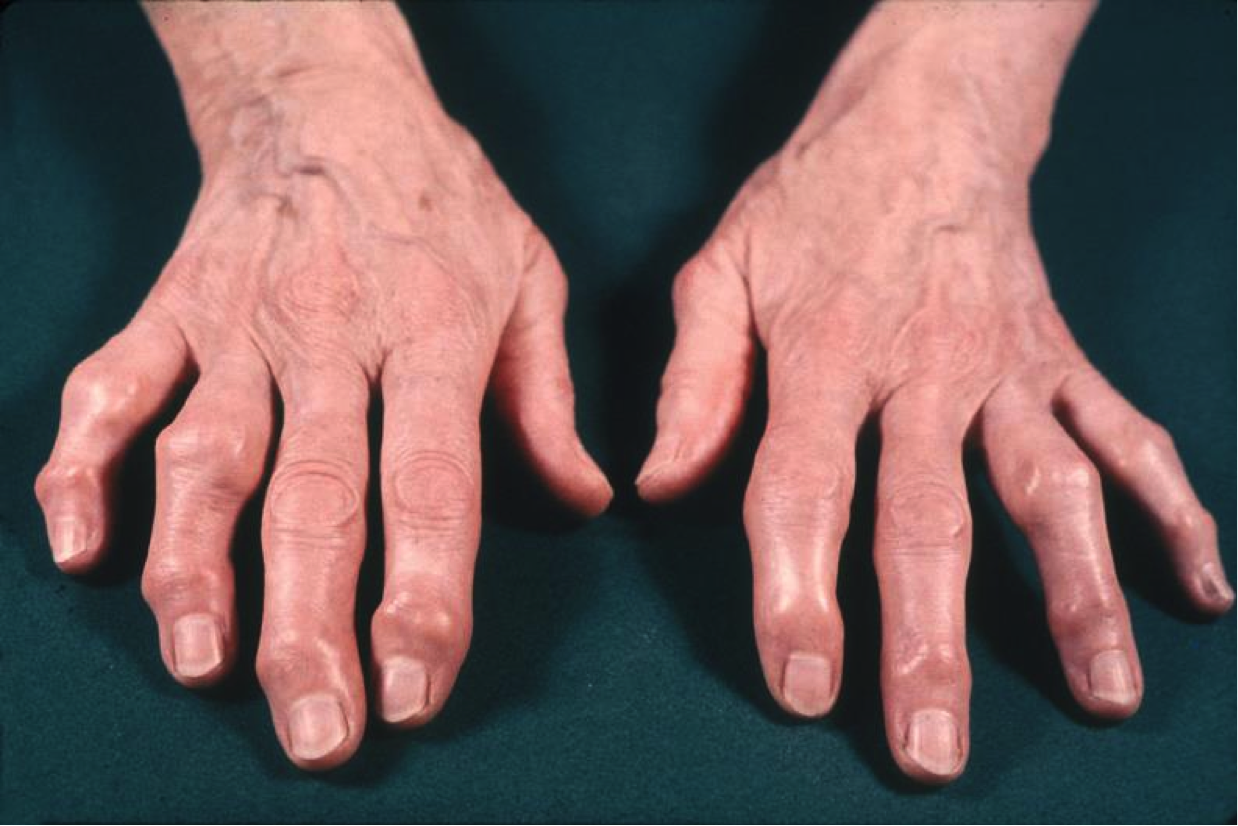
primary osteoarthritis - prevalence?
very common. most people get this as they age.
secondary osteoarthritis - what is the cause?
degenerative process that was preceded by RA, mechanical or metabolic problem (excessive Fe, ACL tear)
OA: what is seen on labs? (ESR, RF titer, fluid aspiration)
ESR < 40
RF Titer < 1:40
non-inflammatory synovial fluid
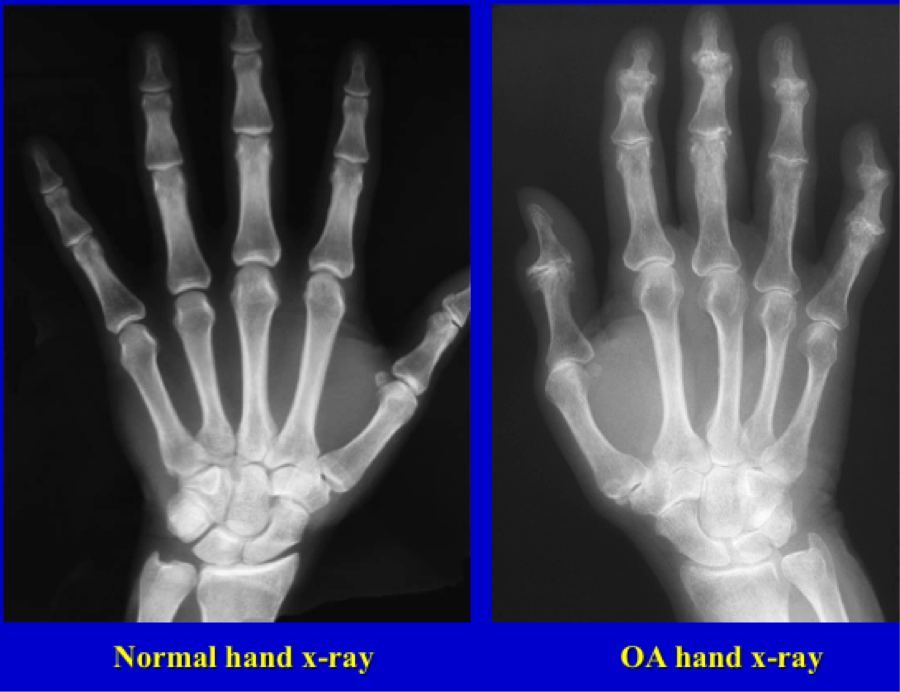
OA: what is seen on imaging?
- osteophytes
- joint space narrowing
- subchondral cysts and sclerosis
- malalignment of joints
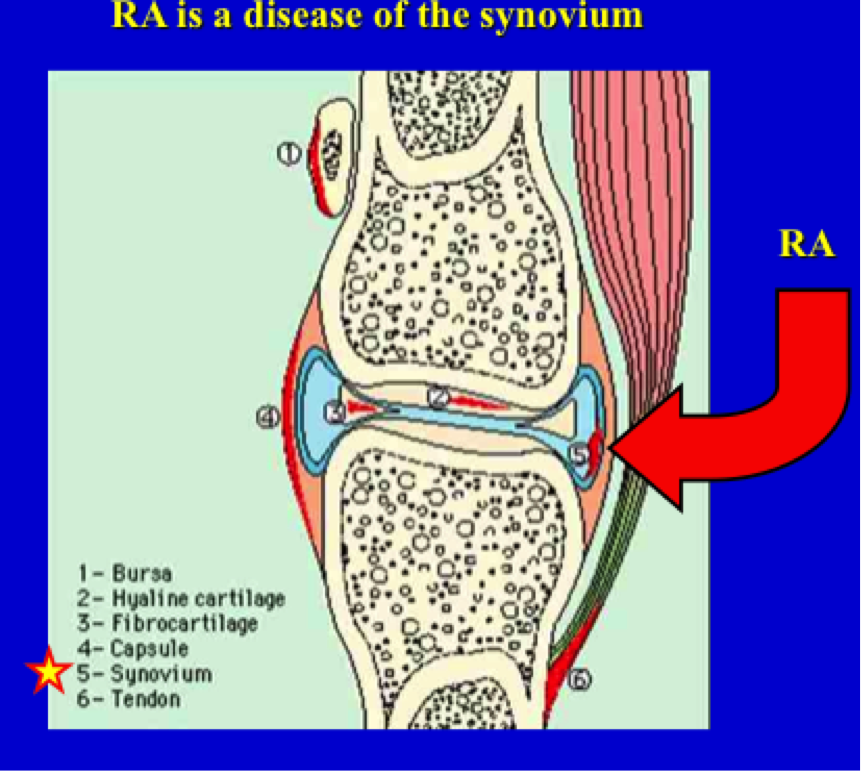
RA is a disease of what part of the joint?
the synovium. synovium proliferates (almost tumor-like)
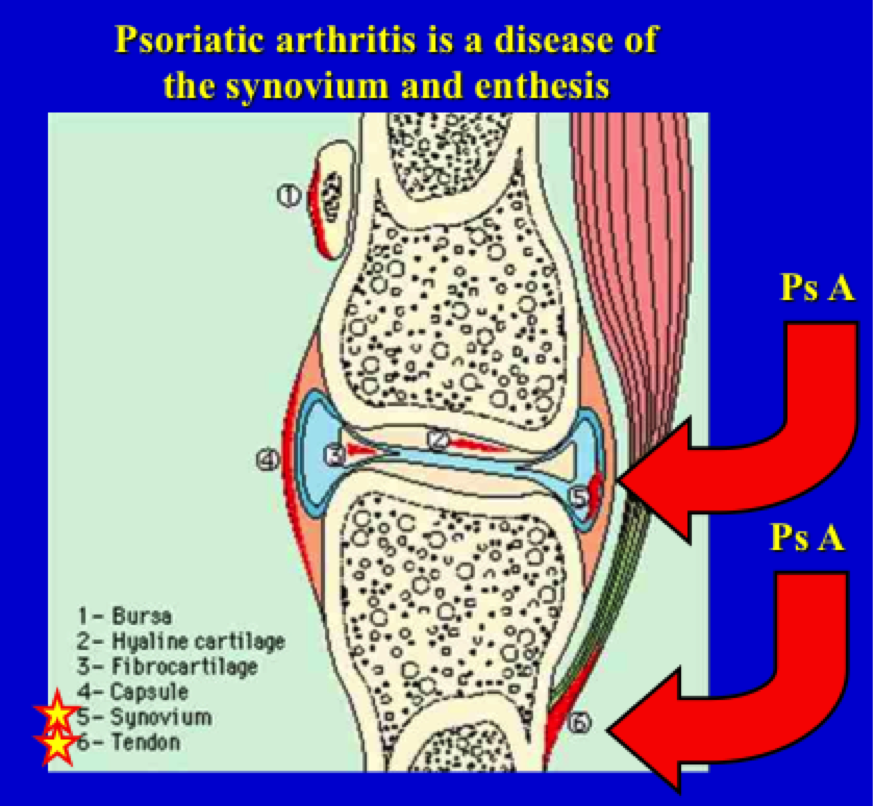
psoriatic arthritis is a disease of what part of the joint?
synovium and enthesis (tendon)
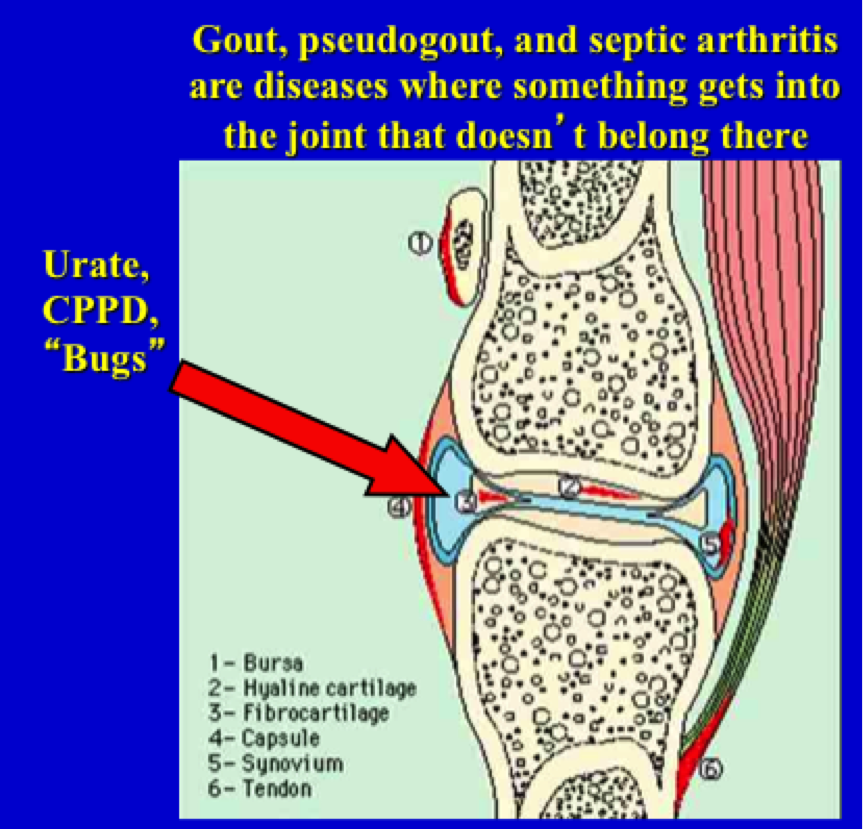
gout, pseudogout, septic arthritis are diseases where what is occuring?
infection and the presence of things in the joint that don’t belong there (urate crystals, bacteria, CPPD- which are another kind of crystals)
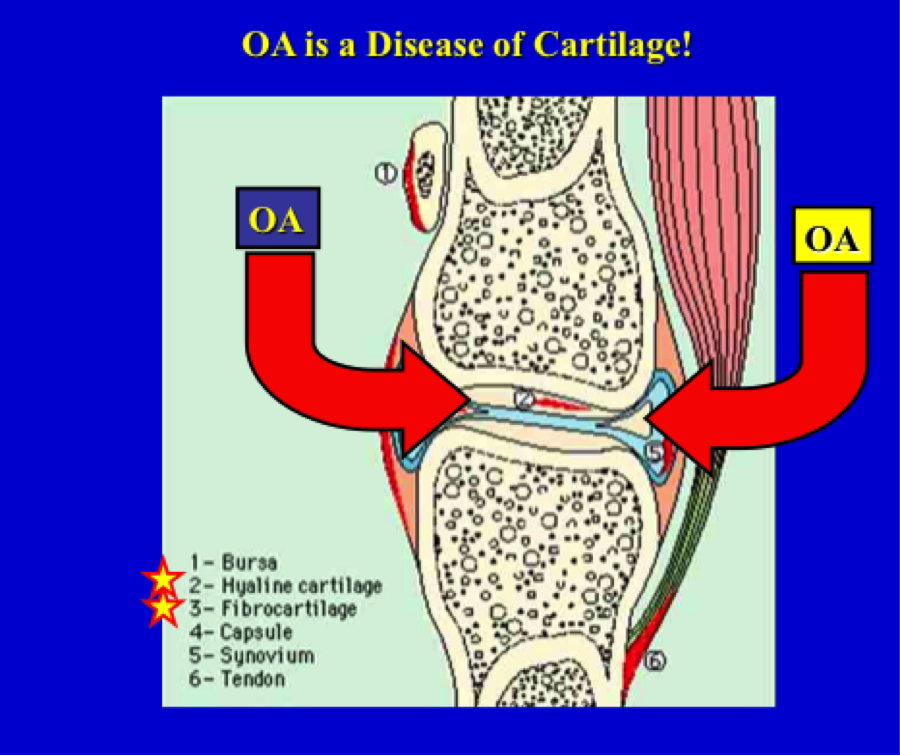
OA is a disease of what part of the joint?
cartilage. wears away over time
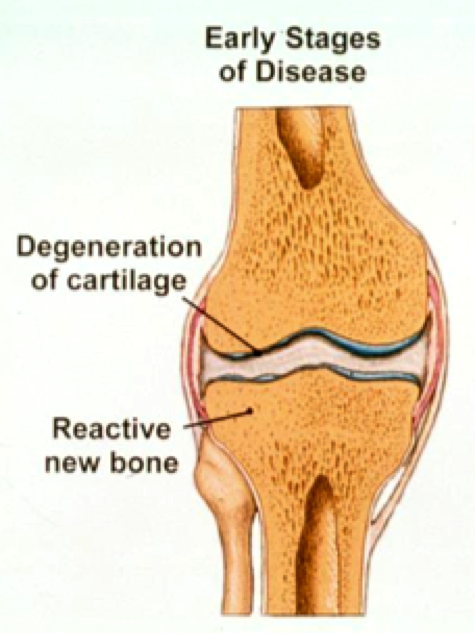
Two features of the joint seen in early stage of OA?
- degeneration of cartilage
- reactive new subchondral bone
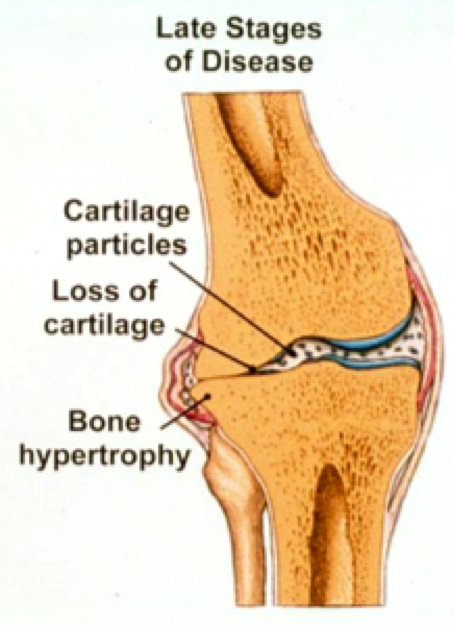
Three features of the joint seen in later stage of disease?
- cartilage particles in joint space
- loss of cartilage -> bone on bone
- bone hypertrophy
Articular/hyaline cartilage: what is the main purpose? general qualities? what is it made of?
- shock absorber of diarthroidial joints
- high H20 content, stiffness: like a gel-pack, fluid under pressure
- well-organized arcs of collagen fibers, with proteoglycans in matrix
- chondrocytes interespersed throughout
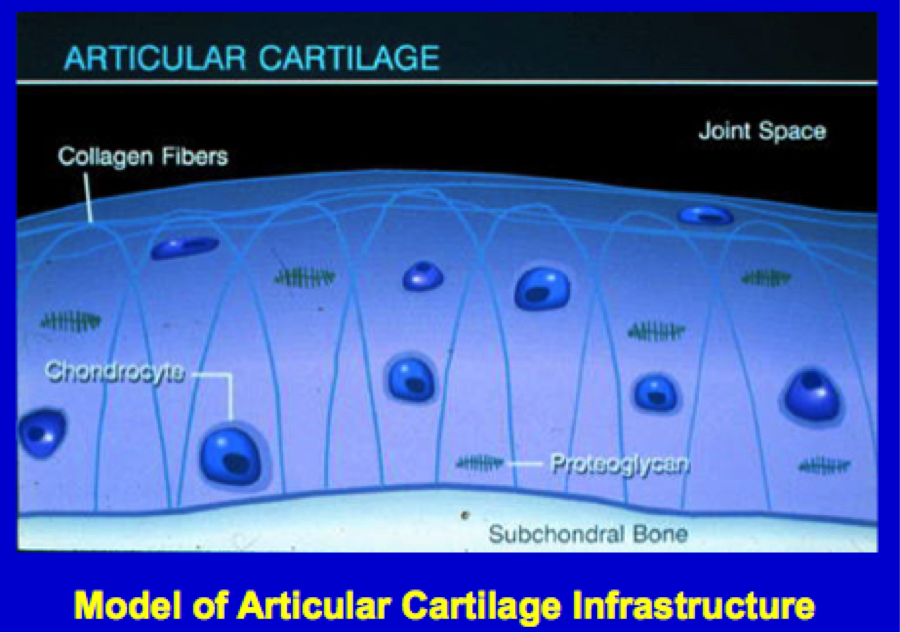
what lies directly beneath articular/hyaline cartilage?
subchondral bone
what happens to cartilage in early OA? (grossly)
- increased water content –> soggy
- more pliable
- deformation with loading
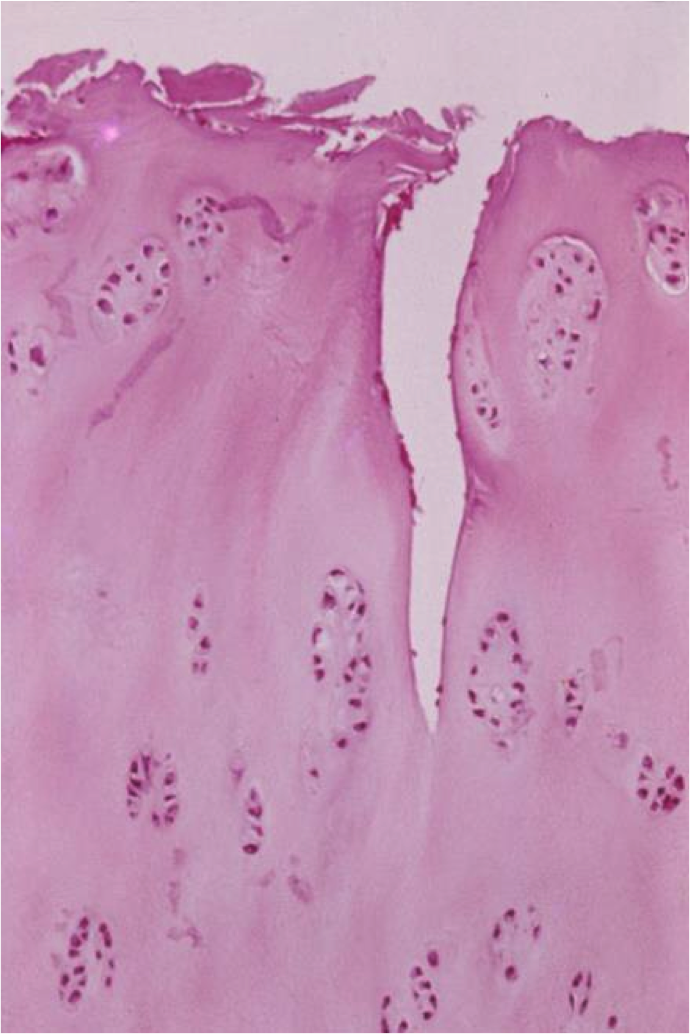
what happens to cartilage in early OA, at the histological level?
- small tangential clefts on surface
- deeper vertical clefts
- splitting/fibrillation (shagginess)
- chondrocytes clump together
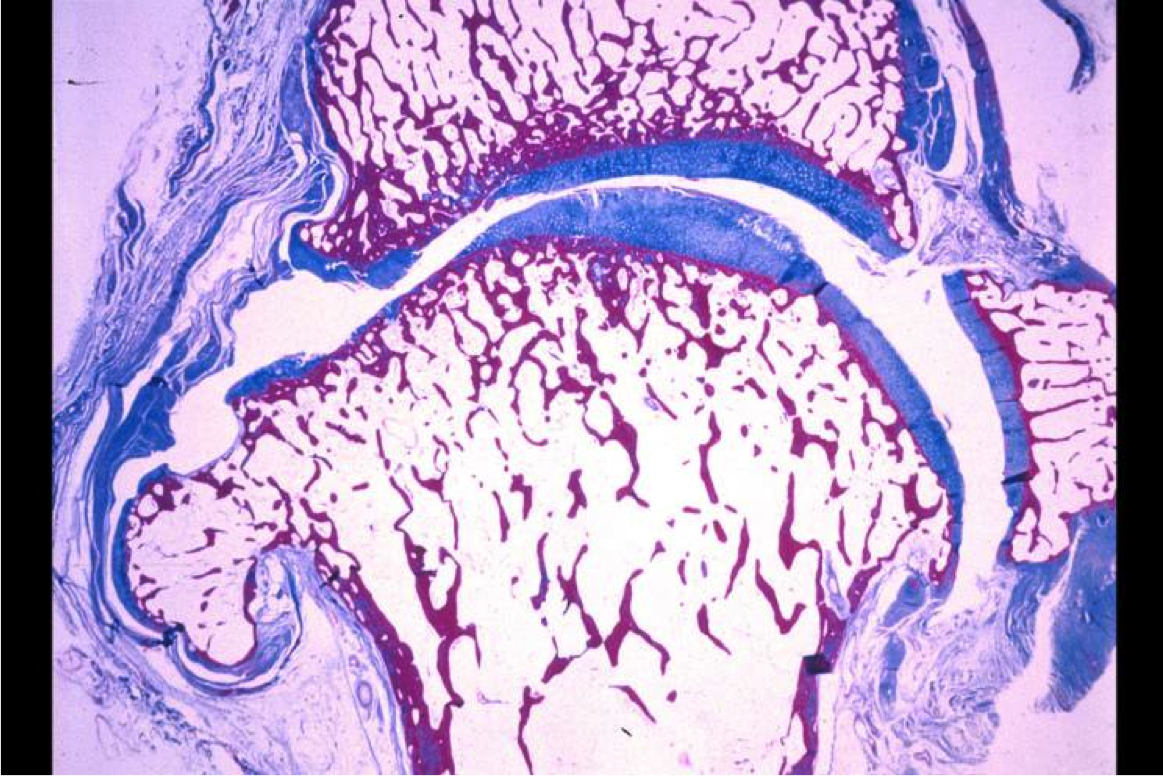
Later in OA progression: what happens to cartilage? bone? infiltrates? other structures?
- cartilage -> progressive fibrillation and loss/erosion
- bone: osteophytes and subchondral sclerosis
- some inflammatory infiltrates in synovium
- ligaments -> lax
- weak surrounding muscles
- Bone on bone
(pic: partial erosion of cartilage, condensation of subchondral bone, osteophyte)
general qualities of chondrocytes? (metabolic activity? vascular supply? what do they do? regeneration?)
- only cell type in adult cartilage matrix
- low metabolic activity; no vascular supply
- maintains structure/function of cartilage matrix
- little ability to regenerate
- maintains low turnover rate of ECM proteins
OA: what cell type is the main problem?
chondrocytes
generally, how do chondrocytes contribute to OA?
normally they are quiescent cells, but in response to stress/injury they will activate –> promote matrix degradation and downreg repair.
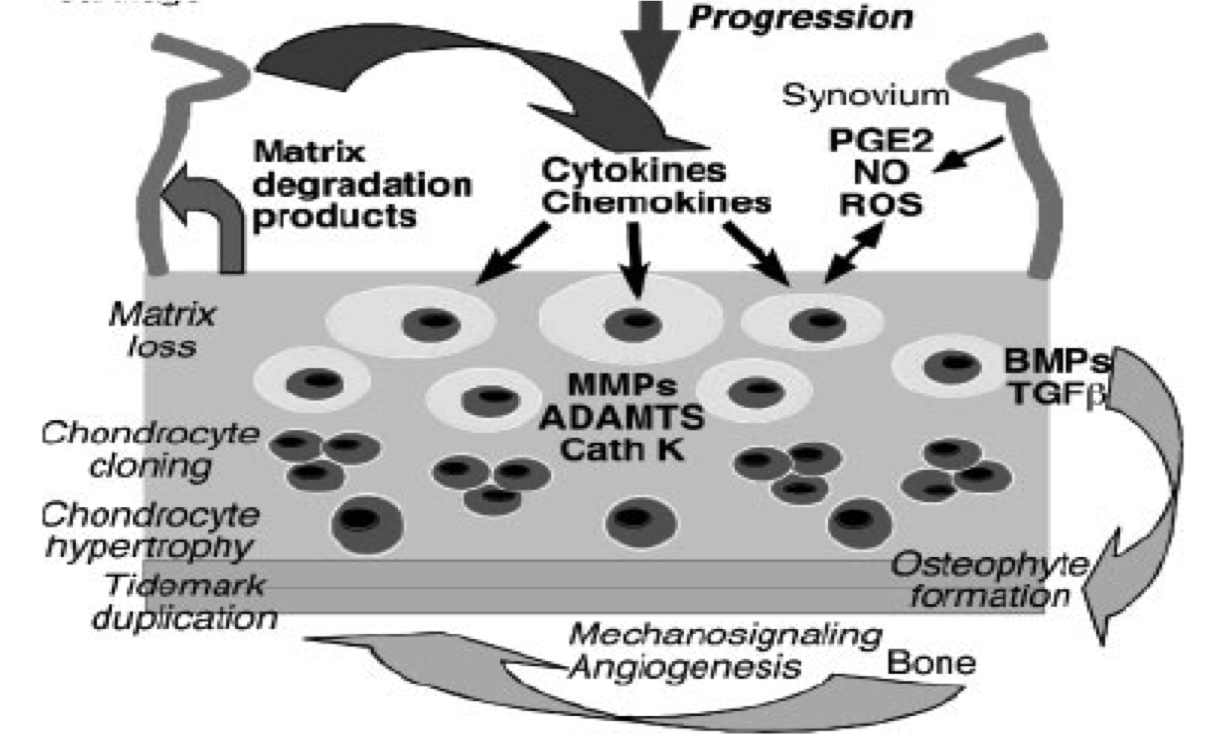
what are the specific processes by which chondrocytes contribute to OA?
chondrocyte stress leads to proliferation and stress response such as growth factors, cytokines, cartilage-degrading proteinases, other inflammatory mediators -> matrix degradation
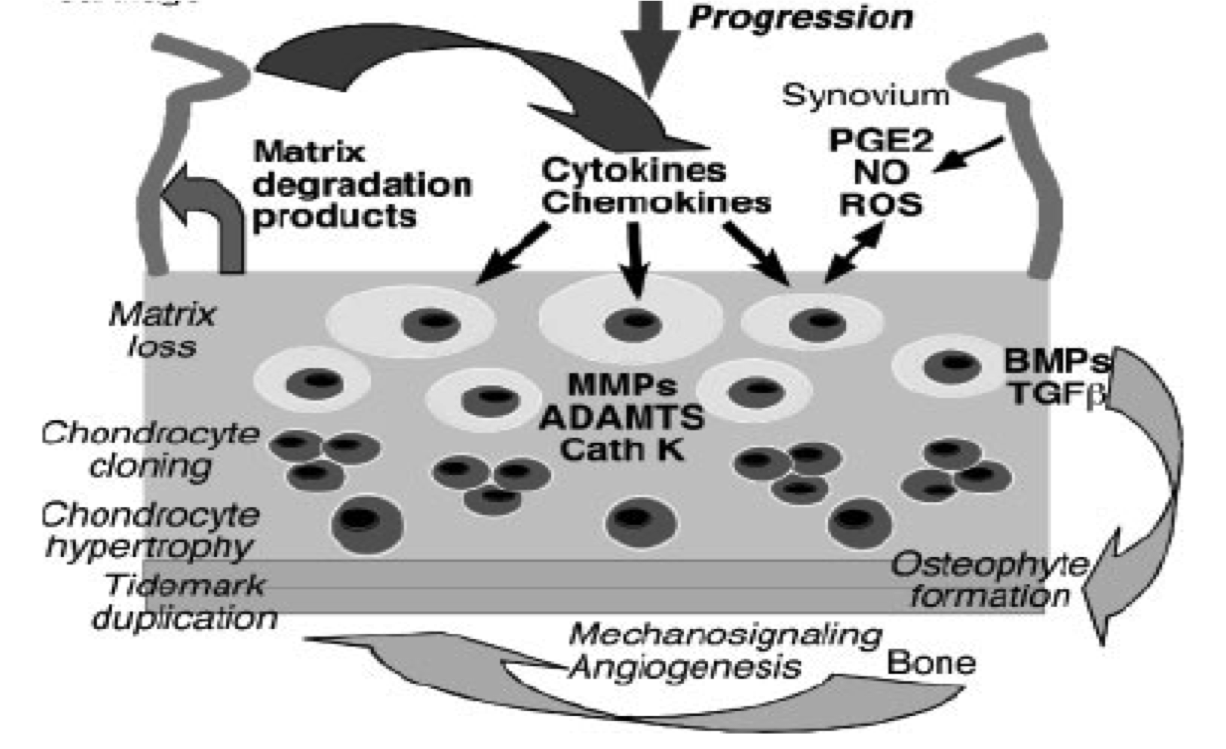
matrix degradation leads to what?
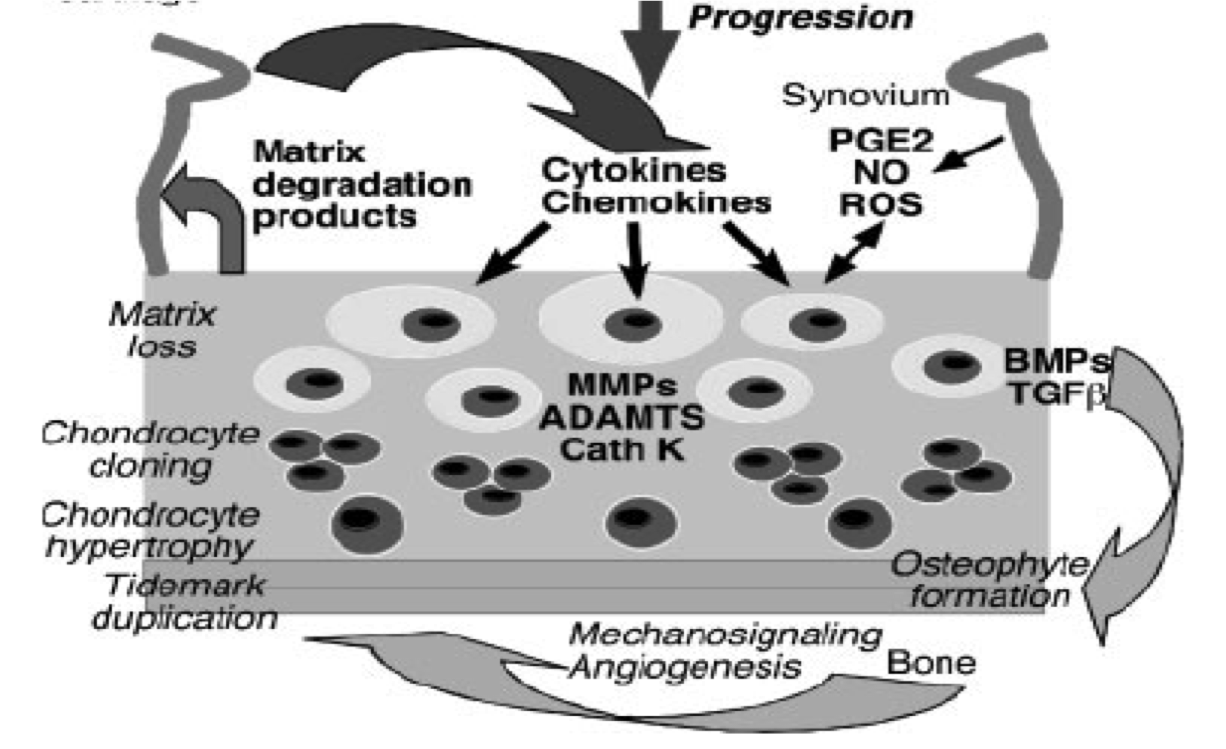
matrix degradation products feedback and upregulate the chondrocyte stress response -> vicious cycle. may also release anabolic factors -> osteophyte formation
which joints does OA most commonly affect?
hands, hips, knees
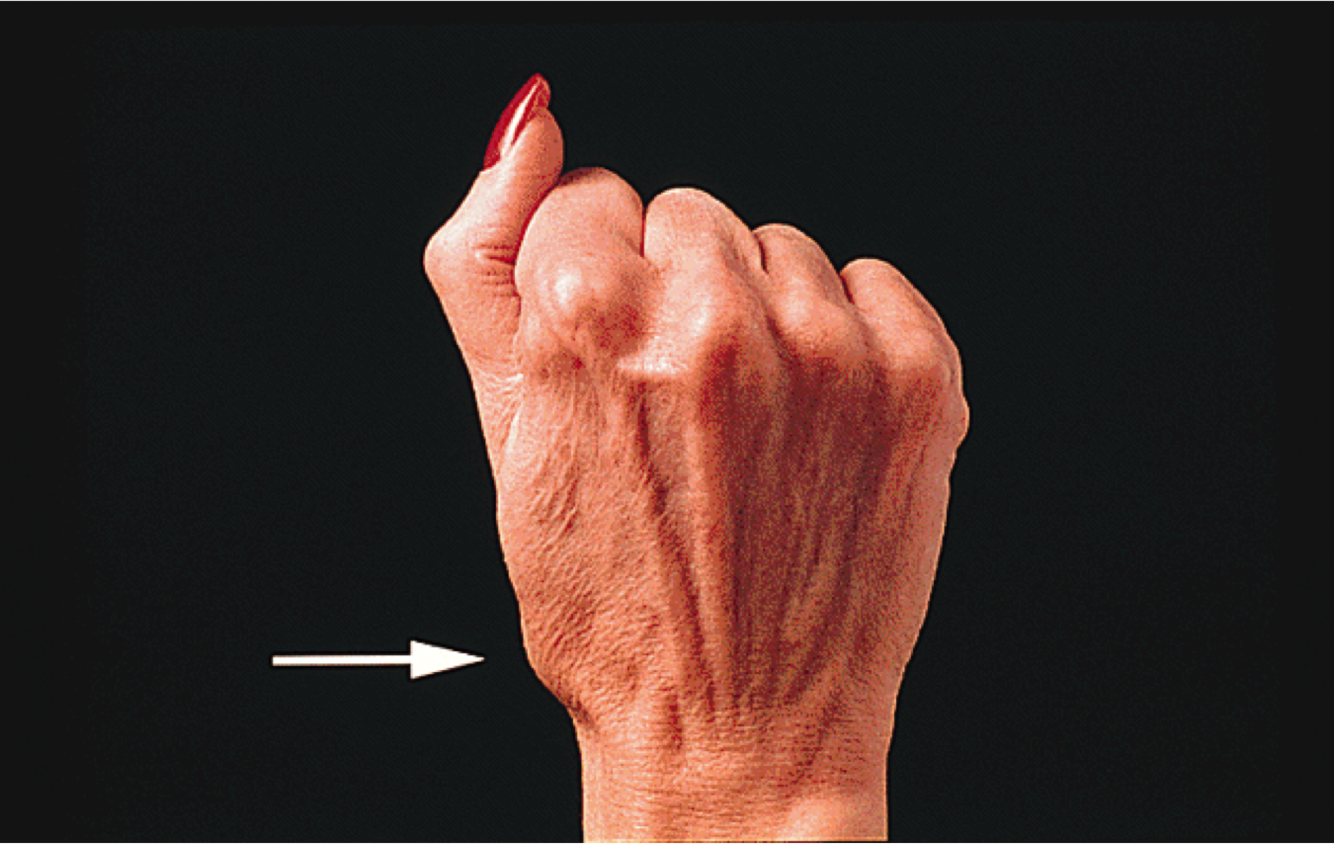
Hand involvement with OA: distribution by gender? which joints most affected?
-Females 4x more likely to have hand involvement than men (more freq found post-menopause). especially basilar thumb joint (first carpometacarpal - CMC).
-Male: wrists more common (possibly occupation-related)
-Both: DIP, PIP


-
1. Approach to the Patient33
-
2. Osteoarthritis48
-
3. Rheumatoid Arthritis43
-
4. Conf 1: Gout, Fibromyalgia27
-
5. Seronegative Spondyloarthritis46
-
7. Infectious Arthritis50
-
8. Lyme Disease26
-
9. Conf 2: Spondyloarth, Migratory Polyarth30
-
10. Vasculitis52
-
11. Myositis53
-
13. Lab Testing45
-
14. Genetics/Osteogenica Imperfecta30
-
15. Scleroderma50
-
16. Conf 3: Vasculitis, Raynaud's21
-
17. Acute Soft Tissue63
-
18. Juvenile Idiopathic Arthritis45
-
19. Pediatric Rheumatology40
-
20. Orthopedics0
-
21. Bone Overview0
-
30. Bone Radiology33
-
24. Bone Tumors31
-
26. DJD of Spine38
-
27. Joint Exam0
-
28. Congenital/Developmental Problems46
-
29. Fractures29
-
22. Lupus (SLE)54
-
Disease & Associated antigens/antibodies34


