A-Level Biology (AQA) Flashcards

All the highest-yield concepts in the official AQA A-Level Biology curriculum.
A laptop and mobile displaying A-Level Biology AQA Flashcards

Watch video

decks
flashcards
learners

Yusuf Q.

Med Student

"Helped me stay on top of Biology content and stop forgetting key details before exams."

Class Icon

The most efficient A-level Biology revision tool.

Brainscape's AQA A-Level Biology flashcards use confidence-based spaced repetition to help you work through the full AQA A-Level Biology specification systematically, reinforcing the topics you find hardest, while saving time on reviewing the ones you've already mastered. From the start of the spec to the trenches of your final revision, Brainscape helps you remember more in much less time.

(Preparing for a different A-level Biology board? We also have expert-vetted flashcards for these A-level boards and subjects.)

What You Get with Brainscape's AQA A-Level Biology Flashcards

AQA A-Level Biology is one of the most content-heavy qualifications you can take in sixth form. Between biological molecules, genetics, cellular respiration, photosynthesis, ecosystems, and everything in between, the sheer volume of material is the number one reason students struggle. Keeping track of it all, retaining the fine detail, and being able to apply it under timed exam conditions is a genuine challenge, even for the most dedicated students.

Brainscape’s AQA A-level Biology flashcards are the answer. You get:

  • Thousands of high-yield flashcards covering every topic across the AQA A-Level Biology specification
  • Full curriculum alignment with the official AQA A-Level Biology spec. Every flashcard is mapped to a specific topic area, so nothing slips through the cracks.
  • Key definitions, processes, and pathways broken down into digestible, memorable flashcard format, including biochemical sequences like respiration and photosynthesis that students find notoriously difficult to retain.
  • Adaptive spaced repetition that prioritises your weakest topics automatically, so every study session is targeted and efficient.
  • Progress tracking tools that give you a clear picture of where you stand across the entire specification.
  • Mobile and web access so you can revise at your desk, on the bus, or in a free moment between lessons.
  • Structured learning progression that follows the logical flow of the AQA A-Level Biology specification from beginning to end.

When you upgrade to Pro for these flashcards, you’ll also get full access to every other A-level subject in our library, making Brainscape your one-stop resource for A-level content review.

A-Level Biology Flashcards Created By Experts

Brainscape's AQA A-Level Biology flashcard deck has been built in alignment with the official AQA A-Level Biology specification: the same document your teacher plans lessons from and that AQA examiners use to set your papers. Each flashcard matches a specific part of the spec, so the collection stays focused on the material you are actually expected to learn (and nothing extraneous).

These flashcards were written and reviewed by Brainscape's in-house team of subject specialists, who checked the content against AQA mark schemes, specimen papers, and examiners' reports. That helps keep the collection close to the way AQA asks questions and awards marks, including the definitions, terminology, and the level of detail that separates a C from an A.

What Topics Are Covered by Brainscape’s AQA A-Level Biology Flashcards?

Brainscape's AQA A-Level Biology flashcards cover every section of the official specification, including:

  • Biological molecules: carbohydrates, lipids, proteins, enzymes, nucleic acids, ATP, and water
  • Cells: cell structure, cell division (mitosis and meiosis), cell membranes, transport across membranes
  • Organisms exchange substances with their environment: gas exchange, digestion, and mass transport in animals and plants
  • Genetic information, variation, and relationships between organisms: DNA, genes, inheritance, variation, and biodiversity
  • Energy transfers in and between organisms: photosynthesis, respiration, and energy flow in ecosystems
  • Organisms respond to changes in their internal and external environments: homeostasis, nervous system, hormonal control, and plant responses
  • Genetics, populations, evolution and ecosystems populations, evolution, ecosystems, and nutrient cycling
  • The control of gene expression: gene expression, epigenetics, recombinant DNA technology, and biotechnology
  • Practical skills: experimental design, data analysis, and required practicals embedded throughout

How to Use Brainscape Flashcards

Brainscape works best when you use it regularly and stay honest about what you know. The basic idea is simple: spend more time on the parts of AQA A-Level Biology that are harder, and less time on the ones you already know well. Here is how to use it properly:

Build a daily habit. Open Brainscape for 10 to 20 minutes each day and work through your AQA A-Level Biology deck. Consistency matters far more than session length: regular short sessions are much more useful than the occasional long revision binge.

Rate your confidence honestly after every card. Brainscape asks you to rate your confidence on a scale of 1 to 5 after each answer. Be rigorous: a 4 or 5 tells the algorithm to show you that card less frequently, which means a generous self-assessment will come back to haunt you in the exam. If in doubt, rate lower.

Let the algorithm schedule your revision. Based on your ratings, Brainscape automatically works out when you need to see each card again: just before the point at which you'd naturally forget it. This is spaced repetition in practice, and it's one of the most well-evidenced techniques in cognitive science.

Combine flashcards with your other revision materials. After covering a topic in your AQA A-Level Biology textbook or in class, open Brainscape and work through the corresponding flashcard deck. The immediate review consolidates the new learning and begins the spaced repetition cycle for those cards.

Use the progress dashboard to guide your study sessions. Brainscape shows you exactly which topic areas are your strongest and which need more work. Use this to inform your wider revision plan, particularly in the weeks leading up to your AQA A-Level Biology exam questions practice sessions.

Best Study Strategies for AQA A-Level Biology

A-Level Biology rewards students who have both breadth and depth: you need to know a lot, and you need to know it precisely. Here's how to approach your revision strategically:

Build a structured revision schedule. Work backwards from your exam dates and allocate specific weeks to specific topics, leaving time at the end for full past-paper practice. Check out our free study schedules and exam countdown sheets to build your personal revision plan.

Start with the AQA A-Level Biology specification. The spec is your single most important revision document. Every exam question is written from it. Download it from the AQA website, work through it topic by topic, and use it as your checklist. If you can't confidently explain the bullet points in a topic, prioritise it in your revision.

Use active recall, not passive re-reading. Re-reading your notes feels productive but does very little for long-term memory. It is far more effective to actively testing yourself with flashcards, past paper questions, or writing out processes from memory. This is the core principle behind Brainscape's approach.

Study your AQA A-Level Biology flashcards daily. Even 10 to 15 minutes a day with Brainscape will significantly outperform a two-hour session once a week. Spaced repetition works best when it's consistent.

Tackle the hard topics head-on. Biochemical pathways like respiration and photosynthesis, the details of gene expression, and the mechanisms of homeostasis are consistently identified in AQA examiners' reports as areas where students lose marks. Pay special attention to these topics. You can use their corresponding decks in Brainscape to break them down card by card until they stick.

Practise with AQA A-Level Biology past papers. Past papers are the closest thing you have to the real exam. Work through them under timed conditions, mark your own answers against the mark scheme, and identify where your knowledge gaps are. Then go back to your flashcards and plug those gaps.

Don't neglect practical skills. AQA A-Level Biology exam questions regularly include data analysis, experimental evaluation, and questions about required practicals. Make sure your revision includes practising these techniques.

Bring Brainscape’s A-level Flashcards to Your Classroom or School

If you’re a teacher, Head of Department, or school leader looking to strengthen how your students prepare for A-level Biology, Brainscape offers discounted bulk Pro licences designed specifically for schools and colleges. Learn more and get started here.

Our A-level Biology (AQA) flashcards are carefully aligned to the AQA specification and exam style, helping students not just memorise content, but apply it effectively under exam conditions. By reinforcing key definitions and concepts through retrieval practice and spaced repetition, students build the depth of understanding needed to tackle all three papers with confidence!

We work with educators to make implementation simple and scalable, whether you’re supporting a single class or rolling out across an entire school.

How Many Papers Are in the AQA A-Level Biology Exam?

AQA A-Level Biology has three written papers. Students usually sit them at the end of Year 13, in May or June, and each paper lasts about two hours.

How Difficult Is AQA A-Level Biology?

AQA A-Level Biology can be challenging because there is a lot of content to remember, and exam answers often need to be very precise. Most students can do well with steady revision, regular practice, and a clear understanding of the core topics.

What Is Covered in the AQA A-Level Biology Specification?

The specification covers biological molecules, cells, exchange and transport, genetics, biodiversity, energy transfers, homeostasis, ecosystems, gene expression, biotechnology, and practical skills.

What Grade Do You Need to Pass AQA A-Level Biology?

An E is the minimum passing grade for AQA A-Level Biology. Grades go from A* to E, and the exact grade boundaries can change each year depending on the exam papers.

Where Can I Find AQA A-Level Biology Past Papers?

You can download AQA A-Level Biology past papers for free from the official AQA website. They are useful for getting used to the style of the questions and the way marks are awarded.

When Are AQA A-Level Biology Exams Held?

AQA A-Level Biology exams are usually held in May and June at the end of Year 13.

How Do I Access the AQA A-Level Biology Specification?

You can download the full AQA A-Level Biology specification from the AQA website. It sets out the topics students need to know and is useful when planning revision.

Can I Study A-Level Biology Independently at Home?

Yes. Many students study A-Level Biology at home using a textbook, the official specification, past papers, and flashcards to help manage the amount of content.

Additional Resources for AQA A-Level Biology Learners

Decks included (39)

3.1.1 Monomers & Polymers
Explain how biological molecules form through condensation and hydrolysis reactions linking monomers into polymers.
9  cards
3.1.2 Carbohydrates
Compare the structure and functions of mono-, di- and polysaccharides and relate structure to biological roles.
22  cards
3.1.3 Lipids
Analyse lipid structure including triglycerides and phospholipids and explain how structure determines function in cells.
17  cards
3.1.4 Proteins
Relate amino acid structure and levels of protein organisation to biological function and enzyme activity.
39  cards
3.1.5 Nucleic Acids
Describe the structure of DNA and RNA and explain how nucleotide sequences store and transfer genetic information.
32  cards
3.1.6 ATP
Explain how ATP acts as the universal energy currency of cells and how its hydrolysis powers metabolic reactions.
11  cards
3.1.7 Water
Analyse the chemical properties of water and explain how they support biological processes in organisms.
11  cards
3.1.8 Inorganic ions
Explain the biological roles of key inorganic ions in cellular processes and physiological functions.
8  cards
3.2.1 Cell structure
Identify the structure and function of eukaryotic and prokaryotic cell components and relate them to cellular specialization.
52  cards
3.2.2 Cell division
Explain the stages of the cell cycle and mitosis and relate cell division to growth, repair and disease.
20  cards
3.2.3 Transport across cell membranes
Analyse how substances move across membranes through diffusion, osmosis, facilitated diffusion and active transport.
20  cards
3.2.4 Cell recognition & the immune system
Explain immune responses including antigen recognition, antibody production and the role of vaccines and monoclonal antibodies.
36  cards
3.3.1 Surface area to volume ratio
Explain how surface area to volume ratio influences diffusion and exchange in organisms.
13  cards
3.3.2 Gas exchange
Compare gas exchange systems in different organisms and explain how ventilation maintains diffusion gradients.
24  cards
3.3.3 Digestion & absorption
Analyse how digestive enzymes break down macromolecules and how products are absorbed in the intestine.
16  cards
3.3.4 Mass transport
Explain how substances are moved to and from exchange surfaces in both animals and plants.
39  cards
3.4.1 DNA, genes & chromosomes
Explain how genetic information is organised within DNA molecules and chromosomes.
13  cards
3.4.2 DNA & protein synthesis
Describe transcription and translation and relate DNA sequences to protein structure.
14  cards
3.4.3 Genetic diversity & meiosis
Explain how mutation, meiosis and fertilisation generate genetic diversity.
14  cards
3.4.4 Genetic diversity & adaptation
Analyse how genetic variation and environmental pressures drive natural selection and evolution.
20  cards
3.4.5 Species & taxonomy
Classify organisms using phylogenetic systems and explain the concept of species and evolutionary relationships.
20  cards
3.4.6 Biodiversity within a community
Measure and interpret biodiversity using species richness and indices of diversity.
12  cards
3.4.7 Investigating diversity
Analyse genetic diversity using DNA, protein sequences and statistical analysis of variation.
12  cards
3.5.1 Photosynthesis
Explain the light-dependent and light-independent reactions and how environmental factors affect photosynthetic rate.
23  cards
3.5.2 Respiration
Analyse aerobic and anaerobic respiration pathways and explain how ATP is generated in cells.
17  cards
3.5.3 Energy & ecosystems
Evaluate energy transfer in ecosystems using concepts of productivity, biomass and trophic efficiency.
20  cards
3.5.4 Nutrient cycles
Explain how microorganisms recycle nutrients through nitrogen and phosphorus cycles.
15  cards
3.6.1 Stimuli & Response
Describe how organisms detect stimuli and coordinate responses through nervous and hormonal systems.
62  cards
3.6.2 Nervous coordination
Explain how neurons transmit impulses and how synapses coordinate nervous responses.
53  cards
3.6.3 Skeletal muscles
Describe the structure and mechanism of skeletal muscle contraction.
14  cards
3.6.4 Homeostasis
Analyse how organisms maintain stable internal conditions through regulatory systems.
57  cards
3.7.1 Inheritance
Explain patterns of inheritance, including monohybrid crosses, codominance, multiple alleles and sex linkage.
12  cards
3.7.2 Populations
Analyse allele frequencies in populations and apply the Hardy–Weinberg principle to genetic variation.
15  cards
3.7.3 Evolution may lead to speciation
Explain how natural selection and reproductive isolation can lead to the formation of new species.
22  cards
3.7.4 Populations in ecosystems
Analyse how populations interact within ecosystems, including competition, predation and population dynamics.
24  cards
3.8.1 Gene Mutations and Protein Structure
Explain how changes in DNA base sequences can alter protein structure and affect phenotype.
14  cards
3.8.2 Control of Gene Expression
Describe mechanisms that regulate gene expression, including transcription factors and epigenetic modifications.
44  cards
3.8.3 Applications of Genome Projects
Explain how genome sequencing projects are used to study evolution, identify genes and improve medical and agricultural research.
10  cards
3.8.4 Gene Technologies and Their Applications
Describe techniques used to study and modify genes and evaluate their applications in medicine, research and industry.
46  cards

Higher A-level scores, guaranteed.

Brainscape’s A-Level Biology (AQA) flashcards are scientifically proven to help you revise more efficiently and retain key biology concepts for longer.

Brainscape promotes stronger retention over time than traditional study methods.

The smartest study method.

Brainscape's spaced repetition system is scientifically proven to help you learn faster and develop better study habits.
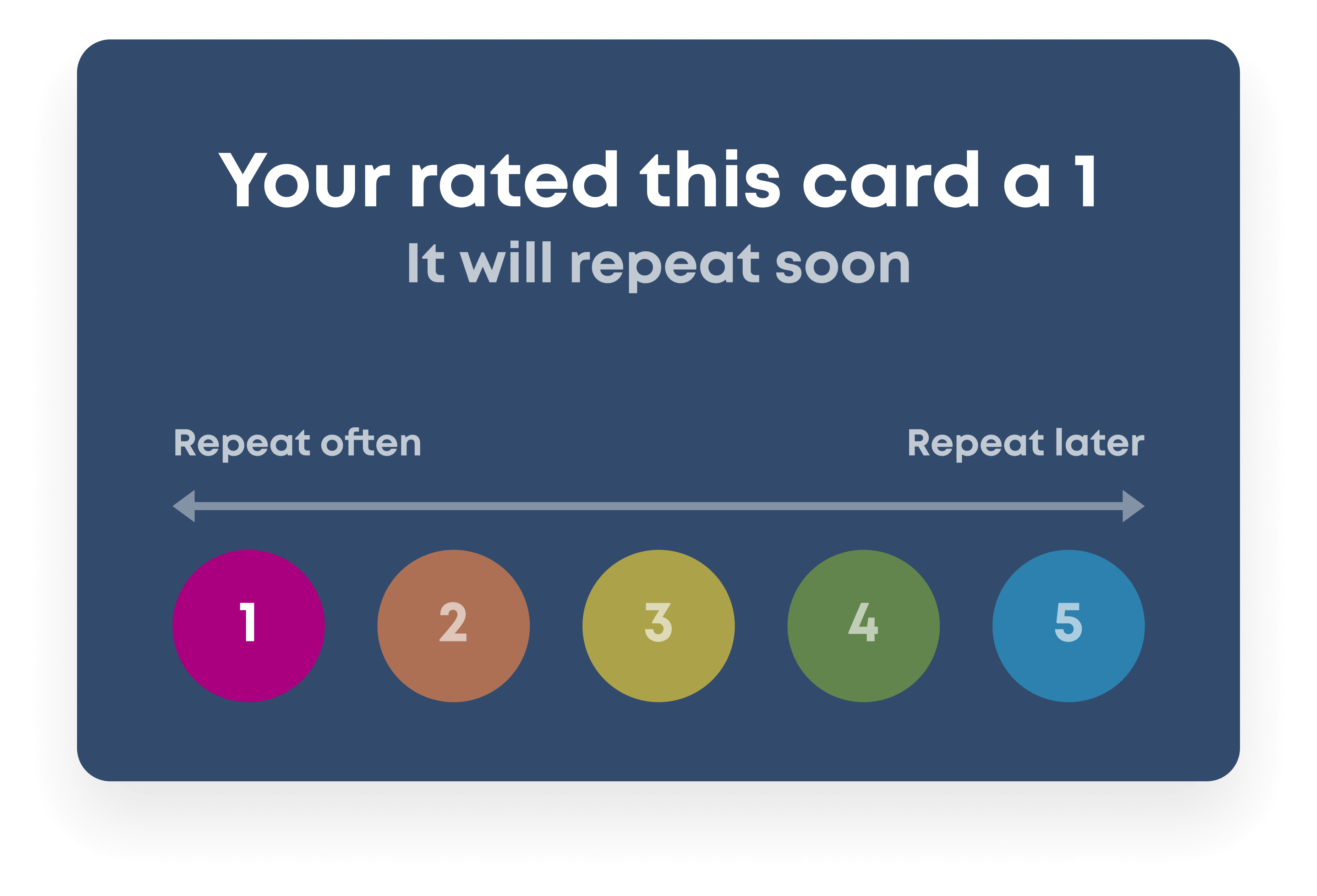
Brainscape uses your confidence rating, on a 1-5 scale, to determine how soon to repeat the flashcard again.

Easy to add your own flashcards.

Collaborate with others, add media, and keep all your flashcards in sync between the Brainscape website and mobile app.

Brainscape's online and mobile flashcard maker supports all types of file imports and AI flashcard creation

Free to start or $8/mo for full access.

Looking for something else?
