A-Level Biology (WJEC / Eduqas) Flashcards

All the highest-yield concepts in the official WJEC / Eduqas A-Level Biology syllabus.
A laptop and mobile displaying A-Level Biology WJEC / Eduqas Flashcards

Watch video

decks
flashcards
learners

Priya S.

Biology Tutor (A-level)

"A reliable way for students to build and retain core knowledge over time."

Class Icon

The most efficient A-level Biology revision tool.

Brainscape’s WJEC / Eduqas A-Level Biology flashcards provide a structured, adaptive way to revise the full specification with focus and efficiency. Built around the WJEC / Eduqas course, this collection breaks down key content into targeted prompts that strengthen understanding and support dependable recall. For educators, it offers reassurance that students are revising accurate, specification-aligned material that reflects the demands of the WJEC / Eduqas A-Level Biology exams.

WJEC / Eduqas A-Level Biology requires students to master a wide and detailed range of content and apply it effectively under exam conditions. These digital flashcards for web and mobile replace passive revision with active, systematic practice, helping learners retain essential knowledge over time. Used consistently, they enable students to build strong understanding, revise more efficiently, and recall key information with confidence when it matters most.

(Preparing for a different A-level Biology board? We also have expert-vetted flashcards for these A-level boards and subjects.)

What You Get with Brainscape's WJEC / Eduqas A-Level Biology Flashcards

Brainscape’s WJEC / Eduqas A-level Biology flashcards are the answer. You get:

  • Thousands of high-yield flashcards covering every topic across the WJEC / Eduqas A-Level Biology specification
  • Full curriculum alignment with the official WJEC / Eduqas A-Level Biology spec. Every flashcard is mapped to a specific topic area, so nothing slips through the cracks.
  • Key definitions, processes, and pathways broken down into digestible, memorable flashcard format, including biochemical sequences like respiration and photosynthesis that students find notoriously difficult to retain.
  • Adaptive spaced repetition that prioritises your weakest topics automatically, so every study session is targeted and efficient.
  • Progress tracking tools that give you a clear picture of where you stand across the entire specification.
  • Mobile and web access so you can revise at your desk, on the bus, or in a free moment between lessons.
  • Structured learning progression that follows the logical flow of the WJEC / Eduqas A-Level Biology specification from beginning to end.

When you upgrade to Pro for these flashcards, you’ll also get full access to every other A-level subject in our library, making Brainscape your one-stop resource for A-level content review.

What Topics Are Covered by Brainscape’s WJEC / Eduqas A-Level Biology Flashcards?

Brainscape’s WJEC / Eduqas A-Level Biology flashcards are aligned to the full WJEC / Eduqas specification, including:

  • Basic biochemistry and organisation: biological molecules, enzymes, and cell structure.
  • Cells and membranes: cell division, membrane structure, and transport mechanisms.
  • Exchange and transport: gas exchange, circulation, and transport in plants.
  • Genetics and evolution: DNA, genes, inheritance, variation, and natural selection.
  • Energy and ecosystems: photosynthesis, respiration, ecosystems, and nutrient cycles.
  • Homeostasis and coordination: nervous and hormonal control, and responses in plants and animals.
  • Applications of genetics and biotechnology: gene technologies, genetic engineering, and their uses.
  • Practical skills: experimental techniques, data handling, and required practical work embedded throughout.

Bring Brainscape’s A-level Flashcards to Your Classroom or School

If you’re a teacher, Head of Department, or school leader looking to strengthen how your students prepare for A-level Biology, Brainscape offers discounted bulk Pro licences designed specifically for schools and colleges. Learn more and get started here.

Our A-level Biology (WJEC / Eduqas) flashcards are carefully aligned to the WJEC / Eduqas specification and exam style, helping students not just memorise content, but apply it effectively under exam conditions. By reinforcing key definitions and concepts through retrieval practice and spaced repetition, students build the depth of understanding needed to tackle all three papers with confidence!

We work with educators to make implementation simple and scalable, whether you’re supporting a single class or rolling out across an entire school.

Frequently Asked Questions About WJEC / Eduqas A-Level Biology

How should I revise for WJEC / Eduqas A-Level Biology effectively?

WJEC / Eduqas A-Level Biology requires you to manage a wide range of content and apply it clearly in exams. A strong approach includes:

  • Build solid understanding first: Learn the key concepts thoroughly using lessons and revision resources.
  • Test yourself to reinforce memory: Active recall—such as using flashcards—helps move knowledge into long-term memory.
  • Use spaced revision: Revisiting topics regularly is far more effective than last-minute cramming.
  • Practise exam questions: Applying your knowledge to exam-style questions is essential for success.

With consistent revision, you’ll be able to recall key information and use it effectively in the exam.

What do WJEC / Eduqas A-Level Biology exams assess?

These exams assess a combination of knowledge, understanding, and application, including data interpretation and extended responses. Students must be able to explain biological processes clearly and apply their knowledge to unfamiliar scenarios, so revision should include both content mastery and exam-style practice.

Where can I find WJEC / Eduqas A-Level Biology revision tools and practice questions?

WJEC / Eduqas past papers are the most important resource for exam preparation. In addition, structured revision tools—such as digital flashcards and A-Level-style question sets—can support ongoing learning. Platforms like Brainscape also provide free practice question sets to help students test their knowledge as they revise.

How important is practical work in WJEC / Eduqas A-Level Biology?

Practical work is a core component of the WJEC / Eduqas course and is assessed through written exams. Students need to understand experimental methods, data analysis, and evaluation of results. Revising practical skills is essential, as these concepts are frequently examined in different contexts.

Additional Resources for WJEC / Eduqas A-Level Biology Learners

Decks included (27)

1: Biological Molecules
Explain how biological molecules are structured and how their properties determine function.
138  cards
1: Enzymes & Digestion
Explain enzyme action and how macromolecules are digested and absorbed.
16  cards
1: Cell Structure
Describe the structure and function of cells and their components.
52  cards
1: Cell Division
Explain the cell cycle and mitosis in growth and development.
20  cards
1: Membranes & Transport
Analyse movement of substances across membranes via diffusion and active transport.
20  cards
2: Exchange & Transport Systems
Explain how organisms exchange and transport substances efficiently.
76  cards
2: Plant Transport
Explain water transport, transpiration, and translocation in plants.
20  cards
2: Immunology
Describe immune responses and mechanisms of pathogen defense.
36  cards
3: DNA & Protein Synthesis
Explain how DNA structure enables genetic information to be expressed as proteins.
27  cards
3: Genetic Diversity
Explain how meiosis and mutation generate genetic variation.
14  cards
3: Biodiversity & Classification
Classify organisms and measure biodiversity within ecosystems.
32  cards
3: Investigating Diversity
Analyse genetic diversity using molecular and statistical methods.
12  cards
4: Evolution
Explain how natural selection leads to adaptation and speciation.
42  cards
4: Populations & Ecosystems
Analyse interactions within ecosystems and population dynamics.
24  cards
4: Energy & Nutrient Cycles
Explain energy flow and nutrient cycling in ecosystems.
35  cards
5: Photosynthesis
Explain the processes and limiting factors of photosynthesis.
23  cards
5: Respiration
Analyse aerobic and anaerobic respiration and ATP production.
17  cards
5: ATP & Energy Transfer
Explain how ATP functions as the universal energy currency in cells.
11  cards
6: Homeostasis
Explain how organisms maintain stable internal conditions through regulation.
57  cards
6: Nervous Coordination
Explain how neurons transmit impulses and coordinate responses.
53  cards
6: Stimuli & Response
Describe how organisms detect stimuli and produce coordinated responses.
62  cards
6: Muscles
Explain the structure and mechanism of skeletal muscle contraction.
14  cards
7: Inheritance
Analyse inheritance patterns including dominance, codominance, and sex linkage.
12  cards
7: Populations (Hardy–Weinberg)
Apply Hardy–Weinberg principles to analyse allele frequencies.
15  cards
8: Gene Mutations & Expression
Explain how mutations affect protein structure and gene regulation.
58  cards
8: Gene Technologies
Explain applications of genome sequencing and genetic technologies.
46  cards
8: Disease
Explain how pathogens cause disease and how organisms respond.
24  cards

Higher A-level scores, guaranteed.

Brainscape’s A-Level Biology (WJEC / Eduqas) flashcards are scientifically proven to help you revise more efficiently and retain key biology concepts for longer.

Brainscape promotes stronger retention over time than traditional study methods.

The smartest study method.

Brainscape's spaced repetition system is scientifically proven to help you learn faster and develop better study habits.
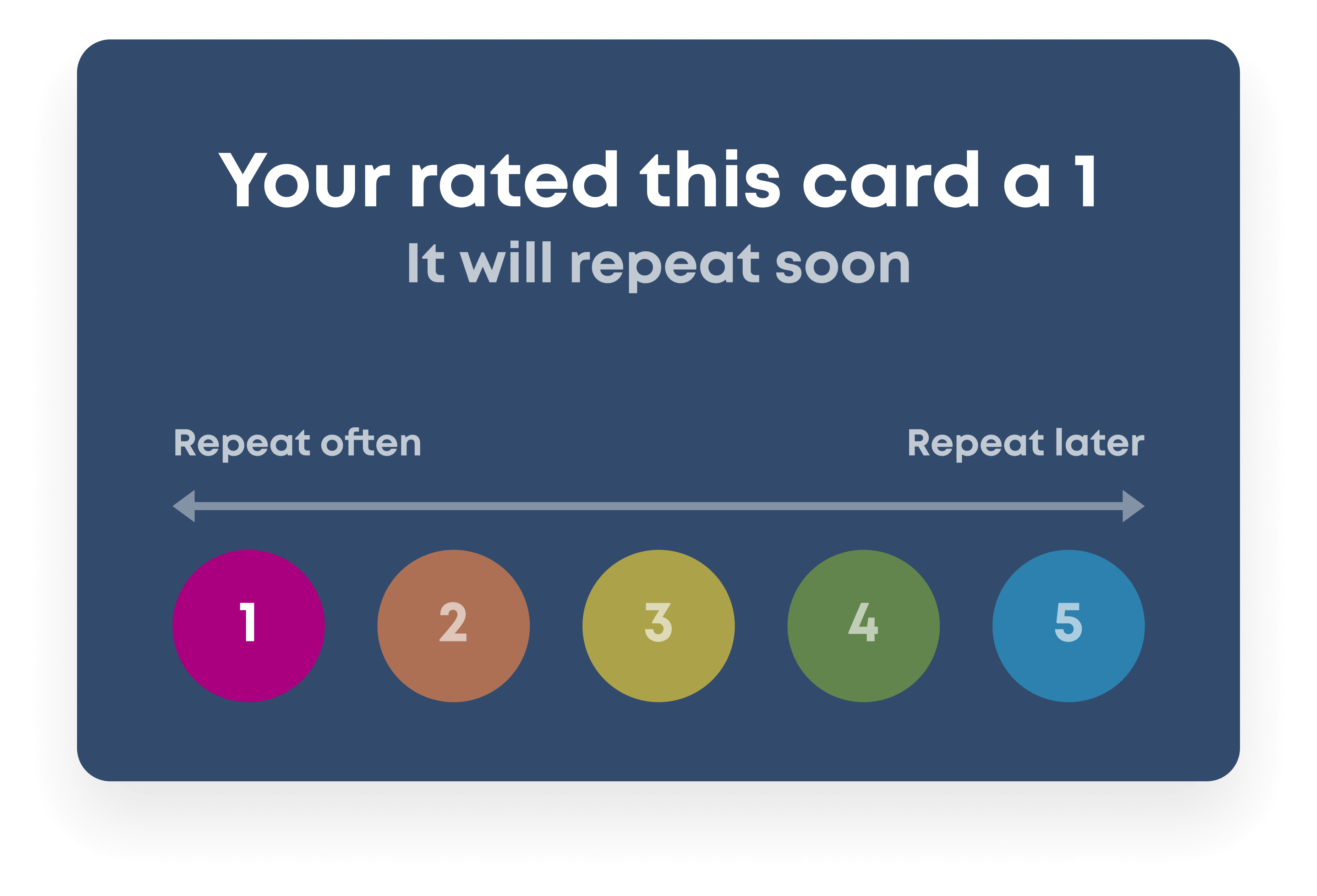
Brainscape uses your confidence rating, on a 1-5 scale, to determine how soon to repeat the flashcard again.

Easy to add your own flashcards.

Collaborate with others, add media, and keep all your flashcards in sync between the Brainscape website and mobile app.

Brainscape's online and mobile flashcard maker supports all types of file imports and AI flashcard creation

Free to start or $8/mo for full access.

Looking for something else?
