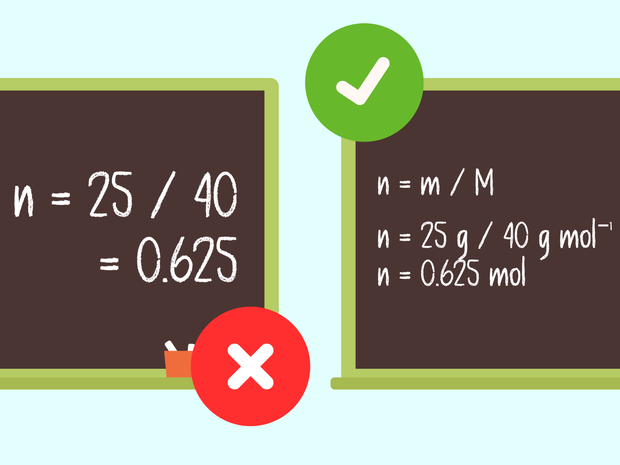
I won’t mince my words. Calculation questions should be your safest marks in A-level Chemistry. They show up in every paper, across all exam boards (AQA, Edexcel, OCR), and they follow predictable patterns. And yet… they’re where students quietly leak marks.
Not because they don’t understand the chemistry, but because they:
- Drop units
- Round incorrectly
- Skip steps
- Panic and guess
In other words, they lose marks on execution, not knowledge.
The good news? That makes this one of the easiest areas to fix, so consider this A-level Chemistry study guide your vaccine against sneezing away precious marks.
And if you’re using tools like Brainscape’s A-level Chemistry flashcards (see below for the board version that applies to you) alongside practice exam papers, you can turn calculations into one of your strongest scoring areas surprisingly quickly!
- AQA A-Level Chemistry flashcards
- OCR A-Level Chemistry flashcards
- Edexcel A-Level Chemistry flashcards
- OCR B / MEI A-Level Chemistry flashcards
- WJEC / Eduqas A-Level Chemistry flashcards
Let’s dive in.
What Are A-Level Chemistry Examiners Actually Looking For?
Most A-level Chemistry calculation questions are marked using a method mark system.
That means:
- You get marks for your working, not just the final answer
- Even if your final number is wrong, you can still pick up marks
Showing your working allows the examiners to see how you think, which means they can give you credit for following the right steps, even if you make a boo-boo at some point.
To maximise marks, always structure your answer like this:
Formula → Substitution → Calculate step-by-step → Answer (with units)
For example:
- Write the formula
- Substitute values (with units if possible)
- Calculate step-by-step
- And then present your final answer clearly
- Time permitting: come back and double-check your work!
This structure does two things:
- It makes your thinking visible to the examiner
- It protects you: if something goes wrong later, you’ve still banked marks
How Should You Structure Every Calculation Answer in A-Level Chemistry?
If you only take one thing from this article, let it be this:
Never jump straight to the answer, even if you can do the math in your head.
Instead, follow the structure we provided above: Formula → Substitution → Calculate step-by-step → Answer (with units)
Remember, skipping steps is the fastest way to:
- Lose method marks
- Make avoidable mistakes
- End up with an answer you can’t trace back
This is especially important in multi-step problems (common in Paper 2 and synoptic-style questions), where one small slip can snowball.
A-Level Chemistry: How Do You Avoid Unit Conversion Mistakes?
Unit errors are one of the biggest “silent killers” of marks.
You might do everything else perfectly… and still lose marks because your units are off.
The Most Common Conversions
You should instantly recognise and convert:
- cm³ → dm³ (divide by 1000)
- kPa → Pa (multiply by 1000)
- g → kg (divide by 1000)
- Temperature → Kelvin (°C + 273)
A classic example is using the ideal gas equation:
- Volume must be in dm³ or m³
- Pressure must be in Pa
- Temperature must be in K
Miss one of these, and your final answer will be wrong, even if your method is perfect.
Pro Tip: Before you start calculating, pause and ask: “Are all my units in the correct form for this formula?” This 3-second check can save multiple marks.
When Should You Round Your Answers on an A-Level Chemistry Paper?
Significant figures are another classic trap. The Golden Rule we recommend you follow is to round at the very end. Not during your working.
Rounding too early introduces small errors that grow as you continue calculating.
How Many Significant Figures?
Usually:
- Match to the lowest significant figures in the question. If, for example, one number is 4.2 and another 6.45, you would round to the lowest TWO significant figures.
- If unsure, 3 significant figures is often a safe default.
But always read the question carefully. Some will specify.
How Do You Catch Your Own Mistakes?
High-scoring students don’t just perform blind calculations. They sense-check. Does the answer make sense chemically? Is it within a realistic range? Did I include units?
For example:
- A concentration of 5000 mol dm⁻³ should raise eyebrows
- A negative mass probably means something’s gone wrong
This habit takes seconds but can rescue marks in tight exams.
Why Do Multi-Step Calculations Go Wrong?
Multi-step questions are where students lose the most marks and not necessarily because they’re harder, but because they require organisation.
Common issues:
- Losing track of intermediate values
- Mixing up formulas
- Carrying forward rounding errors
The advice here is to mentally break the problem into clear steps. (You could even label them if needed but be mindful of that eating into your exam time.)
- Step 1: Calculate moles
- Step 2: Use ratio
- Step 3: Find concentration
This keeps your thinking structured and makes it easier for examiners to award method marks.
How Can Flashcards Help You Master Calculations?
This is where a lot of students go wrong in their revision strategy.
They practise questions… but don’t actually learn the patterns behind them.
That’s where tools like Brainscape’s A-Level Chemistry flashcards come in:
- AQA A-Level Chemistry flashcards
- OCR A-Level Chemistry flashcards
- Edexcel A-Level Chemistry flashcards
- OCR B / MEI A-Level Chemistry flashcards
- WJEC / Eduqas A-Level Chemistry flashcards
With these adaptive, digital flashcards, you can train yourself on the foundational content underlying the calculations you’re performing, so that you deeply understand what you’re doing, why, and whether the output looks reasonable or not. You can also ingrain the key formulae, units, unit conversions, and even step-by-step calculation methods.
In other words, instead of relearning these under exam pressure, you’ve already automated them.
And when paired with spaced repetition, you revisit the exact knowledge you’re most likely to forget just before you forget it.
If you’re using Brainscape’s A-level Chemistry flashcards, you’ll also get:
- Structured decks covering calculation-heavy topics
- Built-in repetition to reinforce weak areas
- Free A-level Chemistry practice papers to apply what you’ve learned immediately
It’s a combination that helps bridge the gap between knowing and translating that knowledge into marks.
What Other A-Level Chemistry Resources Can Help You Improve?
If you want to tighten up your exam technique and preparation further, you might also find these useful:
- How to Answer Extended Response Questions in A-Level Chemistry
- Common A-Level Chemistry Mistakes To Avoid
- How to Decode A-Level Chemistry Command Words
- How To Score Full Marks On A-Level Chemistry Practicals
- Brainscape Periodic Table Flashcards
- Free Revision Planner Templates & Exam Countdown Sheets
For other expert-vetted flashcards on dozens of A-level subjects and boards, check out our A-level flashcard library. (Our certified flashcards have little green ticks next to them.)
Final Thoughts: Turn Calculations Into Guaranteed Marks
A-level Chemistry calculation questions reward clear structure, careful working, and attention to detail. In other words, they reward good habits.
So if you:
- Always write formula → substitution → step-by-step calculation → answer
- Check your units before calculating
- Round only at the end
- Show every step clearly
You’ll stop leaking precious marks, which could mean the difference between a borderline grade and a top one!