What is a Significant Q wave
1 box wide, 1/3 height QRS
MI complications, by location
inferior, anterio/septal, RV, posterior
Inferior (RCA): ‘GOOD’ bradycardias– wenckebach AV block (classic), sinus brady (vagal tone)
Anterior/septal (LAD):
- CHF/shock, BAD bradycardias (septum conduction destroyed, open wide complex), not responsive to atropine
- septal wall, papillar muscle, myocardial rupture (leading to tamponade)
RV: (‘inferior MI’s evil twin’) preload dependent, hypotension
Posterior: assoc with RV and inferior
Pt with MI has bradycardia: think what
Think anterior vs inferior MI:
anterior: ‘BAD’ bradycardias, often wide complex, not responsive to atropine. If bradycardia in anterior MI, large amount of myocardium is affected
inferior: ‘GOOD’ bradycardias, often narrow complex, wenckbach or sinus brady (vagal tone), often transient
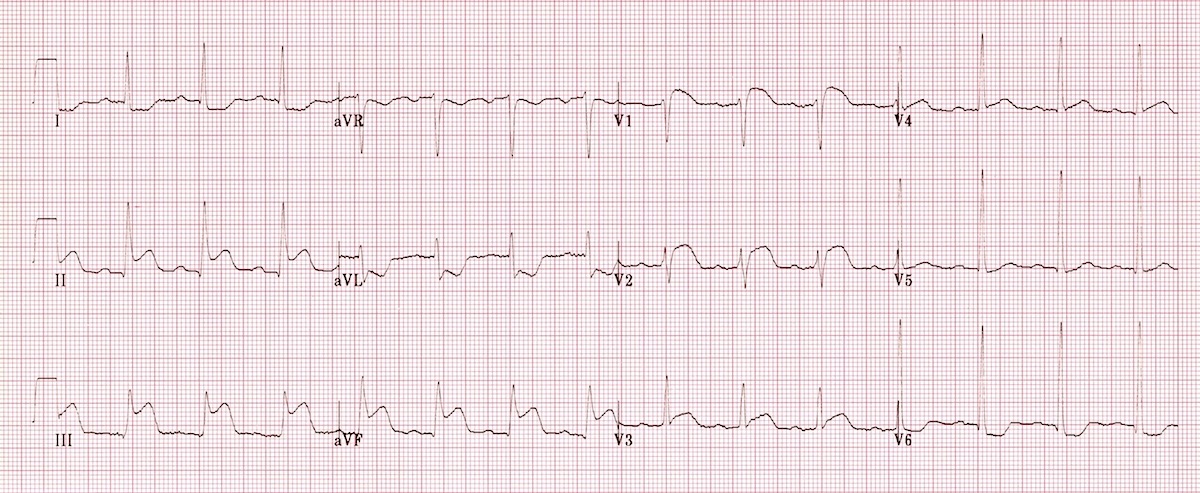
You see inferior MI on EKG
Now, look for what to suspect RV involvement? (3)
What EKG leads are changed in Right side EKG
- STE in III>II
- STE in V1>V2
- STD in V2 alone
V4R, V5R, V6R
STEMI: TPA indications:
- timing of chest pain onset within ?
- if PCI cannot be obtained in ?
PCI timing indication?
time: <12h (same for PCI)
If PCI cannot obtain in 90min
TPA contraindications
-Big 3 head bleed contraindications, what timing (3)
- cerebral hemorrhage–anytime
- tumor/avm/aneurysm –anytime
- 3 months– recent CVA/brain surgery/severe closed head injury (such as skull fx)
You give TPA:
- what to expect on EKG
- What immediately complication to look out for, and how to treat
- accelerated idioventricular rhythm, lasts <1min, this is reperfusing rhythm
- Bleeding, esp ICH
Reverse: give blood and blood products: FFP, platelets, cryo
Pregnant woman with cardiovascular collapse during delivery:
classic story for what?
Mitral stenosis
high resistance in valve leads to atrial dilation, Afib, sudden cardiac death
-listen for the diastolic murmur
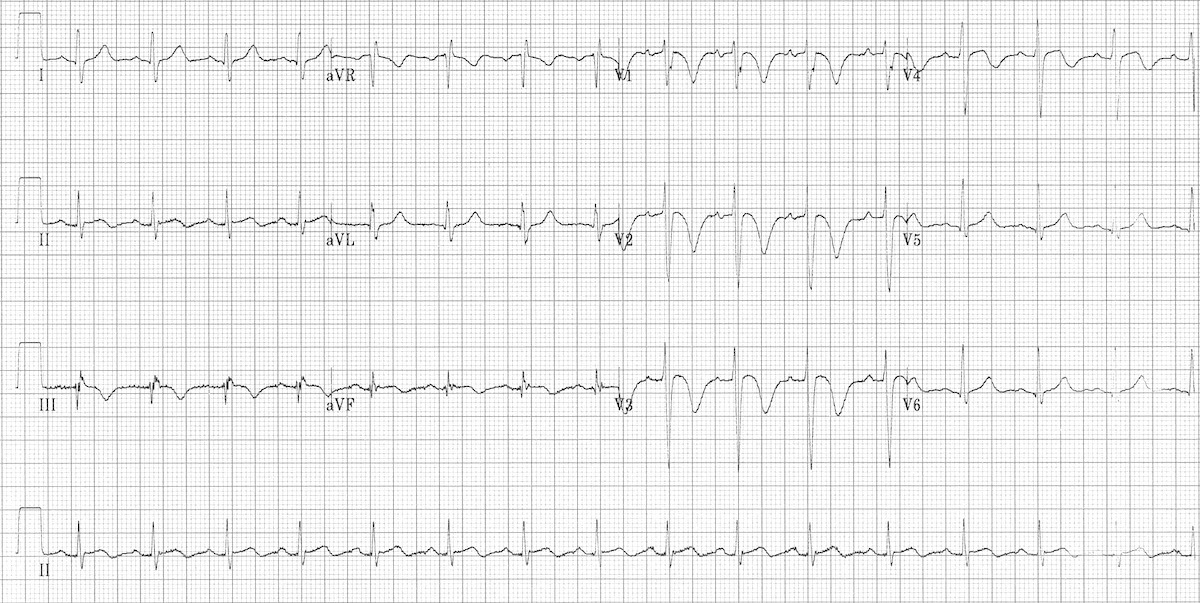
Signs of R heart strain on EKG
TWI in V1-3, S1Q3T3, RBBB, RAD
think PE, COPD, pulm htn
Also look for P Pulmonale–if you see this, then more likely chronic as opposed to acute PE
EKG image: acute PE
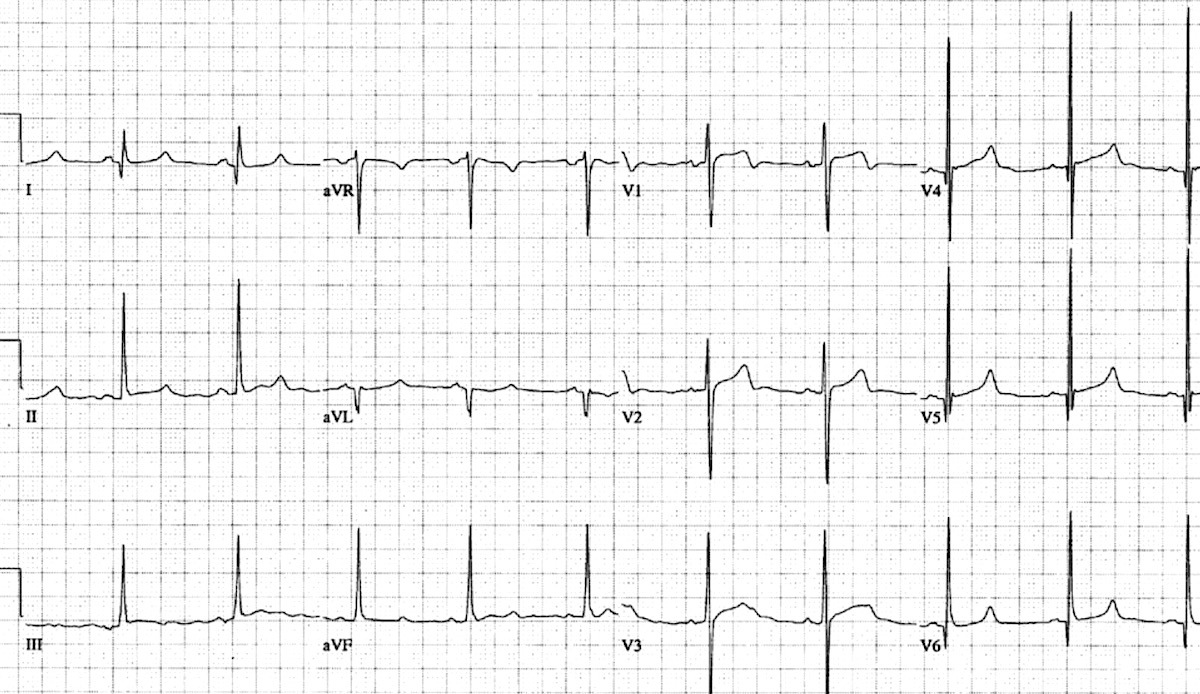
HOCM EKG findings:
Look for 2 main things:
- dagger Qs (big septum)–check ALL LEADS, may not be present in all
- LVH
image: this pt died in VF arrest after being discharged from ED
Pericarditis on EKG:
What did Amal Mattu say to be careful
Do not rely on PR depression! Not specific for pericarditis
- If you see any ST depressions on EKG on chest pain pt (not including LBBB etc), it is NOT pericarditis. These are reciprocal changes of the STEMI
- You can still get localized pericarditis from STEMI
AAA: cm to know
general rule: 3cm is bad, 5.5 cm needs surgery
What is:
phlegmasia cerulean dolens,
phlegmasia alba dolens
phlegmasia cerulean dolens: “edema, blue, painful”
phlegmasia alba dolens: edema, white, painful
Both are acute DVT. White leg means there is deep vein occlusion but superficial veins still draing. Blue leg happens when superficial veins also occluded
“milk leg” (white painful edema) described in pregnant/postpartum women, people actually thought this was caused by milk going to the legs
Afib RVR med doses:
Dilt (bolus and gtt and PO)
Metoprolol (IV and PO)
Verapamil
Dig
Amio
Dilt: 0.25 mg/kg (10-20 mg over 2min, give 10mg if small/elderly person). If tolerated but inadequate after 15min, given 0.35mg/kg (15-25).
if respond: gtt: 5-15mg/h or PO 60mg qid
Metop: 5mg (over 2min) x3 doses
PO load 25-50mg
Verapamil: (similar to metop)
2.5-10 mg x1, then repeat 5-10mg after 15-30min
Dig: 0.25-1mg IV q2h
Amio: 150mg IV over 10min, then 1mg/min x6h, then 0.5mg/min x18h
HCOM
what movements increase or decrease murmur
valsalva, leg squat, clenching fists
valsalva increases
leg squats/clench fist decraeses
decreasing volume of blood increases murmur.
so, valsalva increases.
leg squats and clenching fists increased peripheral vascular resistance, meaning more blood in heart, so these decrease


