How is the structure of cellulose suited to its function?
- β-Glucose molecules can form long straight chains
- Parallel chains of cellulose form hydrogen bond ‘cross links’ which add strength
- Cellulose is arranged into microfibrils and then fibres, which add yet more strength
Which type of bond forms between adjacent α-glucose molecules in glycogen?
α 1-4 glycosidic bonds
Unbranched starch (amylose) coils into a…
compact helix structure
What test is described below:
Place 2 cm3 of the sample being tested into a test tube
Add 2 drops of iodine solution
A blue black colouration indicates a positive result
The test for starch
Identify the polysaccharide
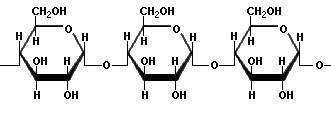
Starch (amylose)
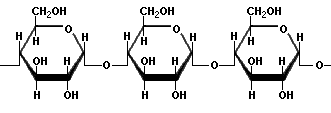
Identify the polysaccharide
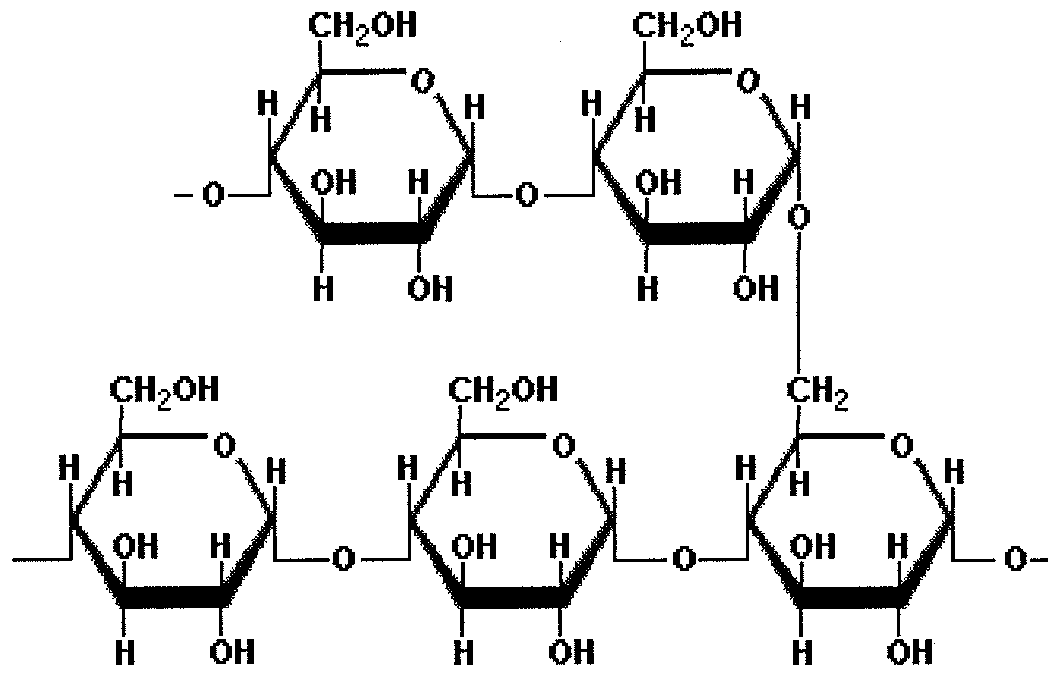
Starch (amylopectin)
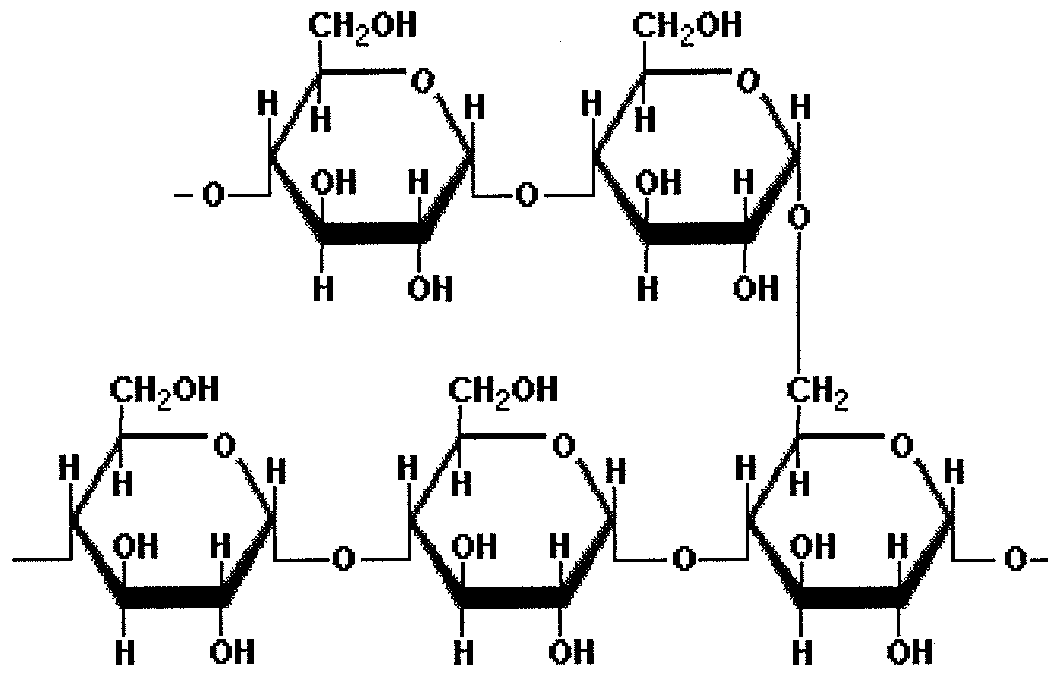
What form does starch take within plant cells?
Starch grains
Which type of bond forms between branching α-glucose molecules in glycogen?
α 1-6 glycosidic bonds
Which type of bond forms between unbranched starch (amylose) molecules?
α 1-4 glycosidic bonds
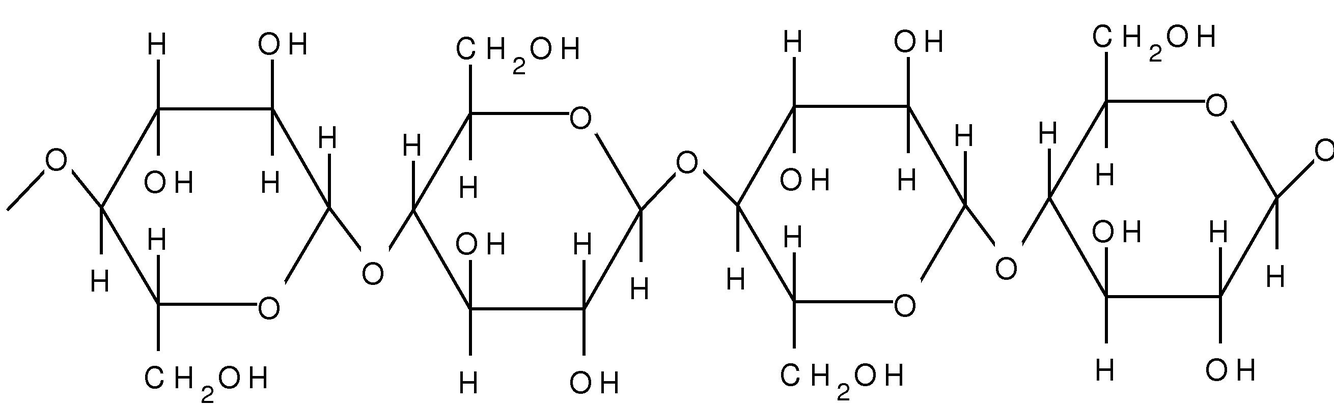
Identify the polysaccharide
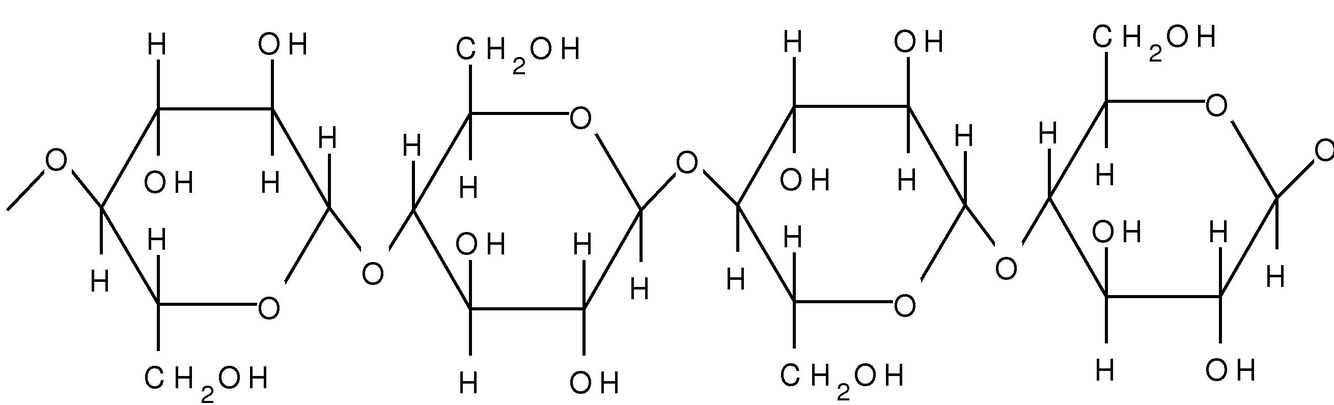
Cellulose
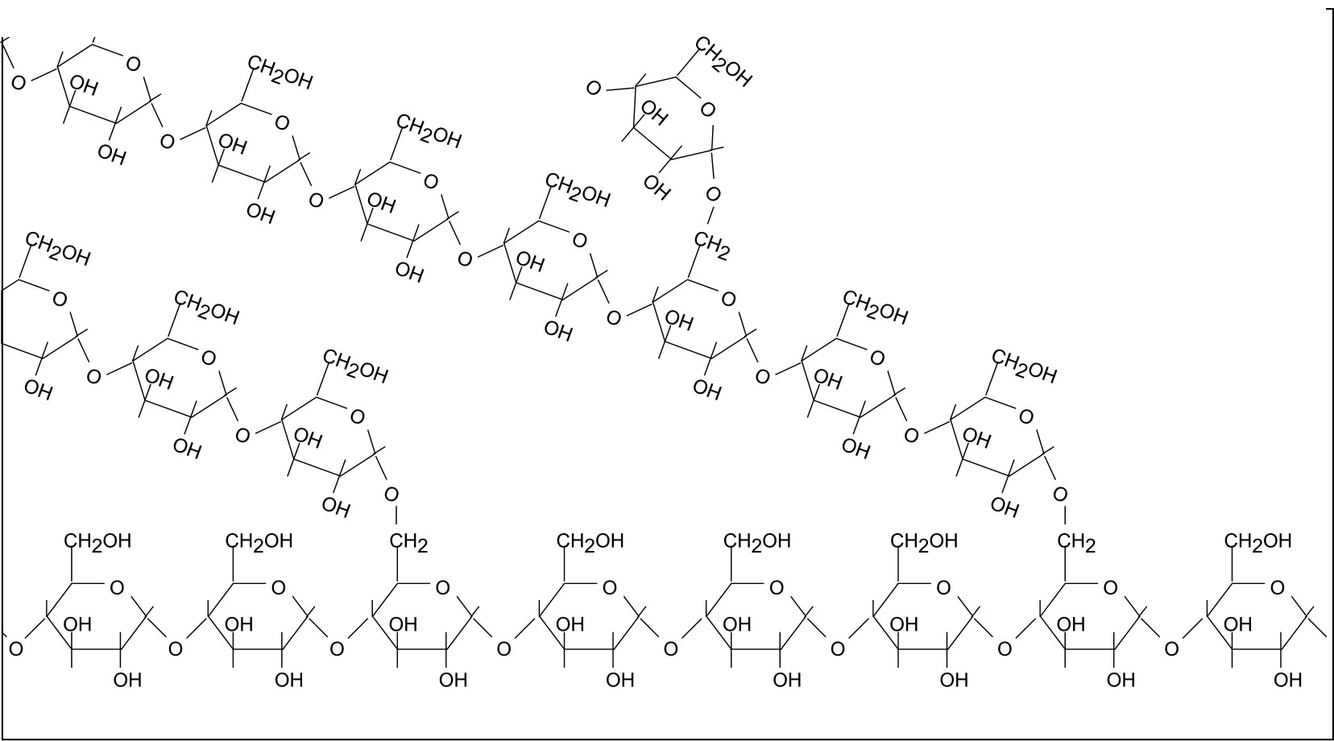
How is glycogen different to starch?
Glycogen has many more branches
Identify the polysaccharide
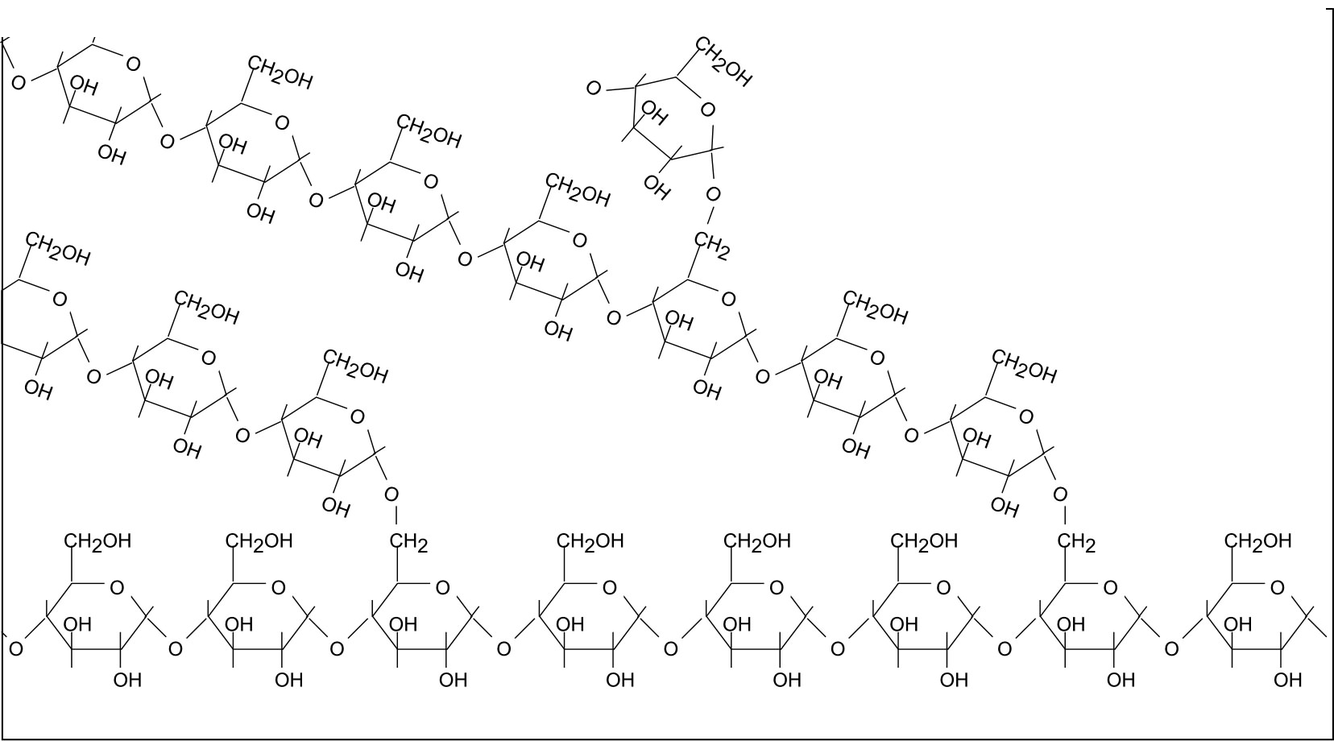
Glycogen (more branches than starch)
Which type of organism contains starch?
Plants
What form does glycogen take in cells?
granules within muscle and liver cells
What type of reaction occurs when monosaccharides join?
Condensation reaction
How would you test for starch?
- Place 2 cm3 of the sample being tested into a test tube
- Add 2 drops of iodine solution
- A blue black colouration indicates a positive result
Cellulose microfibrils are grouped are arranged in parallel groups called…
fibres
Which monosaccharide is cellulose made from?
β-Glucose
How does the structure of glycogen make it suited to its function?
- It is insoluble so does not cause water to move into the cell via osmosis
- It is large so does not diffuse out of animal cells
- It is compact
- It forms α-Glucose when hydrolysed for respiration
- Many more branches than starch allow α-Glucose to be released faster from glycogen
What is the function of glycogen?
an energy store for animal and bacterial cells
The coiled helix structure of unbranched starch (amylose) is held in place by…
hydrogen bonds
What is the function of cellulose?
- Cellulose is a major component of plant cell walls and provides rigidity to plant cells
- Stops plant cells bursting when water enters
How are parallel chains of cellulose held together?
hydrogen bonds
What structure does cellulose take?
Long unbranched chains that run parallel to each other

-
3.1.2.1 Introduction to Biological Molecules39
-
3.1.2.2 Carbohydrates - Monosaccharides to Polysaccharides40
-
3.1.2.3 Reducing and Non-Reducing Sugar Tests20
-
3.1.2.4 Polysaccharides structure and function and the starch test35
-
3.1.3 Lipids - Triglycerides, Phospholipids and the Emulsion Test40
-
3.1.4.1 Proteins - structure, function and biuret test47
-
3.1.4.2 Proteins - Enzyme Action25
-
3.1.4.3 Proteins - Factors Affecting Enzyme Action20
-
3.1.5.1 Structure of DNA and RNA43
-
3.1.5.2 DNA Replication18
-
3.1.6 Energy and ATP30
-
3.2.1.1 Eukaryotic Cell Structure87
-
3.2.1.2 Organelle Structure and Function39
-
3.1.7 and 8 water and other ions7
-
3.2.1.3 - Specialised Cells43
-
3.2.1.4 - Structure of Prokaryotic Cells48
-
3.2.1.5 - Light and Electron Microscopes32
-
3.2.1.6 - Cell Calculations and AIM Triangle18
-
3.2.2 - Mitosis and Cell Cycle37
-
3.2.3.1 - Cell Membrane Structure and Function30
-
3.2.3.2 - Simple and Facilitated Diffusion23
-
3.2.3.3 - Osmosis17
-
3.2.3.4 - Active Transport15
-
3.2.4.1 - Cell Recognition22
-
3.2.4.2 - Phagocytosis9
-
3.2.4.3 - Cell Mediated Immunity12
-
3.2.4.4 - Humoral Immunity10
-
3.2.4.5 - Monoclonal Antibodies21
-
3.2.4.6 - Vaccination15
-
3.2.4.7 - HIV21
-
3.3.1 Surface area to volume ratio22
-
3.3.2 Gas Exchange36
-
3.3.3.1 Proteins - Enzymes and Digestion55
-
3.3.3.2 Absorption of the Products of Digestion42
-
3.3.4.1 Mass Transport in animals33
-
3.3.4.2 Mass Transport in plants23
-
3.4.1.1 DNA, genes and chromosomes25
-
3.4.2 DNA and protein synthesis36
-
3.4.3 Genetic Diversity - mutations and meiosis27
-
3.4.4 Genetic diversity and adaptation28
-
3.4.5 Species and taxonomy34
-
3.4.6 Biodiversity within a community19
-
3.4.7 Investigating diversity29
-
Longer Processes22
-
Exchange of Substances126


