How do you initially assess airway?
Is the patient able to speak to you comfortably?
- Yes - airway is patent
- No - assess airway further
What signs on general inspection suggest airway compromise? (6)
- difficulty breathing, distressed, choking
- inability to talk normally
- shortness of breath
- noisy breathing (e.g. stridor, wheeze, gurgling)
- see-saw respiratory pattern
- use of accessory muscles
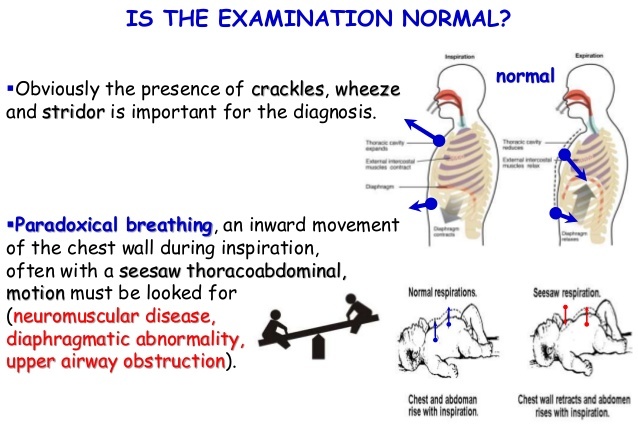
What is meant by ‘see saw’ or ‘rocking-horse’ pattern of chest and abdominal movement?
This is a sign of diaphragmatic or respiratory muscle fatigue and suggests (complete) airway obstruction. The chest is drawn in and the abdomen expands on inspiration, and the opposite occurs on expiration.
What are the causes of airway obstruction?
- CNS depression
- Blood, Vomitus, Foreign body (tooth, food)
- Direct trauma to face or throat
- Upper airway swelling (infection, anaphylaxis) - Epiglottitis, Pharyngeal swelling
- Neck space infections - Retropharyngeal abscess, Parapharyngeal abscess, Ludwig’s angina
- Laryngospasm
- Blocked tracheostomy or laryngectomy
Name 5 causes of central nervous system depression.
- Head injury
- Intracerebral disease
- Hypercapnia
- The depressant effect of metabolic disorders e.g. hypoglycaemia in diabetic patients
- Drugs - alcohol, opioids, general anaesthetics
How does central nervous system depression result in airway compromise?
Loss of airway patency and protective reflexes
What are the types of airway obstruction?
- Complete airway obstruction - rapidly causes cardiac arrest
- Partial airway obstruction - often precedes complete airway obstruction
If you suspect someone has airway obstruction and can hear stridor, does this suggest complete or partial airway obstruction?
Partial. Complete airway obstruction is silent and there is no air movement at the patient’s mouth.
Name 5 consequences of partial airway obstruction.
- Cerebral/pulmonary oedema
- Exhaustion
- Secondary apnoea
- Hypoxic brain injury
- Eventually cardiac arrest
Which condition is likely to predispose patients to a greater risk of airway obstruction when they are given sedative drugs?
Obstructive sleep apnoea - more common in obese patients
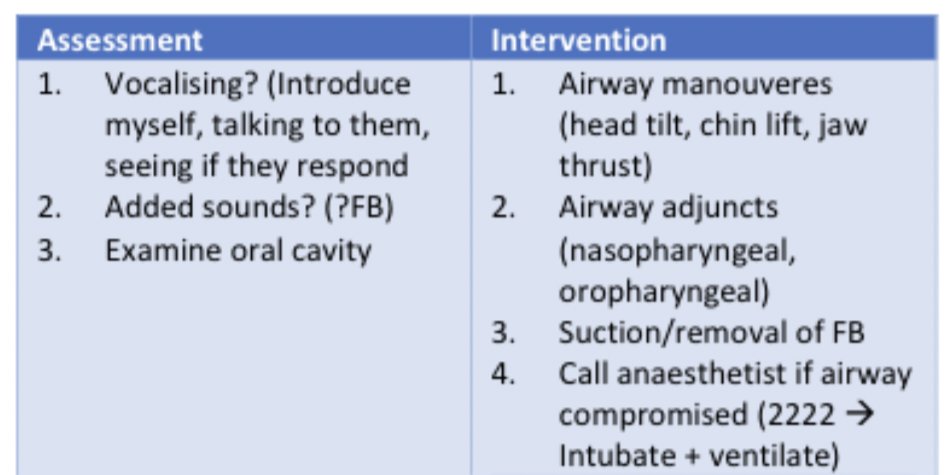
Describe how you would approach the A part of the A-E assessment
‘I would assess the patency of the patient’s airway by checking whether they were
- vocalising
- listening for added sounds (such as stridor which may indicate a foreign body)
- examine the oral cavity.
If the airway was not patent I would:
- consider airway manoeuvres such as a head tilt and chin lift
- if they were still not vocalising I would call for senior help and consider airway adjuncts such as a nasopharyngeal or oropharyngeal tube
- If their airway appears compromised or their GCS is <8 “less than 8, intubate”/not responding to voice I would like to request anaesthetic input to restore patency.’
A patient’s GCS is 10. GCS was 15 four hours ago. What are your next steps in the A-E management?
(Assume actual/impending airway obstruction in anyone with a depressed level of consciousness. Safeguard the airway and prevent further complications like aspiration of gastric content).
- Head tilt/chin lift or jaw thrust
- Insertion of oropharyngeal airway or nasal airway
- Turn patient on their side
- CALL FOR HELP IF YOUR INTERVENTIONS FAIL - may require tracheal intubation by airway expert, consider insertion of nasogastric tube to empty the stomach
A patient’s airway is compromised. You can see blood/vomitus in their mouth. What are your next steps?
- Head tilt, chin lift
- Insertion of oropharyngeal airway or nasal airway
- Use suction to remove the blood and gastric contents from the airway
- Unless contraindicated, turn the patient on their side
- Give oxygen as soon as possible to achieve sats 94-98%
What would you hear with complete airway obstruction?
nothing - complete obstruction is silent, with no air movement at the patient’s mouth.
If the airway is compromised, what step-wise approach would you use in managing the airway?
- airway opening (e.g. head tilt, chin lift, jaw thrust)
- simple adjuncts (e.g. guedel, nasopharyngeal airway)
- call for expert help - advanced techniques (e.g. supraglottic airway or endotracheal tube)
- give high flow oxygen via a non-rebreather as soon as possible
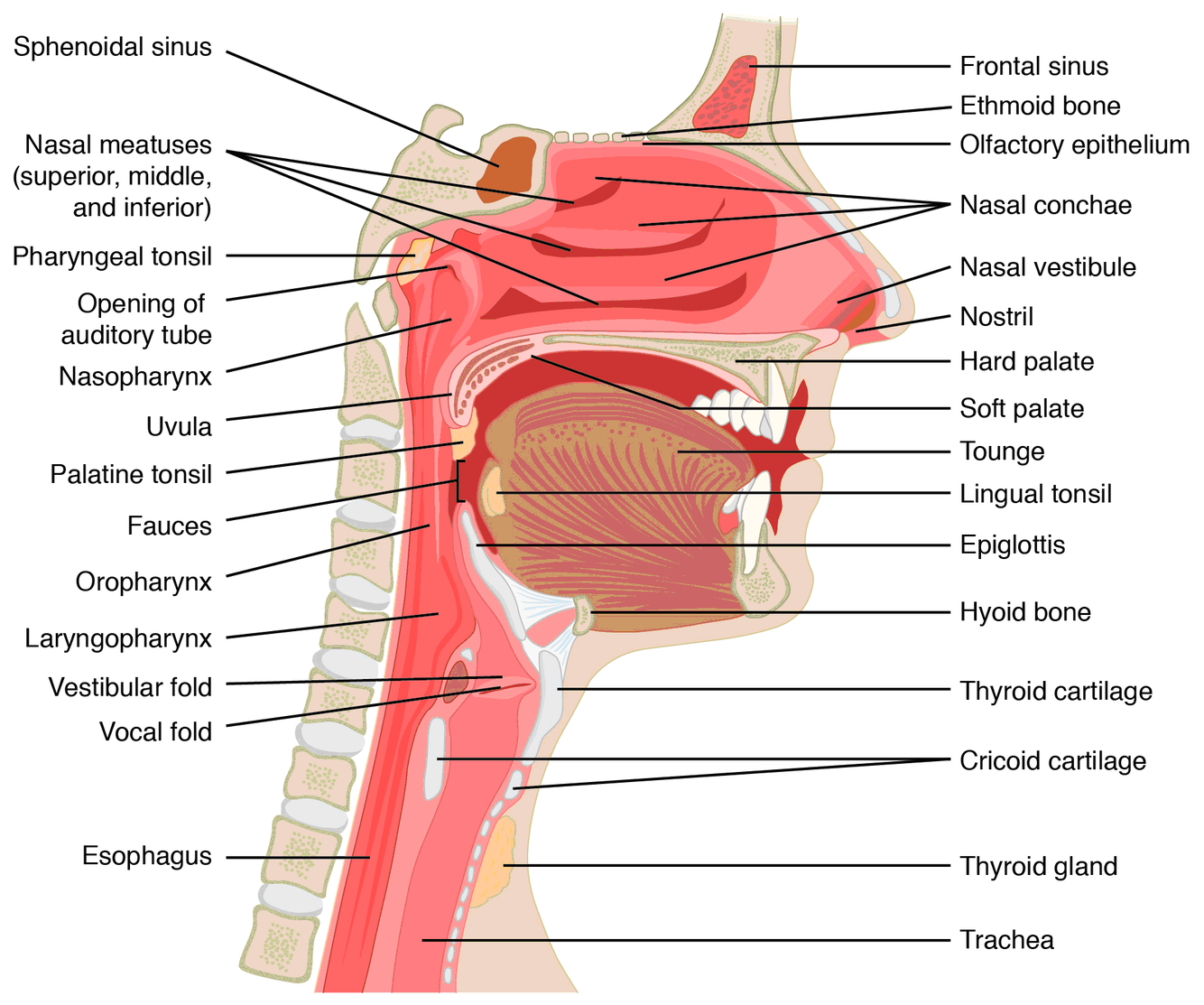
Describe how the movement of air is different to the movement of food when it enters the body.
air
1) nasal cavity –> nasopharynx
2) oral cavity –> oropharynx
3) laryngopharynx
4) larynx
5) trachea
food
1) oral cavity –> oropharynx
2) laryngopharynx
3) oesophagus
What is the main function of the larynx?
airway protection - protects the airway from food when swallowing
other functions:
ventilation, cough, phonation
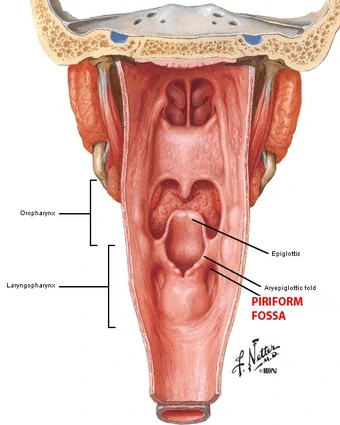
What structures are found either side of the aryepilglottic folds? What is the importance of this structure?
piriform fossae - food can gather here and be directed posteriorly to the oropharynx
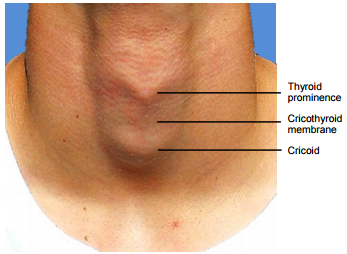
When a patient cannot be intubated and ventilated e.g. due to swelling of the vocal cords, how can access into the airway be obtained?
cricothyroidotomy - emergency access via the cricothyroid membrane (between thyroid cartilage and cricoid cartilage)
What happens to the larynx during swallowing?
- Contraction of the aryepiglottic muscles acts to narrow the laryngeal inlet and pull down the epiglottis
- Assisted by elevation of pharynx by pharyngeal muscles and suprahyoi muscles
- Closure of glottis (vocal cords)
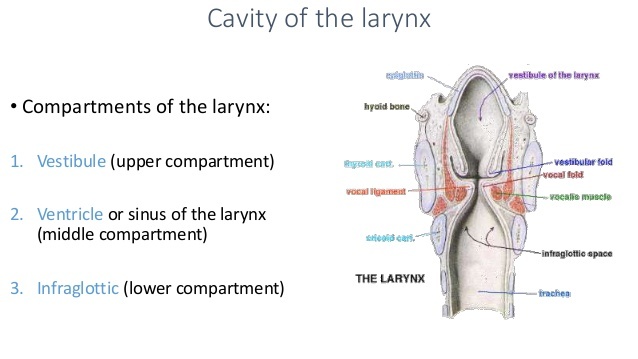
What are the 3 compartments of the larynx?
- supraglottic compartment (vestibule)
- glottis compartment (ventricle)
- subglottic/infraglottic compartment
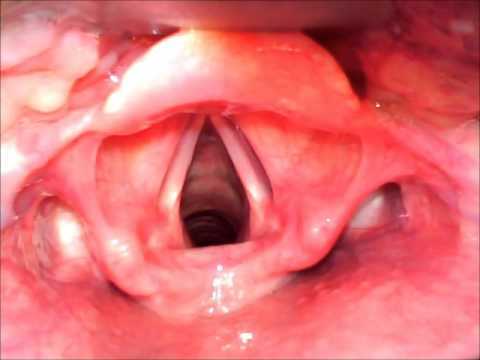
What tool can be used to view the vocal cords when intubating?
laryngoscope
Where in the airway are most foreign bodies likely to be lodged?
- 20% in larynx/trachea (more dangerous as it can cause complete airway obstruction)
- 80% in bronchi - right bronchus more often affected than the left main bronchus because of its more vertical position
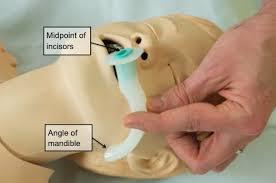
How would you measure an oropharyngeal airway?
angle of mandible to midpoint of incisors