What is allergic Rhinitis
- systemic IgE antibody mediated, inflammatory response disease
- characterized by inflammation insida nose following allergen inhalation
common allergens
- grass/tree pollen, mould, must mites/insects, animal dander
*body responds with a systemic IgT-Mediated Inflammatroy Disease Secondary to Allergen exposure
how common is AR
who is it most common in
affects 10-40% common in chidlren and adults but prevalence is highest in school aged chilren and more common is history of asthma and atopic dermatitis
- assocaited with genetic predisposition; if 1 parant is affected, children have 30% change of devleoping it -> if both parents affected children have 50% chance
what are the phases of the antigen-antibody mediated reaction
sensitization
immediate response
late phase reaction
describe sensitizaiton
*first contact with allergen- allergen enters the nose and sensitizes nnucosal mast cells
- occurs via T-cell release of cytokines -> promote IgE production
- IgE binds to mast cells and absophils
describe the immediate response phase of allergy
- occurs within minutes of re exposure to allergen
- lasts 30-90min
- allergen is bound to IgE and sensitized mast cells -> release of preformed mediators like histamine and newly generated oens leukotrienes, prostaglandin D2 and kinins
- mediators attract, recruit and activate other inflammatory mediations (esoinophils, neutrophils and T lymphocytes)
- this then initiates late phase response
describe the late reaction to an allergen
- associated w/ chronic inflammation
- characterized by migreation of inflammatory cells, eosinophils, monocytes, macrophages and basophils
- symptoms begin 4-8h after allergen exposure
- peak 12-24 hours
- results in recurrent symptoms (often nasal congestion) that often persist
what are the signs and symptoms of allergic rhinitis
- signs of nasal obstruction (congestion, sneezing, nasal itching and rhinorrhea)
- post nasal drainage, irritability and fatigue
- some get allergic conjunctivitis, bilateral ocular itching, redness, tearing and/or burning
- can also get facial pressure, itchy trhaot/palate, and ear fullness/popping
symptoms during senzitiziton phase
patients are asymptomatic
late phase usually has wht symptom
nasal congestion
physial sigsn of allergic rhinitis
face
- “allergic facies” higher arched palate, open mouth due to chronic mouth breathing, dental malocclusion
- frequent grimacing and twitching of face and especiall nose
*young children typically dont blow nose, so may freq rub nose, snort, sniff, cough etc
physical signs of allergic rhinitis
eyes
- dennie morgan lines: accentuated lines or folds below to lwoer eyelids. can get mroe noticable with age
- allergic conjunctivites: ocular itching, burning tearing and conjunctival injection
- allergic shiners: infraorbital edema and darkening due to subcutaneous venodilation
*more severe the disease the more pronounced the discolouration udner the eyes
physical signs fo allergic rhinitis
Nose
- allergic salute
- transverse nasal crease caused by repeating rubbing and wiping with of nose
0 nasal mucosal swelling, bleeding
- bluish or pale thin secretions
- nasal polyps or toher structural abnormalities (eg., septal deviation, nasal ulcerations) may be assessed via internal endoscopy
physical sings of allergic Rhinitis
Posterior Oropharynx
aka area of throat that is at back of mouth
- Postnasal drip- if nasal pasaged are obstructed, rhinorrhea may be visible driping down posterior pharynx
- lymphoid hyperplasia: hyperplastic lymphoid tissues lines posterior pharynx which resembles cobblestones
- tonsilar hypertrophy: persistenly enlarged tonsils
allergic rhinitis physical signs
sinuses
maxillary tooerh sensitivity
palpitation of sniuses for sensitivity
allergic rihinits phyxical signs
chest and skin
wheezing (sign of concurrent asthma
atopic disease
what cognitive and psychiatric issues are assocaited with AR
children
attention deficit hyperactivity disorder (ADHD)
lower exam scores during peak pollen seasons
poor concentration
impaired athletic performance
low self-esteem
what cognitive and psychiatric issues are assocaited with AR
adults
Anxiety
Depression
Reduced academic performance
Reduced work productivity (lower than that of patients with asthma)
Impaired sexual performance
Lower quality of life scores
how is allergic rhinitis classified
intermittent or persistent
and
mild or moderate/severe
inetmittent vs persistent AR
intermittent: <4days/week or <4 consecutive weeks
Persistent: >4 days/week or > 4 consecutive weeks
mild vs molderate/severe AR
- Mild
- normal sleep
- symp not bothersome
- no impairemnt of daily activities
- normal work/school
- Moderate/severe
- Abnormal sleeo OR
- bothersome symptoms OR
- impairment of daily activities OR
- Problems at work/school
how are patients symptoms quantified
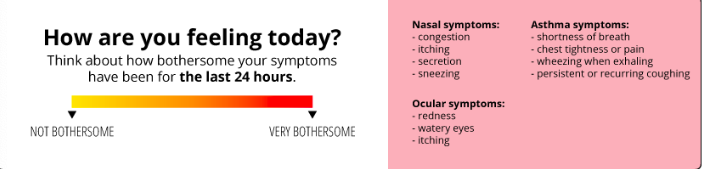
- use a visual analogue scale VAS
- point wehre on line you feel about a partiuclar characteristic
“Over the past 24 hours, how troublesome are your allergy symptoms on a scale from 0 to 10, with 0 is not troublesome at all and 10 is very troublesome”
- if less than 2 patient is said to ahve well controlled AR
2-5 partily controlled
5 indicated uncontrolled
Risk factors of AR
Male gender
Birth during pollen season
Firstborn status
Being overweight
Maternal exposure to cigarette smoke in the baby’s first year of life
Exposure to indoor allergens, such as dust mite allergen
Serum IgE > 100 IU/mL before age 6
Presence of allergen-specific IgE
Scholar for gathering info on AR
- Symptoms
- main & associated symptoms: nasal pruritus, congestion, rhinorrhea, sneezing, eye involvement
- Characteristics
- characteristics of allergic symptoms: frequency, severity: VAS score, QoL impact
- History
- have they had AR before
- Onset
- timing/patern/seasonality
- not uncommon for patietns to attribute peristent nasla symp as “constant col”
- Location
- symptoms affecting eyes, nose or palate
- aggravating factors
- what triggers it
- Remitting
- therapies they trie,d regimines

-
Top 50 Drugs50
-
Acute cough32
-
Upper respiratory tract symptoms and conditions30
-
Viral Rhinitis36
-
Viral Rhinitis pt 216
-
NHP for treatment of URI22
-
COVID-1927
-
Allergic Rhinitis: condition overview25
-
Allergic Rhinitis: patient assessment41
-
Allergic rhinitis: product selection, implement/follow uo7
-
URI terms to know19
-
Insect Bites & Stings26
-
Hives (urticaria)20
-
Pinworms21
-
Dermatitis40
-
Dermatitis Pt 230
-
Derm Drugs10
-
Diaper Dematitis23
-
Dandrugg and seborrheic dermatitis48
-
Acne38
-
Acne pt 214
-
Fungal skin infections30
-
Lice0
-
Scabies0
-
Lyme0
-
Impetigo0
-
W10. Consitpation34
-
W10. Diarrhea and Dehydration32
-
W.10 Constipation pt 215
-
W10. Hemorrhoids32


