To collect cerebrospinal fluid (CSF) for analysis
INDICATIONS
- Animals with progressive brain or spinal cord disease
- Animals with fever and neck pain
- Any animal before injection of radiographic contrast media into the spinal subarachnoid space for myelography
CONTRAINDICATIONS AND CONCERNS
- CSF collection requires general anesthesia, so is contraindicated in animals that present a serious anesthetic risk.
- CSF collection should be avoided in animals with severe coagulopathy.
- When increased intracranial pressure is suspected, measures should be taken to decrease intracranial pressure before anesthesia for CSF collection in order to decrease the risk of brain herniation.
- Care must be taken to advance the needle slowly during cisternal CSF collection to decrease the risk of needle puncture of the parenchyma because neurologic damage at this site can be fatal.
SPECIAL ANATOMY
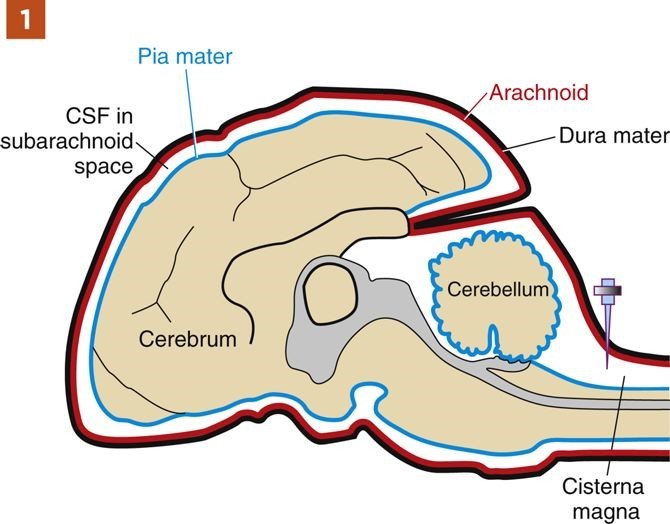
- Cerebrospinal fluid is a clear, colorless fluid contained within the ventricular system of the brain and the subarachnoid spaces of the brain and spinal cord.
Cerebrospinal fluid (CSF) is contained within the ventricular system of the brain and the subarachnoid spaces of the brain and spinal cord.
SPECIAL ANATOMY
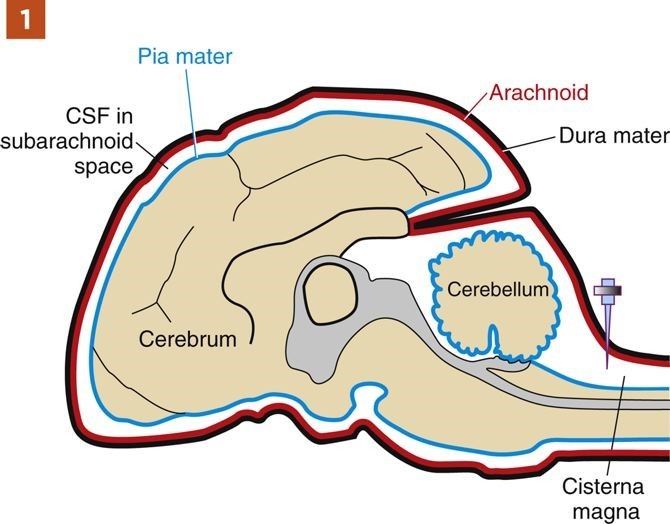
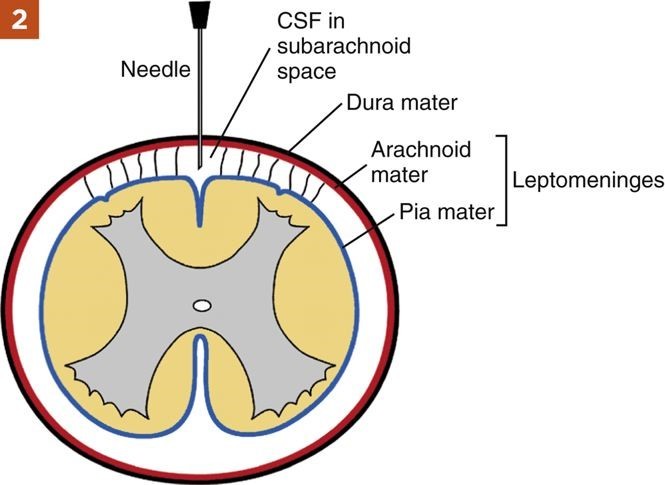
- The brain and spinal cord are surrounded by three layers of meninges. The thin inner layer, the pia mater, is intimately attached** to the underlying nervous system tissues. The subarachnoid space is the CSF-filled space **between the pia mater and the next layer of the meninges, the arachnoid mater. The arachnoid mater is attached to the thick outer membrane—the dura mater, which is attached to the skull and to the bones of the vertebral canal.
Signs Suggesting Increased Intracranial Pressure
Depressed mentation or abnormal behavior
Constricted, dilated or unresponsive pupils
Bradycardia
Increased arterial blood pressure
Altered breathing pattern
Treatment Steps to Decrease Intracranial Pressure
Oxygenate
Administer 20% mannitol: 1 g/kg IV over 15 minutes
Administer furosemide: 1 mg/kg IV
Anesthesia of Patients Suspected to Have Increased Intracranial Pressure
Rapid induction: intubate and ventilate to maintain Paco2 30 to 40 mm Hg
Diagram showing the relationship between the meninges and the CSF surrounding the spinal cord.
CHOOSING THE SITE
In dogs and cats the most reliable source of uncontaminated CSF for analysis is the cerebellomedullary cistern (cisterna magna). Although it is often stated that cisternal CSF best reflects intracranial disease and lumbar CSF reflects spinal cord disease, diagnostically samples from the two sites are not very different.
Collection of CSF from the lumbar site is more difficult, and blood contamination is more frequent.
EQUIPMENT
20- or 22-gauge, 1½- or 3-inch (3.75 to 7.5 cm) spinal needle with stylet
- Sterile gloves
- EDTA (ethylenediaminetetraacetic acid) and red-top tube for collection of fluid
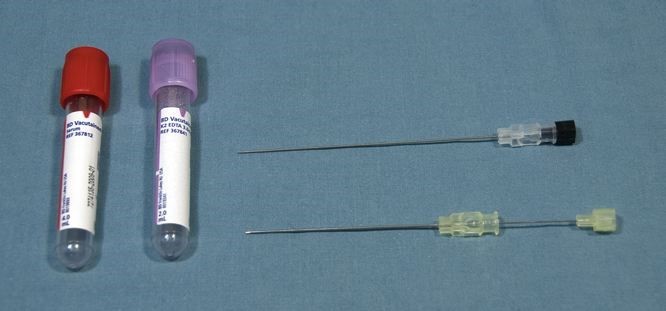
TECHNIQUE: CISTERNAL CSF COLLECTION
- The animal should be placed under general anesthesia with a noncollapsing endotracheal tube in place to avoid occluding airflow during positioning for the procedure.
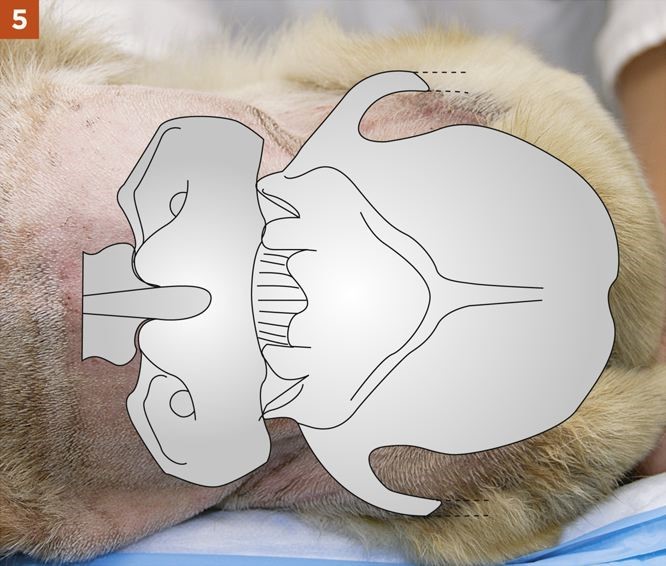
- Shave a rectangular area on the back of the neck centered over the needle insertion site. The region shaved should extend from 2 cm rostral to the external occipital protuberance to 2 cm caudal to the cranial aspect of the wings of the atlas. Laterally the clipped region should include the most lateral aspects of the wings of the atlas. The entire clipped region should be prepared as for surgery.
- The person holding the animal’s head s_hould stand across the table from the person collecting the sample_. If the clinician is right-handed, the animal should be placed in right lateral recumbency with its cervical spine at the edge of the table. The neck should be flexed so that the median axis of the head is perpendicular to the spine.** The patient’s **nose should be elevated slightly so that its midline is parallel to the surface of the table.
- The person performing the CSF tap should kneel on the floor or sit in a chair so that the point of needle insertion is at eye level.
- Wearing sterile gloves, the person performing the CSF collection should palpate the site and be certain that the positioning is correct and symmetric**. Sometimes padding needs to be inserted u_nderneath the scapula to ensure that a line connecting the most cranial aspect of the left and right wings of the atlas (C1) is perpendicular to the table and to the spine._** Taking the time to establish proper positioning is an important step in successful CSF collection.
Neck position
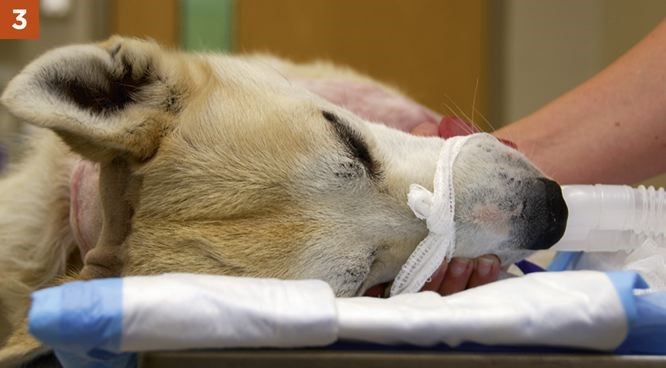
For cisternal CSF collection the neck is flexed so that the median axis of the head is perpendicular to the spine and the patient’s nose is elevated slightly so that its midline is parallel to the surface of the table.
Symmetric line
Positioning is correct and symmetric, with a line connecting the most cranial aspect of the left and right wings of the atlas (C1) perpendicular to the table and to the spine.
Positioning is correct and symmetric, with a line connecting the most cranial aspect of the left and right wings of the atlas (C1) perpendicular to the table and to the spine.
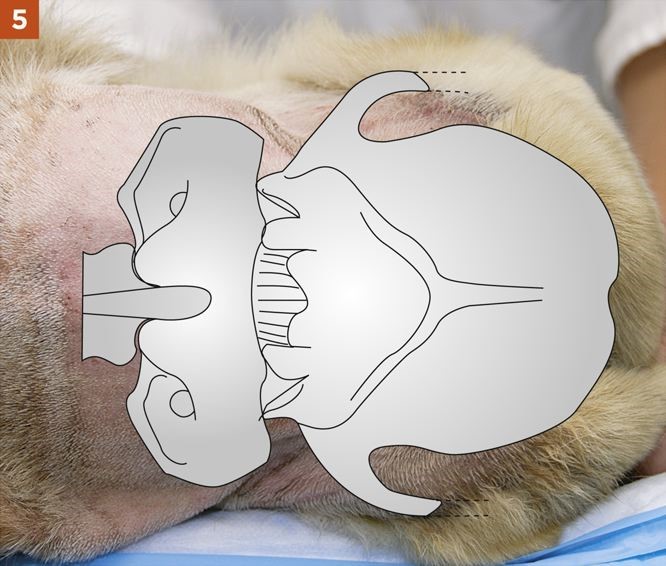
- With the thumb and third finger of the left hand, the clinician should palpate the cranial edges of the wings of the atlas and draw an imaginary line at their most cranial aspect.
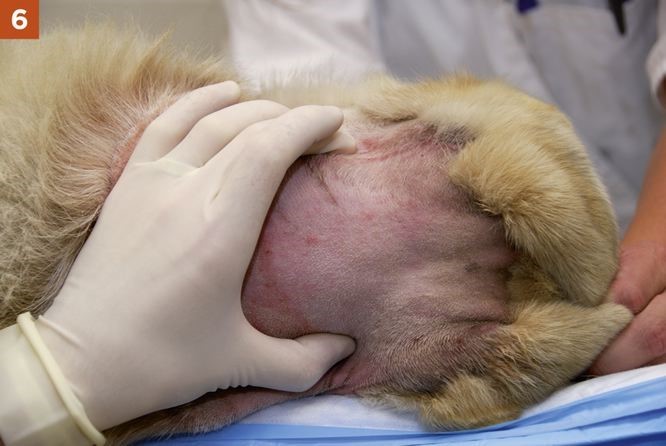
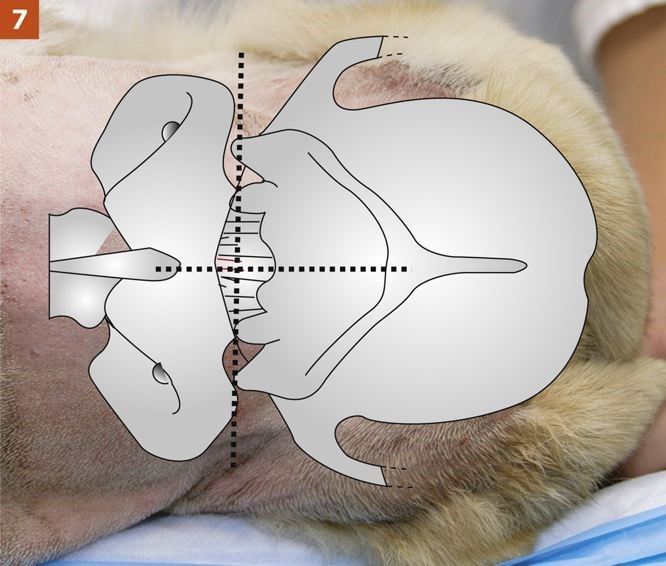
- The examiner can then use the left index finger to palpate the external occipital protuberance and draw a second imaginary line caudally from that site along the dorsal midline. The needle is inserted where the two imaginary lines intersect.
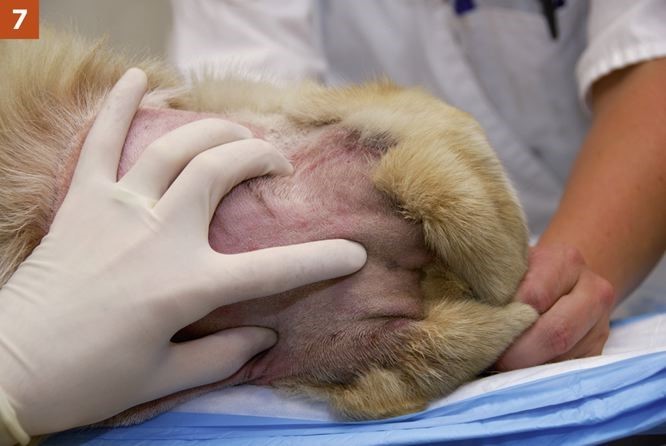
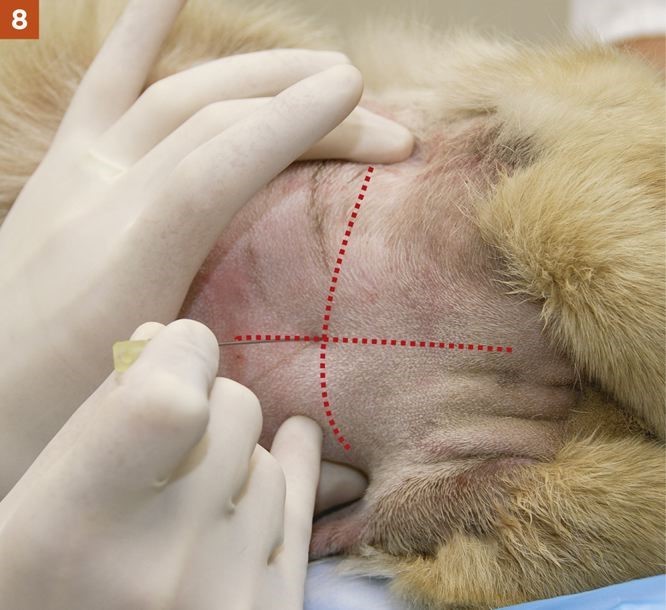
The needle is inserted where an imaginary line connecting the most cranial aspects of the wings of the atlas intersects a line running down midline caudally from the occipital protuberance.
- While the landmarks are palpated with the left hand, the needle is inserted with the right hand. During needle insertion the right hand should be rested on the animal’s head or the table edge for added stability. The spinal needle with stylet in place is directed straight in through the skin, perpendicular to the spine, and into the underlying tissues. For CSF collection in patients with brain disease, the bevel of the needle is directed cranially and for those with suspected spinal cord disease, the bevel is directed caudally.
- Once the needle tip is through the skin, the needle is slowly advanced through the underlying tissues. Varying resistance is noted as different fascial and muscle planes are encountered. Advance the needle only a few millimeters at a time, then remove the stylet to look for CSF. The thumb and first finger of the left hand, which is rested against the spine for support, should grasp and stabilize the needle while the right hand is used to remove the stylet.
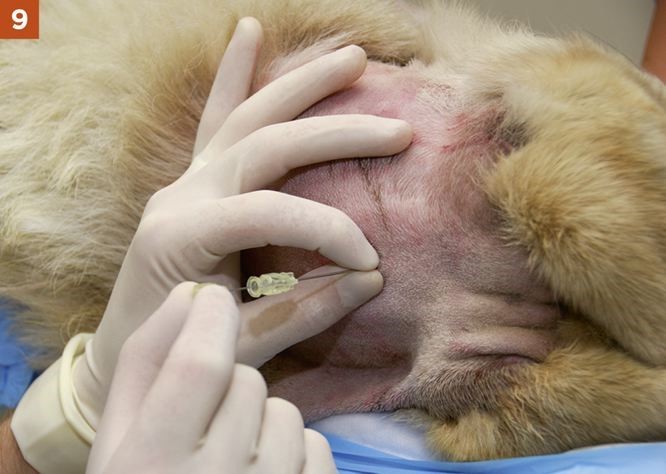
- If there is no fluid seen, the stylet should be reinserted and the needle advanced a few millimeters again.
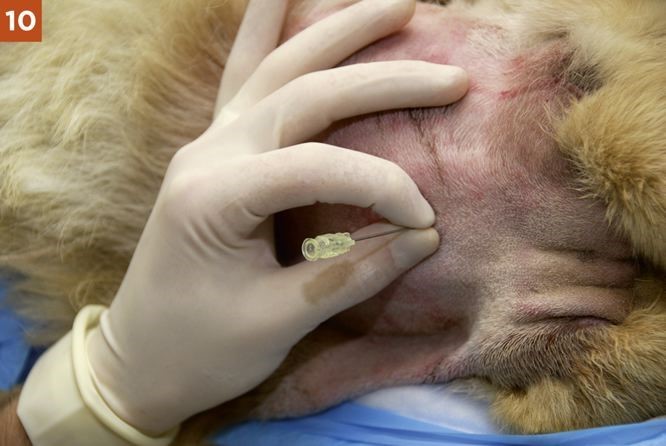
advancing
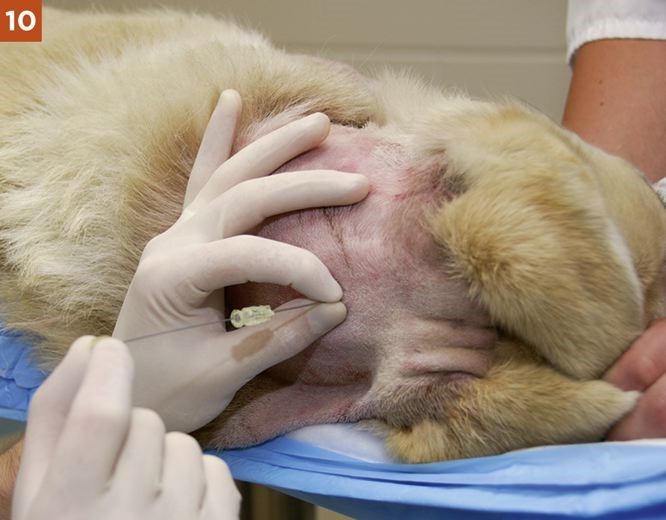
- Each time the needle is advanced a few millimeters the needle should be stabilized and the stylet removed to check for the flow of CSF. If none is seen, the stylet is reinserted and the needle is advanced a few millimeters more before checking for CSF.
- A “pop” may be felt as the dorsal atlantooccipital membrane and the dura mater and arachnoid mater are penetrated. This is not a reliable sign, however, and the level at which the subarachnoid space is reached varies greatly with the breed and individual animal. It is often very close to the skin surface in toy breeds and some cats.
- If the needle strikes bone, it should be withdrawn, patient position and landmarks reassessed, and the procedure repeated with a new needle.
- If dark venous blood appears in the spinal needle, the needle should be withdrawn and the procedure repeated with another sterile needle. It is most likely that venous structures lateral to midline and external to the dura mater were punctured, so the CSF should be uncontaminated.
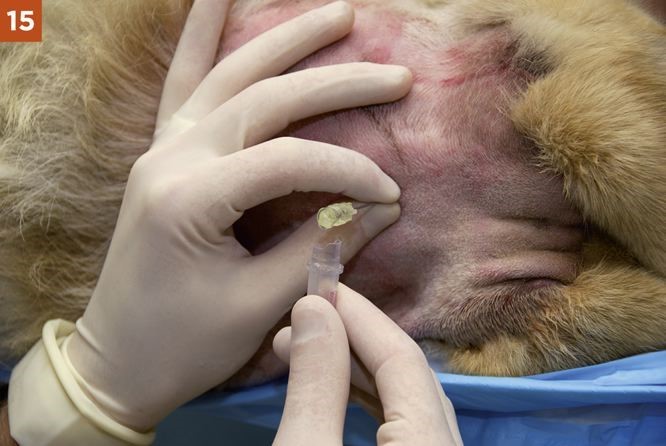
- When CSF is observed, the fluid should be allowed to drip directly from the needle into a tube.
- Withdraw the needle after CSF collection, without replacing the stylet. CSF from inside the needle can then be dripped into a second tube for additional testing.