Genetic Diseases Flashcards

(45 cards)

1
Q

What is a defect or condition that is present at birth, does NOT automatically mean genetic

-HIV, passed from someone else, from mom to baby

A

Congenital

2
Q

What is a disease/defect/condition that has a genetic basis, is passed on from parent to offspring (familial)

-based in genetic code

A

Hereditary

3
Q

_________ arise from a mutation (permanent change) in a persons DNA

  • passed on to offspring if the change occurs in the parent’s gametes (germ cells; egg or sperm)
  • those that occur in cells other than germ cells are not passed on but are often stimm important
A

Genetic diseases

4
Q

What are three ways a single gene mutation is changed in POINT?

A
  • silent/conservatice-no change in amino-acid
  • missense-different amino acid (sickle cell)
  • nonsense-stop codon (truncated protein)
5
Q

What are the two ways a single gene defect can occur in frameshift mutation?

A
  • insertion-addition of nucleotides
  • deleltion-loss of nucleotides
6
Q

What is a single gene defect that can occur in trinucleotide repeat?

A
  • amplication of a set of three
  • fragile X syndrome
7
Q

What are the transmission patterns of single-gene disorders?

A

Follow mendelian rules:

  • Autosomal dominant
  • Autosomal recessive
  • X-linked
8
Q

What is autosomal dominant?

A

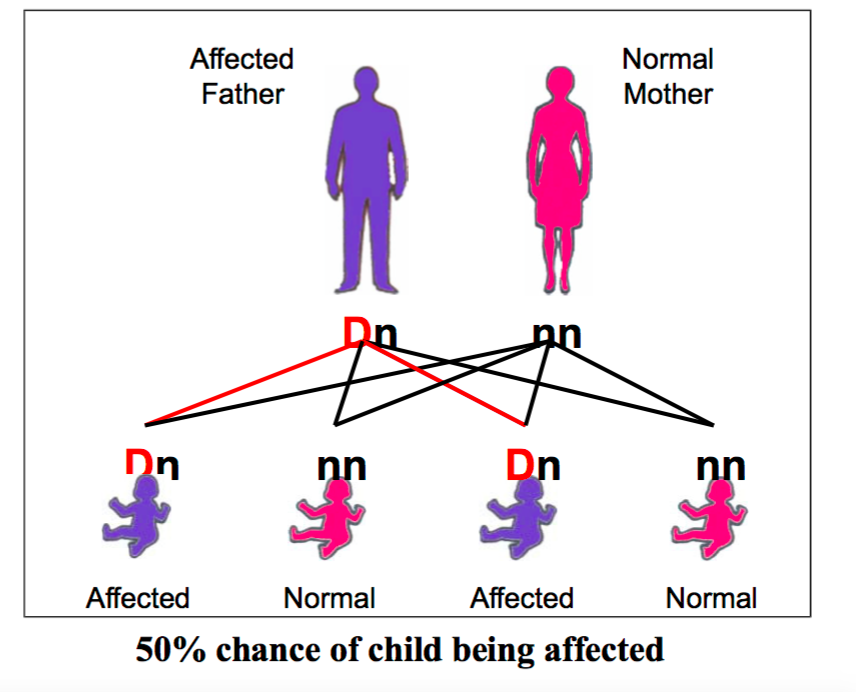
Only one copy of mutant allele (D) results in disease manifestation

-mutant allele is dominant over normal allele

9
Q

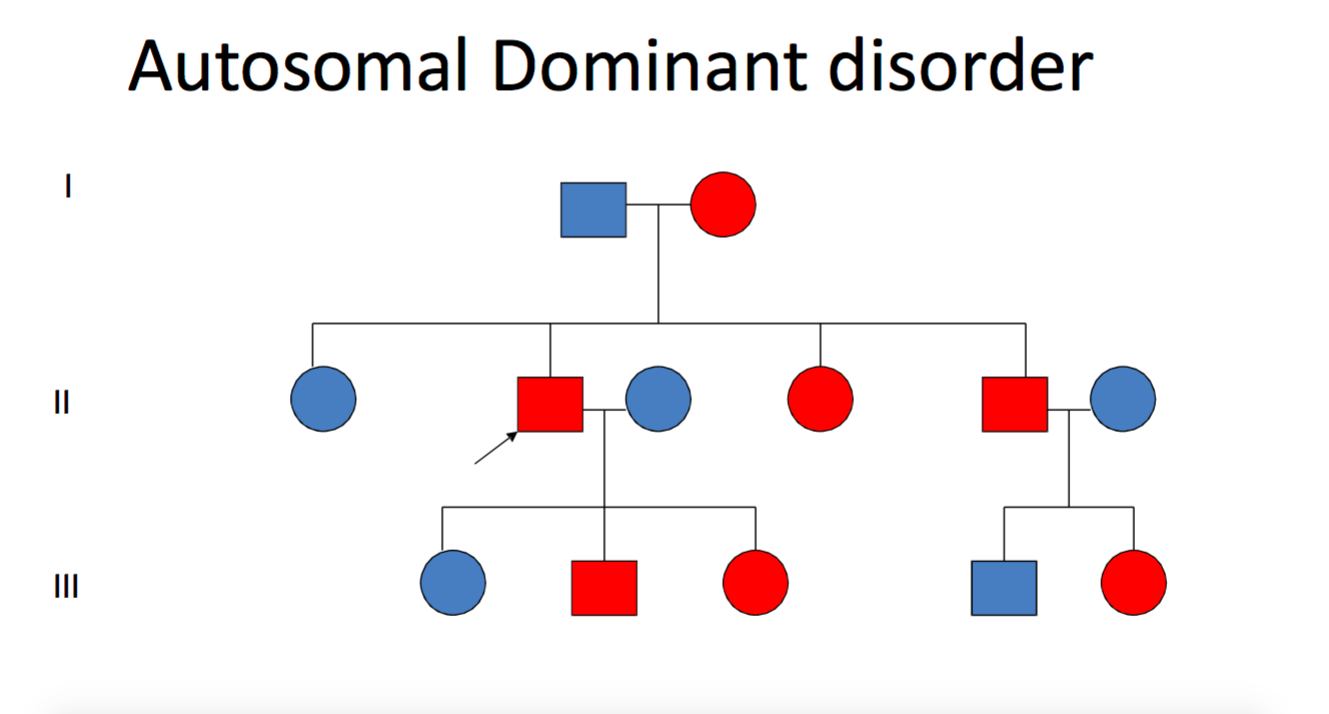
How can you tell that a pedigree is autosomal dominant?
A
  • every generation has an effected person
  • both males and females are affected
10
Q

New AD mutations will manifest in the first generation. Whereas AR mutations will not manifest until the _______ generation

A

Second

11
Q

Autoisomal dominant inheritance is reduced pentrance. What does that mean?

A

-the proportion of herterzygotes who show manifestations

Heterzygote: an individual having two different alleles of a particular gene or genes, and so giving rise to varying offspring

12
Q

Autosomal dominant inheritance has variable expressivity. What does that mean

A

Expressivity is the degree (severity) of manifestations

13
Q

AD inheritance has delayed age onset. What does that mean?

A

usually permit survial into adulthood (otherwise allele would cease to exist in the population)

14
Q

Is loss of enzyme activity normal or rare in AD diseases?

A

Rare in AD diseases

-50 % activity is adequate for most enzymes

15
Q

in AD inheritance what are genes usually encoding?

A

Structural proteins

-fibrillin 1 (Marfan syndrome)

16
Q

What is this syndrome?

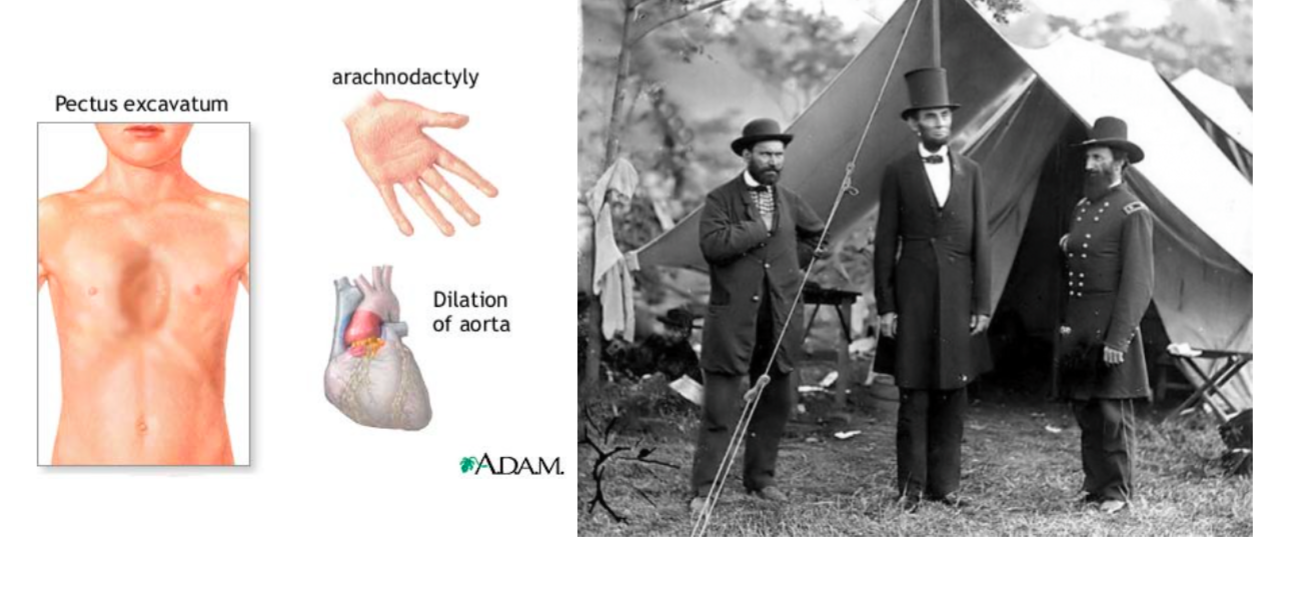
  • a defect in fibrillin, a structural protein that is found in elastic fibers in various tissues (collagen)
  • cause of chest pain/sudden death in young adults due to aortic dissection
A

Marfan’s Syndrome

17
Q

What are the odds for each child in Autosomal recessive?

A

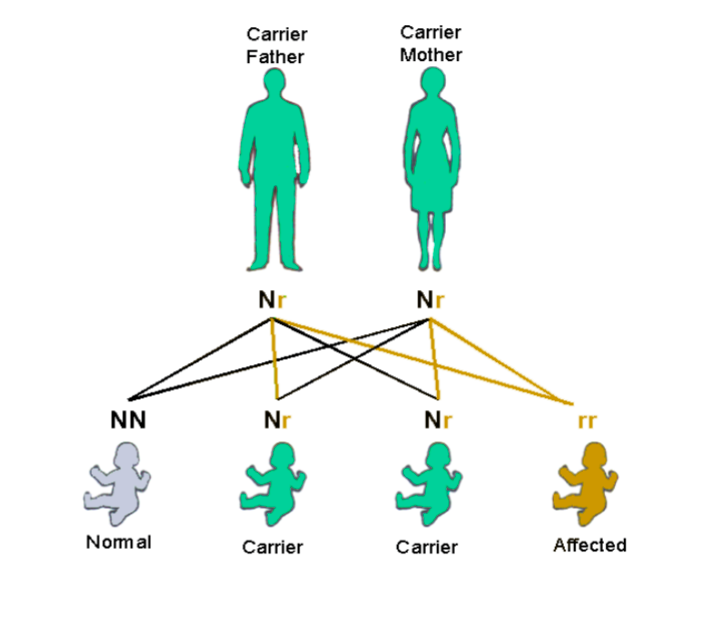
The odds for each child are:

25% chance of being affected

75% chance of being unaffected

–unaffected but still have potential to pass it on

50% chance of being a carrier as both parents are.

66% chance that an unaffected child is a carrier.

*because two copies of the mutant allele are needed to be affected
18
Q

In what disorders are:

Penetrance and expressivity tend not to vary significantly.

New mutations (asymptomatic heterozygotes).

Consanguinity is commonly involved.

-cousins marrying cousins-so you have more instances of recessive alleles

Generation skipping is seen.

-because you need both recessive genes to come together

A

Autosomal recessive diseases

19
Q

How are autosomal recessive disorders most comonly caused?

A

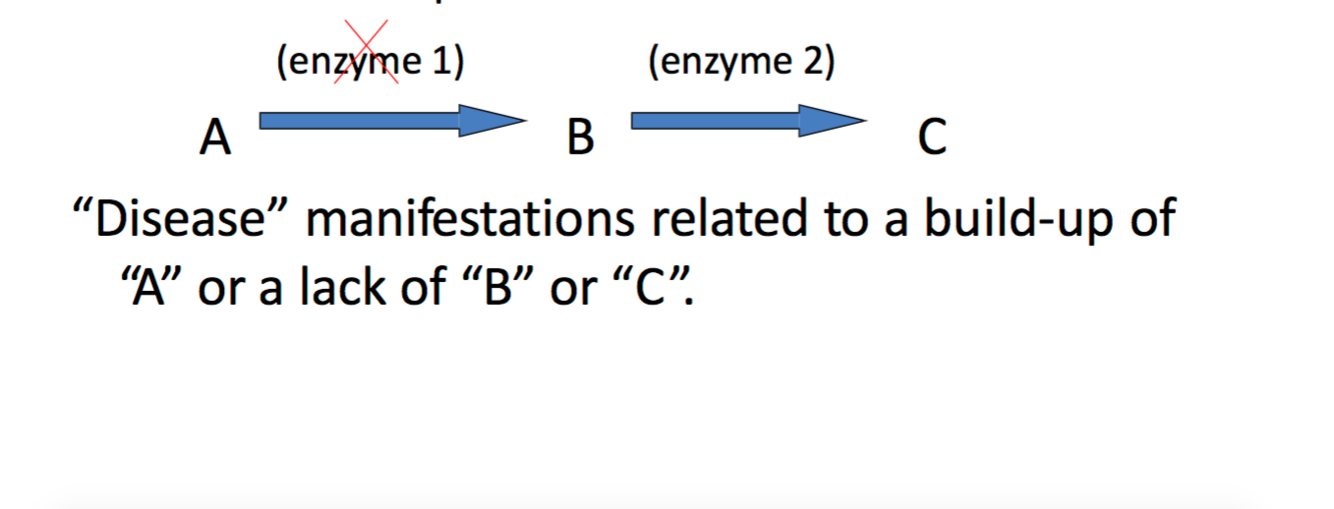
A defect in an enzyme in some metabolic pathway– most are METABOLIC problems

– A defect in a protein that makes it function less well
20
Q

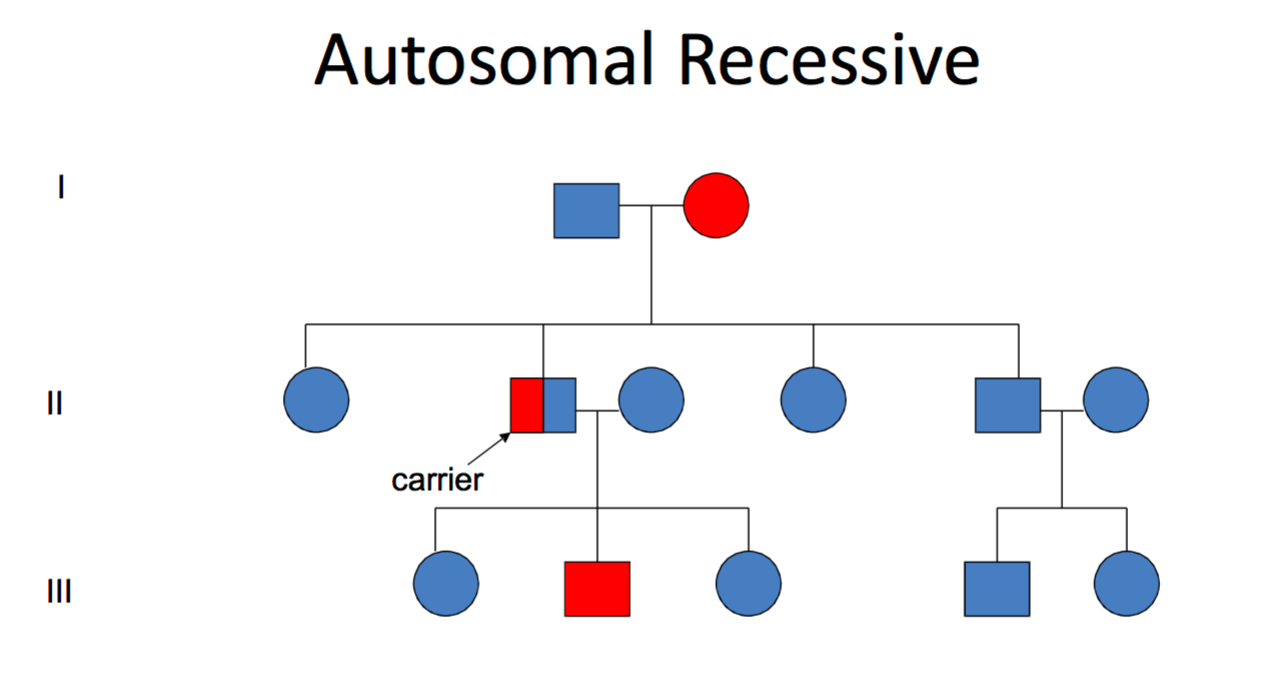
What are some hints that tell you the trait is autosomal recessive trait in a pedigree?
A

Hints that a pedigree is from an autosomal recessive trait:

  • disease skips generations
  • diseased patient has normal parents
  • both males and females are affected
21
Q

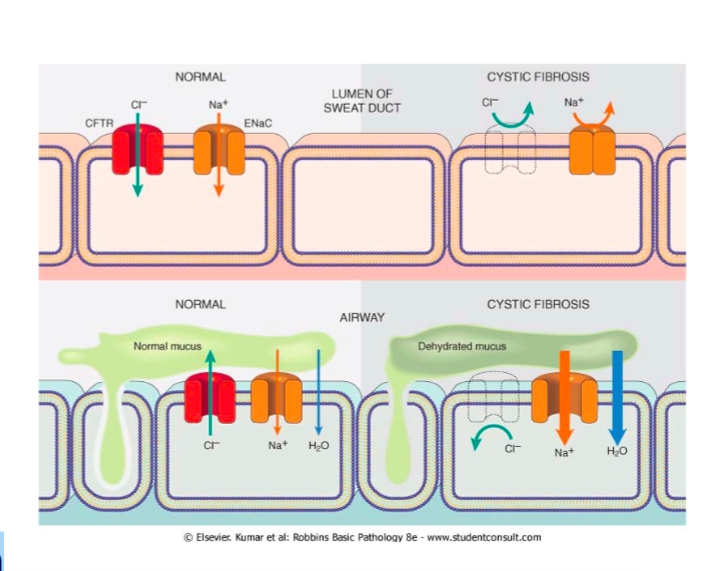
What is this disease?

Autosomal recessive inheritance

1:25 Caucasian adults are carriers

– 1:3200 live births

Mutations in CFTR channel

– Over 1000 mutations described.

– Most common (~66%) is ΔF508:

• 3‐base deletion of codon 508 resulting in a CFTR protein that lacks phenylalanine and is rapidly degraded.

A

Cystic Fibrosis

22
Q

What is this disease?

• Organs affected

– Lungs: Bronchialobstruction,recurrentand severe pneumonias, especially with P. aeruginosa

– Pancreas – malabsorption, pancreatitis.

– Small intestine: obstruction (meconium

ileus).

– Reproductive tract: Male infertility in 95%.

– Skin: excessive NaCl excretion.

• Diagnosis
– Elevated sweat chloride

– Genetictestingforthecommonmutations

A

Cystic Fibrosis

23
Q

What are X-linked disorders?

A
  • Genes on the X chromosome are also susceptible to mutations.
  • These mutations may be recessive or dominant. – X‐linked dominant disorders are very rare.
  • Males are hemizygous for the X chromosome.
24
Q

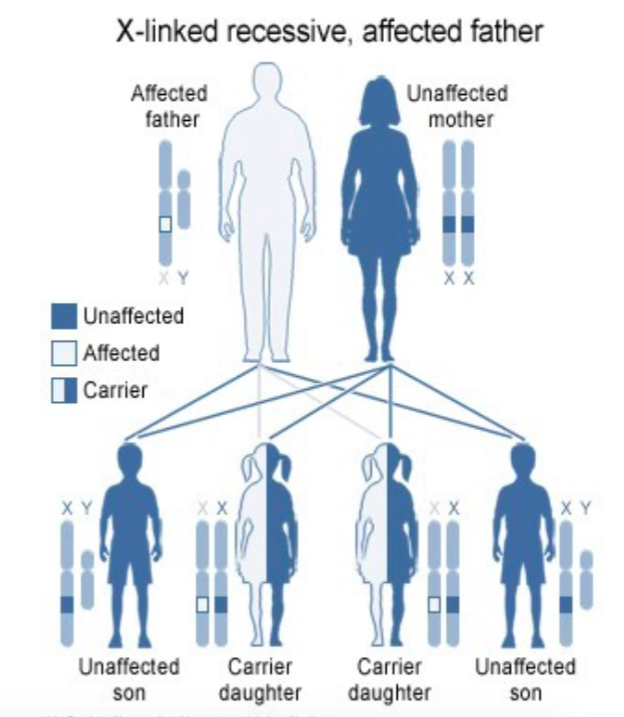
What is some evidence that tells you X-linked recessive inheritance?

A

Only males are affected by the trait

All daughters of affected males are carriers.

All sons of affected males are unaffected and are not carriers.
25
What gender is affected by X-linked recessive inheritance?
Only males are affected by the trait 50% of children receive the mutant allele from a carrier mother. – 50% of daughters of a carrier mother are carriers. – 50% of sons of a carrier mother are affected.
26
What is this syndrome? * X‐linked recessive disorder * Common cause of familial mental retardation * Clinical presentation: – Males – Moderate to severe mental retardation – Physical phenotype: large mandible, large everted ears, macroorchidism • May be subtle
Fragile X syndrome
27
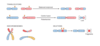
What is this syndrome? • Trinucleotide repeat disorder – Caused by expansion of trinucleotides (CGG in FMR1 gene) – Repeat number at a locus remains stable below a certain threshold. – Beyond that threshold, the locus becomes unstable (in this range, the allele is considered a premutation). – After further expansion, the allele can become a full mutation.
Fragile X Syndrome
28
What single gene disorders with atypical patterns of inheritance? - Caused by expansion of trinucleotides. - Repeat number at a locus remains stable below a certain threshold. - Beyond that threshold, the locus becomes unstable (in this range, the allele is considered a premutation). - After further expansion, the allele can become a full mutation.
Trinucleotide Repeat Disorders
29
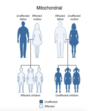
What single gene disorders with atypical patterns of inheritance? - Maternal inheritance - 100% of children of affected mothers are affected. - 100% of children of affected fathers are unaffected. e. g. Leberhereditaryoptic neuropathy
Mitochondrial Disorders -all come from mom because all of our mitochondria are inherited from mom
30
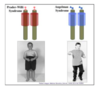
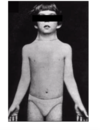
What single gene disorders with atypical patterns of inheritance? The gender of the transmitting parent affects expression. Prader‐Willi and Angelman Syndromes (15q11‐13) – Paternal Uniparental disomy–Prader‐ Willi \*mild mental retardation, short stature, obesity, hypogonadism, small hands and feet. – Maternal Uniparental disomy– Angelman \*hyperactivity, inappropriate laughter, ataxia, mental retardation, seizures.
Disorders affected by Genomic imprinting Imprinting = silencing
31
What causes sponatenous miscariges 50% of the time?
Chromosomal Abnormalities - Common in live born (1 in 200) infants and first‐trimester aborted fetuses (50%) - Alterations in number or structure of chromosomes - Can affect autosomes or sex chromosomes
32
A multiple of the haploid (n) number
Euploid
33
2n -\> normal for humans is 46
Diploid
34
-not a multiple of n – Monosomy – 1 copy of a chromosome (2n‐1) • E.g. Turner syndrome (45,X0) – Trisomy – 3 copies of a chromosome (2n+1) • E.g. Down Syndrome (47,XY+21)
Aneuploid
35
What this example of structural chromosomal abnormalities? – one chromosome arm lost (e.g. iXq)
Isochromosome
36
What is this example of structural chromosomal abnormalities? --Missing portion of a chromosome
Deletion
37
What is this example of structural chromosomal abnormalities? – 2 chromosome segments break and cross‐over – Balanced reciprocal – robertsonian – acrocentric chromosomes:
Translocation
38
What are some features of chromosomal abnormalities?
May be numerical or structural More severe defects with loss of chromosomal material Sex chromosome imbalances tolerated better than autosomal imbalances Most cases are denovo (normal parents and low risk of recurrence in siblings)
39
What is this chromosomal abnormality? - 1:1550 live births in moms less than 20 - 1:25 if mom greater than 45 - 95% cases caused by Trisomy 21 (also caused by a Robertsonian translocation) - 47, XX, +21 - Mental retardation - Epicanthic folds - Flat facial profile - Hypotonia - Congenital heart defects - Predisposition to leukemia - Early Alzheimer ’s (40s)
Down syndrome
40
What is this chromosomal abnormality? * 1:2500 female live births * 99% of affected fetuses abort spontaneously • 57% of cases caused by monosomy X (NO Y) - 45,X - Short stature - Webbed neck - Infertility - Heart defects (coarctation of the aorta) - Broad chest and widely spaced nipples - Peripheral edema
Turner Syndrome
41
-Diseases or conditions that are heritable as evidenced by studies of twins and first degree relatives, but that can not be explained by a single genetic defect. Do not follow Mendelian rules: -Recurrence rates are higher than observed for the general population. - Recurrence rates among first degree relatives ~2‐7 %. - Concordance for identical twins ~20‐40%. Influenced by environmental factors.-means if you have this predisposition you could still prevent it Examples: Diabetes mellitus, hypertension, gout, schizophrenia, bipolar disorder, congenital heart disease...
Multifactoral Genetic Diseases
42
What is this type of diagnosis of genetic diseases? • View entire chromosomal complement • Advantages: – Global strategy • Disadvantages: – Low resolution – Only dividing cells – Requires fresh/frozen tissue
Karyotype
43
What is this type of diagnosis of genetic diseases? • DNA probes to specific chromosomal regions. • Advantages: – Dividing and nondividing cells – Fresh or fixed tissue – High resolution • Disadvantages: – Must know what suspected abnormalities is \*tags will go to area and light up then we can analyze the area
Fluorescence In Situ Hybridization (FISH)
44
What is this type of diagnosis of genetic diseases? -Patient DNA and reference DNA hybridized labeled with 2 different dyes and mixed; color signal corresponds to DNA signal Advantages: – Global strategy Disadvantages: – May miss submicroscopic alterations \*tags will go to area and light up then we can analyze the area \*good for finding amplifications and increase in number of chromosomes
Comparative Genomic Hybridization (CGH)
45
Exponential amplification of DNA \*can take a small amount of DNA adn make a large amount, dont need much at all RT‐PCR: RNA → cDNA → amplification • Advantages: – Requires very little patient sample – Detects mutations at level of nucleotides • Disadvantages: – Sequence of normal gene must be known
Polymerase Chain Reaction