lower urinary tract has two basic functions:
- storage of adequate volume of urine at low pressure; ensures contienence and protects kidneys
- voluntary and complete emptying
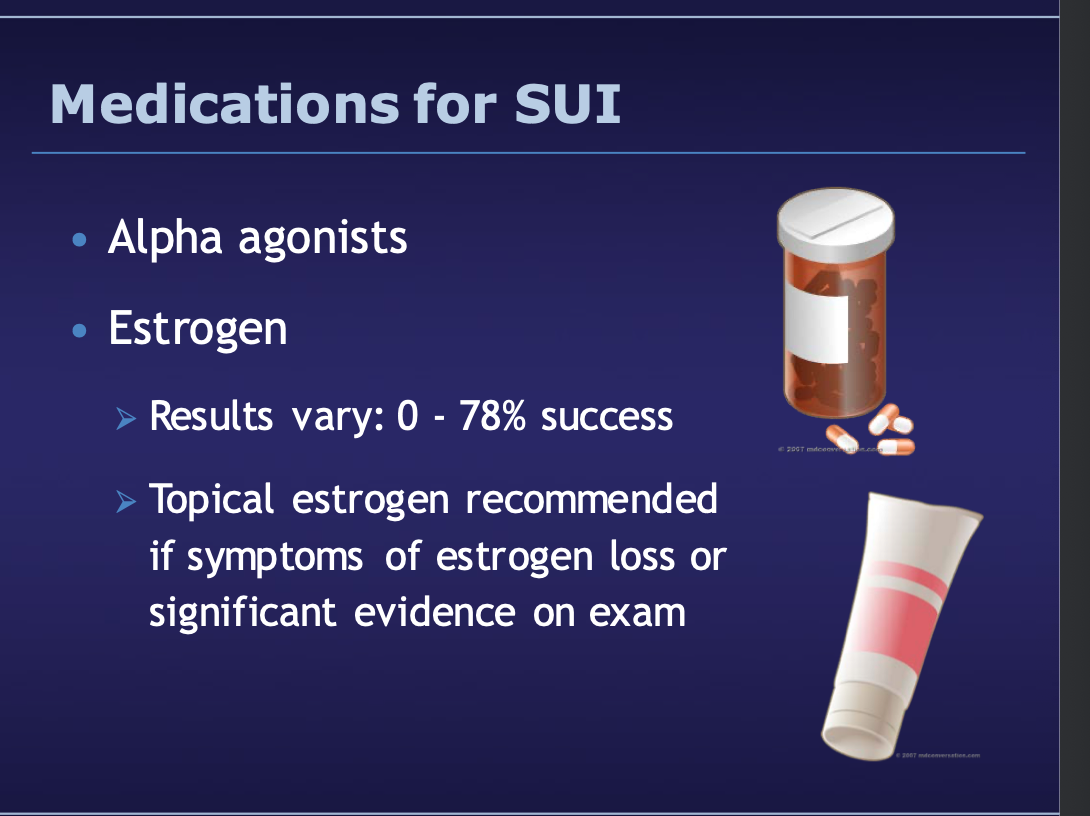
medications for SUI
innervation of the detrusor muscle
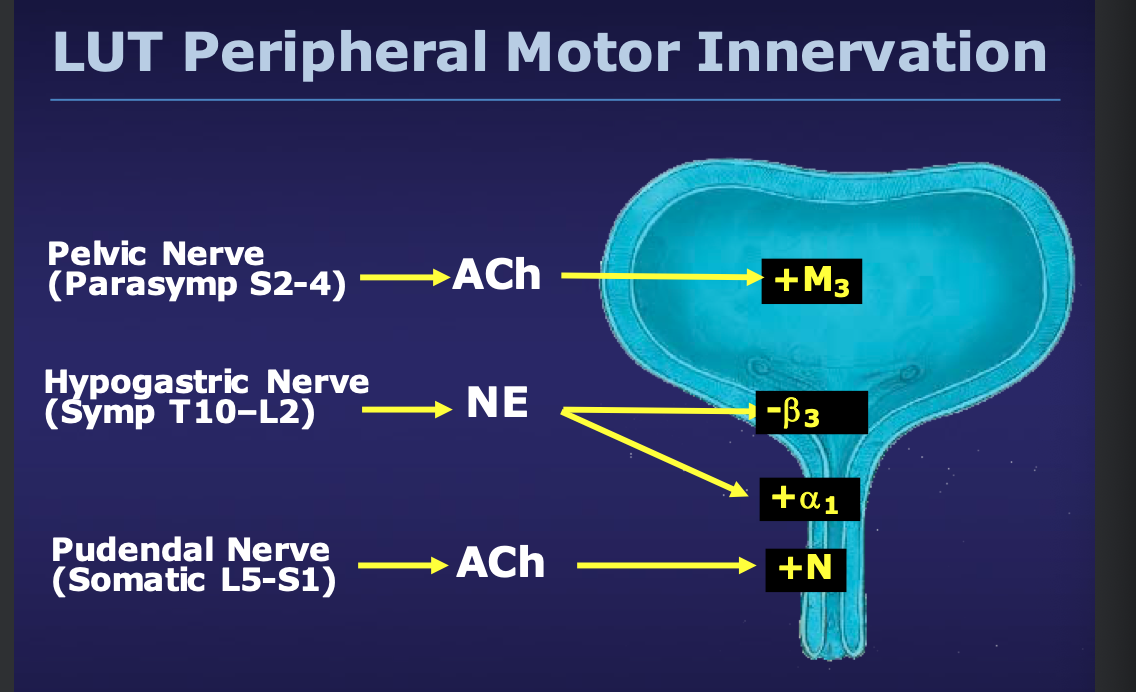
parasympathetic (motor efferent) innervation: Ach-receptors
the mucosa of the bladder sends ___ ___ to the SC and the brain
afferent sensation to the spinal cord and brain. allows us to detect stretch or pain
bladder outlet:
the internal __ muscle sphincter is innervated ___ via __- receptors.
the external __ muscle spincter is innervated __ via ___ receptors
the internal smooth muscle sphincter is innervated sympatehtically via ALPHA- receptors.
the external striated muscle spincter is innervated somatically via NIC receptors
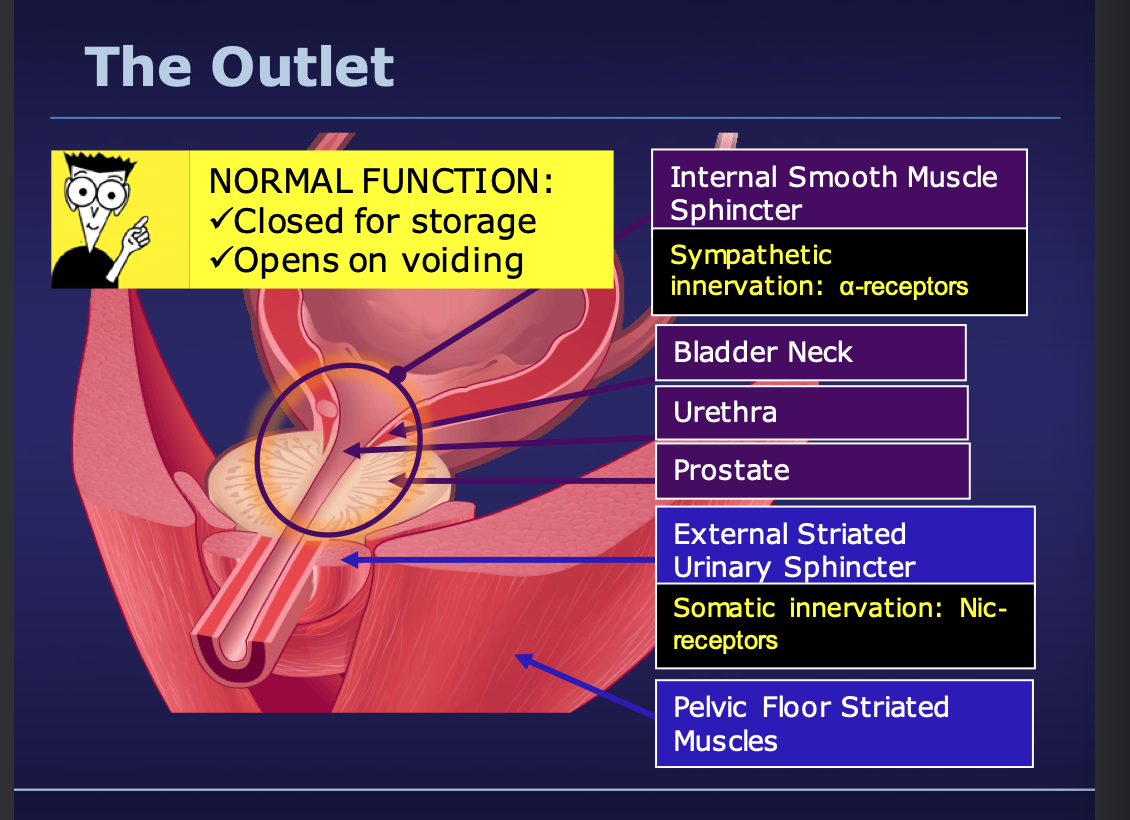
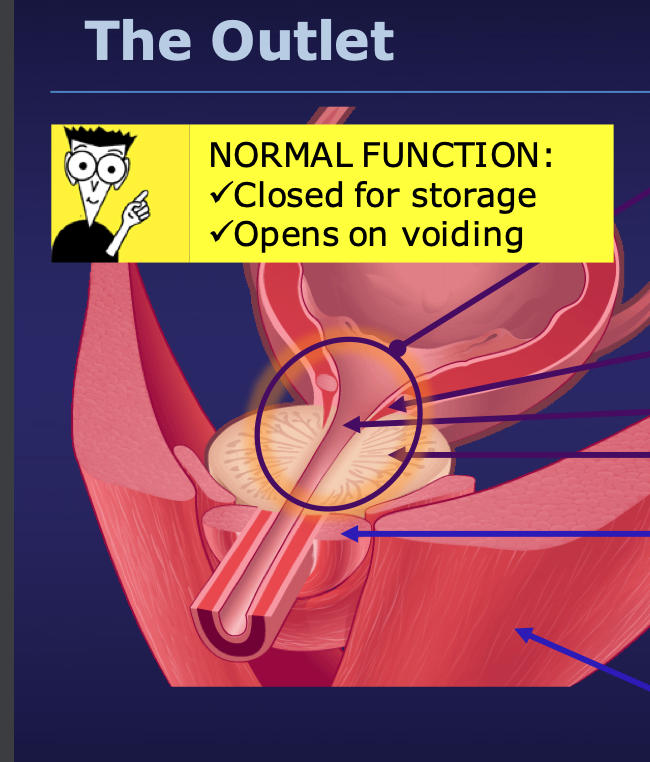
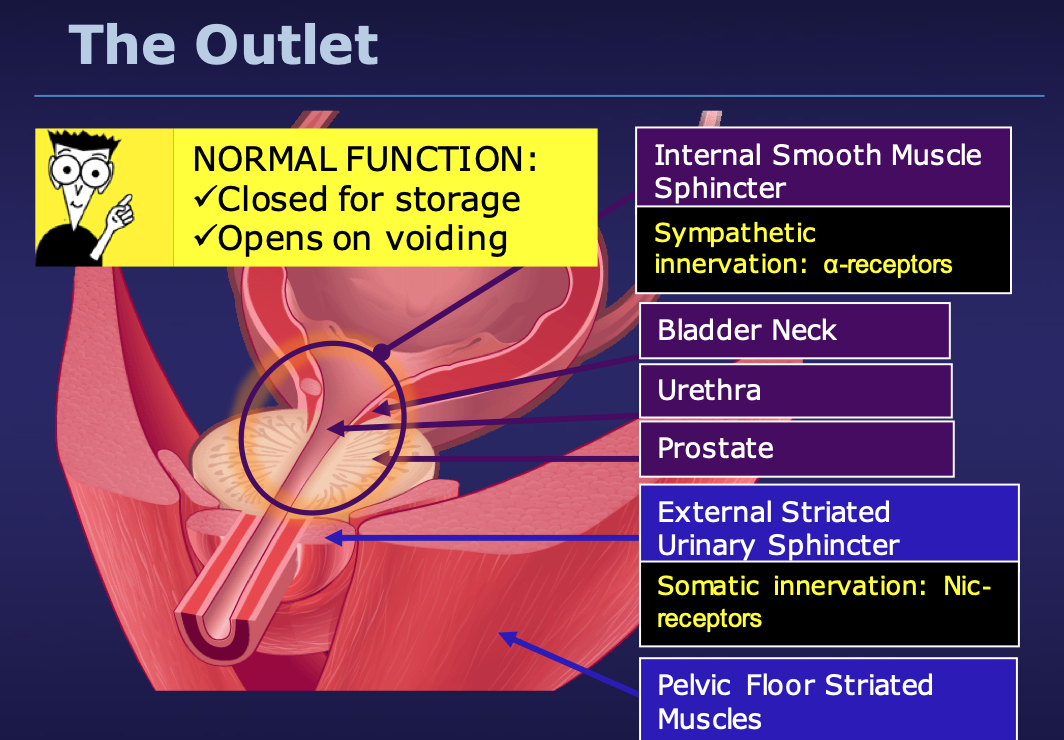
what type of muscle is the pelvic floor composed of
striated muscle
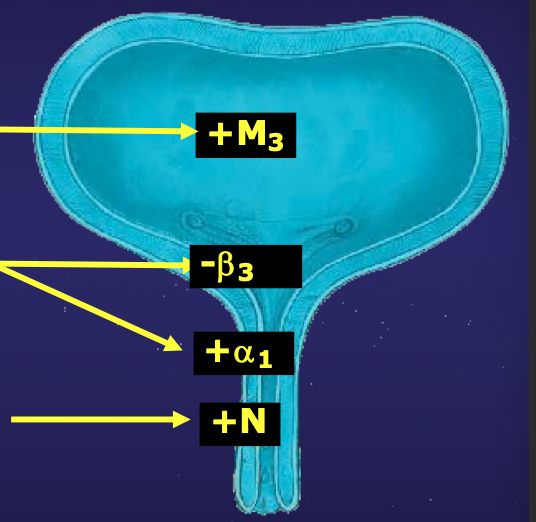
the bladder and outlet has different innervation depending on the location. Outline this diagram in terms of which nerve and which transmitter is involved at each site.
Normal Voiding (micturition Cycle):
Bladder filling: the detrusor __, the urethra is _, and the pelvic floor is __.
First sensation to void: the detrusor is __, the urethra __ __, and the pelvic flood __.
the normal desire to void: the destrusor __, the urethra __, and the pelvic floor relaxes, allowing for __/urination.
Bladder filling: the detrusor relaxes, the urethra is contracted, and the pelvic floor is contracted.
First sensation to void: the detrusor is relaxed, the urethra contraction increases, and the pelvic flood contracts.
the normal desire to void: the destrusor contracts, the urethra relaxes, and the pelvic floor relaxes, allowing for micturition/urination.
the bladder then fills again.
Neurological steps of voiding:
- brain removes inhibition
- PMC (__ __ __) facilitates voiding:
- inhibits the sphincter/pelvic floor contraction via __ innervation
- removes inhibition to bladder muscle (__ innervation)
- stimulates contraction of bladder muscle via __ innervation - outlet __
- bladder __
- bladder empties
- outlet __
- bladder contraction ends
- inhibitory stimuli returns
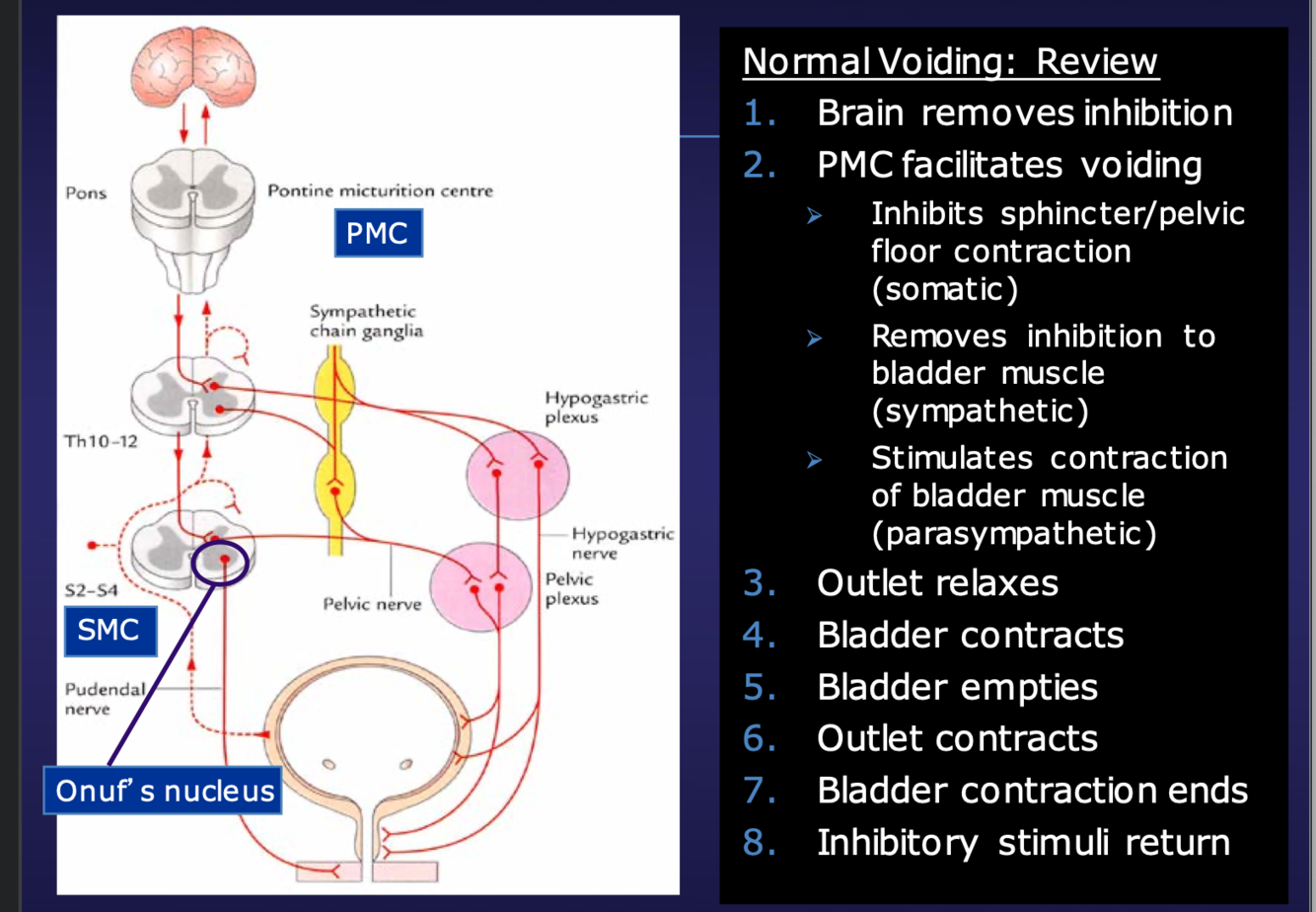
- brain removes inhibition
- PMC PONTINE MUCTURITION CENTER facilitates voiding:
- inhibits the sphincter/pelvic fllor contraction via somatic innervation
- removes inhibition to bladder muscle (sympathetic innervation)
- stimulates contraction of bladder muscle via parasympathetic innervation - outlet relaxes
- bladder contracts
- bladder empties
- outlet contracts
- bladder contraction ends
- inhibitory stimuli returns
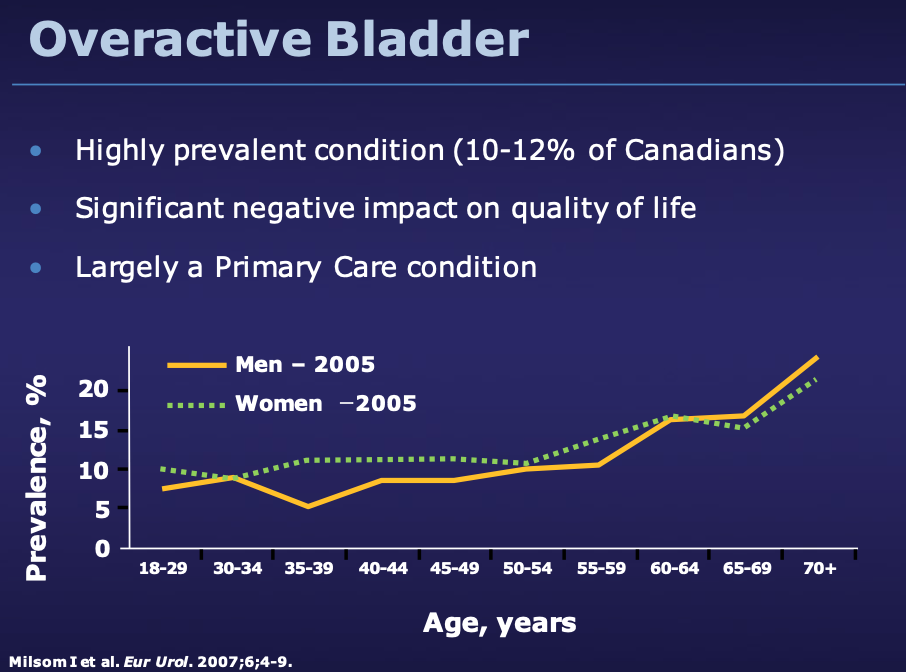
key symptoms of an overactive bladder (OAB)
frequecy, noctuia, urgency, +/- urge incontinence
2 forms of OAB and their causes
- sensory nervous bladder. due to increased firing from bladder or CNS is over-aware of bladder filling. these people usually sleep through the night
- motor nervous bladder. Day adn night-time frequency and urgency. May have urge incontinece
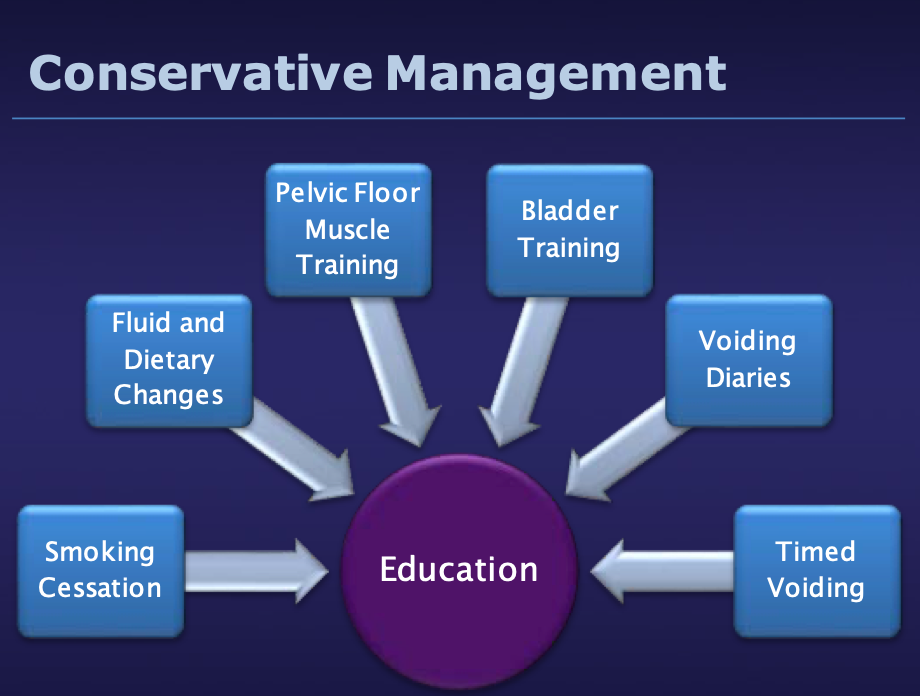
conservative management of overactive bladder
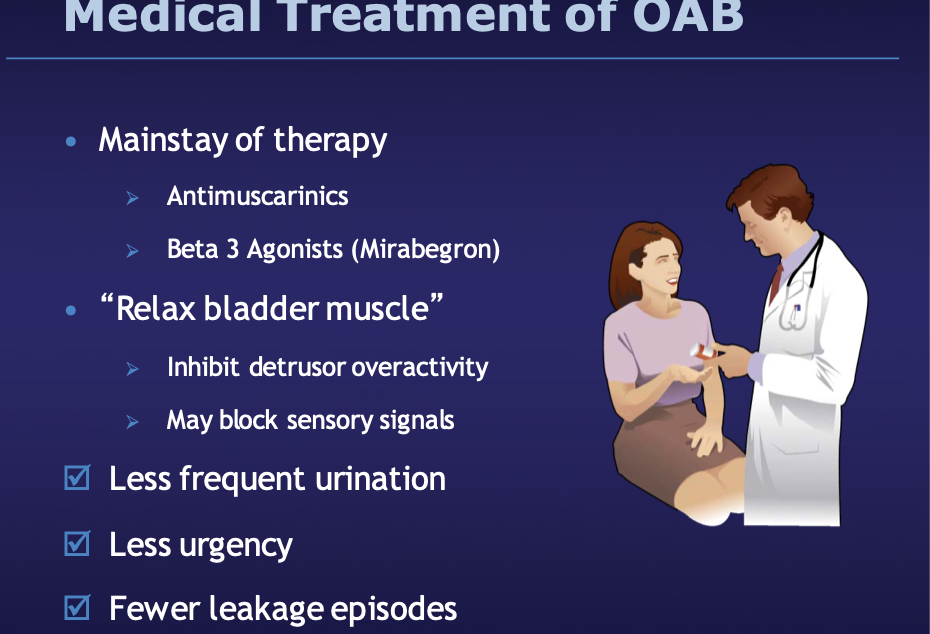
2 calasses of medications that can help with medical treatment of OAB. What is their MOA?
mainstay therapy are either antimuscarinics or beta 3 agonists
- they both work by inhibiting the detrusor overactivity and may block sensory signals
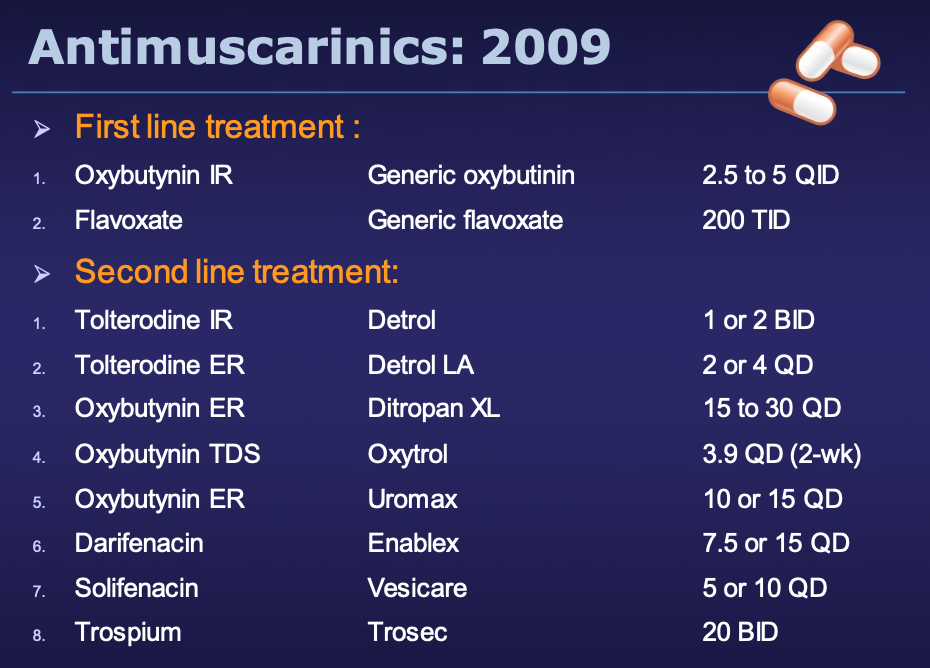
two first line antimuscarinics
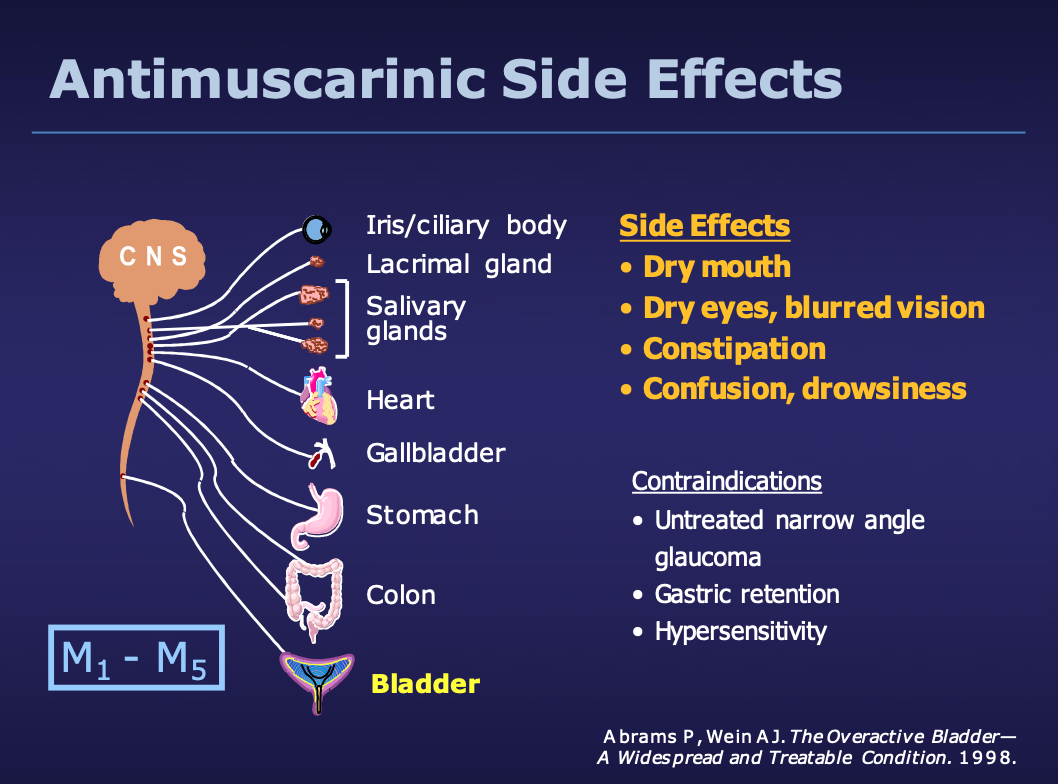
side effects and contra-indications of antimuscarinics
side effects; dry mouth, dry eyes, constipation, confusion and drowsiness
contraindications; untreated narrow angle glaucoma, gastric retention (will make this worse), hypersensitivity
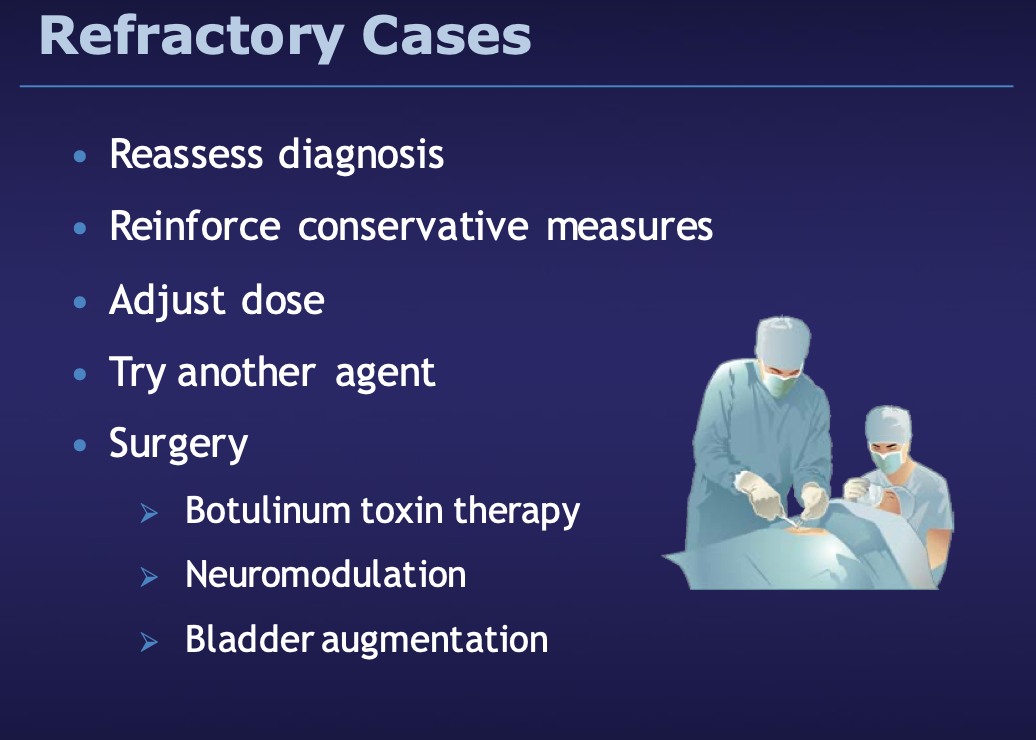
if a person with overactive bladder is refractory to conservative measures and to medications, which three surgical procedures may help things?
botox therapy
neuromodulation
bladder augmentation
T/F Dysfunctionally voiding involves the impaired relaxation of the sphincter in someone with a non=neurologically intact patient
false. the person IS neurologically intact. • Impaired relaxation of sphincter and/or
pelvic floor during voiding in neurologically intact patient
two key populations affected by dysfunctional voiding
- those who develop in childhood. happens during toilet training, with over-bearing parents, abuse. common cause of secondary reflux d/t high voiding pressures. at worst, can present with renal failure and bilateral hydronephropathy.
- devlops as an adult- following UTIs, surgery, abuse, high anxiety individials. commonly associated with pelvic pain, sensory urgency (OAB)
complications of pediatric dysfunctional voiding
renal failure and bilateral hydronephropathy.
treatment of dysfunctional voiding (DFV)
- proper diagnosis and education
- self cath program when necessary at least initially to avoid renal failure and bilateral hydronephropathy.
- pelvic floor rehab/
- neuromodulation
- renal monitoring when necessary
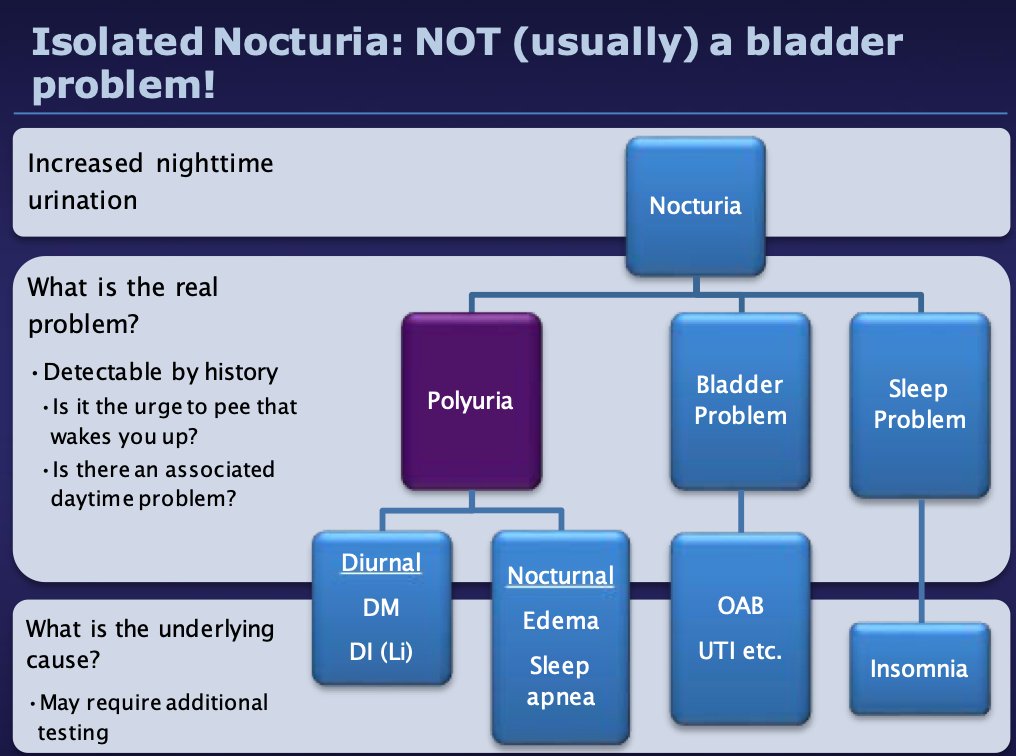
T/F; isolated nocturia is uaully a bladder issue involving irritation
false. not usually a bladder problem. usually its polyuria– caused by DI, DM, edema, sleep apnea.


-
Basic Nephrology: The Glomerulus11
-
Basic Nephrology: The Renal Tubules16
-
Approach to Abnormal Electrolyes10
-
Water Handling44
-
Intravenous Fluids33
-
Approach to Hyponatremia11
-
Fluid Compartment and Edema18
-
Treatment of Hyponatremia11
-
Endocrine 10132
-
Diabetes in Children21
-
Insulin Management29
-
Carbohydrate Metabolism and Regulation49
-
Peptide and Steroids17
-
Introduction to Diabetes21
-
Primary Hypertension I23
-
Primary Hypertension Part 221
-
Hypernatremia- Diabetes Insipidus, Polydipsia, Polyuria29
-
Diuretics25
-
Pathogenesis of Type I DM30
-
Pathogenesis of Type II DM22
-
Lipoprotein Physiology I19
-
Lipoprotein Physiology II: Genetic Lipid Disorders35
-
Management of Lipid Disorders26
-
Secondary Causes of Hyperlipidemia30
-
CV Risk Prediction18
-
Appropriate Use of DM Guidelines3
-
Hyperglycemic Diabetic Emergencies38
-
Hypoglycemia19
-
Non-Insulin Pharmacologic Agents for Diabetes18
-
Diabetes in Pregnancy38
-
Potassium Physiology13
-
Hypokalemia11
-
Hyperkalemia12
-
Putting it All Together: Diabetes2
-
In hospital Management of Diabetes14
-
Approach to Proteinuria35
-
Glomerular Hematuria: Nephritic Syndrome14
-
NSAIDs and Renal Toxicity15
-
Nephrolithiasis II30
-
Acute Kidney Injury I and II31
-
Acute Kidney Injury III13
-
Acute Interstitial Nephritis14
-
Acute Tubular Necrosis22
-
Thyroid Anatomy and Pathology I40
-
Thyroid Anatomy and Pathology II20
-
Low TSH Approach29
-
High TSH Approahc23
-
Thyroid Disorders in Pregnancy47
-
Abnormal TSH in Infancy38
-
Approach to Acid-Base Problems18
-
Proton Handling and Renal Tubular Acidosis15
-
Metabolic Alkalosis13
-
Metabolic Acidosis12
-
Incontinence: Voiding Function36
-
Approach to Chronic Kidney Disease31
-
Complications and Management of CKD29
-
Renal Replacement Therapy34
-
Palliative Care in CKD11
-
Drug Handling and the Kidney22
-
Approach to the Poisoned Patient23
-
Kidney Transplantation6
-
Calcium Metabolism35
-
Bone Metabolism Continued20
-
Approach to the Thyroid Nodule39
-
Thyroid Cancer26
-
Osteoporosis I33
-
Osteoporosis II: Treatment29
-
Hypocalcemia24
-
Hypercalcemia15
-
Growth Hormone Excess and Physiology19
-
Pituitary Physiology23
-
Approach to Prolactinemia15
-
Diabetic Nephropathy26
-
Hypertensive Nephrosclerosis13
-
Renal Artery Stenosis15
-
Erectile Dysfunction15
-
Adrenal Physiology27
-
Neoplasia of Testes and Scrotal Mass16
-
Urine Microscopy16
-
Newborn Disorders of Sexual Development16
-
Delayed Puberty17
-
Precocious Puberty28
-
Pediatric Panhypopituitarism22


