Default activity log retention period
90 days
Resource lock types
- CanNotDelete - authorized users can still read and modify a resource, but they can’t delete the resource.
- ReadOnly - authorized users can read a resource, but they can’t delete or update the resource.
PowerShell command to add an authenticated Azure account to use for Azure Resource Manager cmdlet requests.
Add-AzureRmAccount
What are the two types of approaches to Infrastructure as Code?
- declarative (functional) - states “what” the final state should be. When run, the script or definition will initialize or configure the machine to have the finished state that was declared.
- imperative (procedural) - states the “how” for the final state of the machine by executing through the steps to get to the finished state.
What are the two types of methods in Infrastructure as Code?
- push - the controlling or master server will push the configuration to the target machines
- pull - the machines configured will pull the configuration from a controlling server, such as a master server
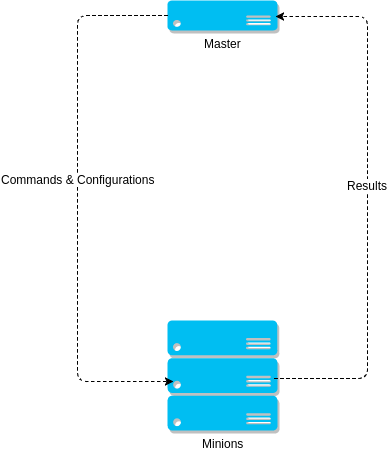
What is salt master?
It’s a master component in Salt, mainly responsible for sending commands and configurations to the minions to manage them.
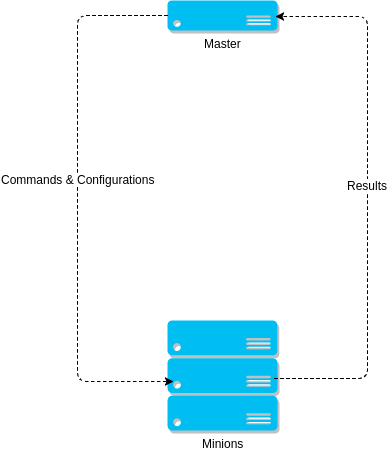
What is salt minion?
It represents a managed system, and it is responsible for receiving and executing commands and configurations that a user sends via master.
Salt can be run in a masterless mode where only the Minion is used.
What are salt formulas?
They are pre-written salt states. A formula could be either declarative or imperative, representing a system configuration. Formulas can be used to execute tasks like managing configurations and services states, or installing and managing system packages.
What are salt grains?
They are the interface to access static information about the Minion system, such as OS, kernel, memory, etc.
What are salt pillars?
They are user-defined variables.
What’s the difference between grains and pillars?
Pillars are stored in the master and passed through to the minion.
What are salt runners?
They are modules located inside the master and are responsible for executing different tasks such as:
- reporting job and connection status
- interacting with external APIs
- interacting with minions
What is the difference between runners and execution modules?
It’s the fact that a runner executes on the master, not the minion
What are salt returners?
They return the data from master or minion to an external system like MySQL or Redis.
What are salt reactors?
They are event triggers. They use the event bus to watch event tags and, if a tag matches a given pattern, the system runs a command in response.
What is salt cloud?
It’s a SaltStack interface for interacting with cloud providers such as Microsoft Azure. With Salt Cloud, the system administrator can provision systems and virtual machines on different cloud providers without leaving Salt.
What are four elements of Azure Advisor?
- high availability
- security
- performance
- cost
RBAC owner role
An owner can do anything—create objects, delete objects, modify things, and assign permissions to other users.
RBAC contributor role
A contributor can do everything except modify permissions. A contributor cannot grant someone access to something but can create runbooks, execute them, and run them.
RBAC reader role
A reader is a view-only administrator; readers can view everything but cannot change anything.
RBAC automation operator role
An automation operator can perform tasks that are involved in the operation of an automation account such as starting and stopping runbooks, but an operator cannot add new runbooks, modify runbooks, modify credentials, or grant permissions.
RBAC: user access administrator
A user access administrator cannot do anything to the Automation objects but can grant and revoke permissions.
What is RBAC?
Role-Based Access Control
You are using an Azure Automation runbook to manage a set of virtual machines. You need to ensure that the runbook can securely authenticate to the relevant Azure subscription. The solution must be usable for multiple runbooks.
What 5 steps do you need to take in order?
- Create a certificate and PFX file.
- Create a Key Credential object.
- Create an Azure Active Directory service principal.
- Assign role-based access control permissions.
- Create an Azure Automation asset


