What are the primary functions of the skin (13 listed)?
It’s primary function is protection. It is crucial to survival. It protects by:
- covers the underlying tissue to prevent invasion by harmful microbes
- bars entry of most chemicals - minimizes the chances of mechanical in injury (provides ‘cushioning’ for the underlying tissues)
- prevents the dehydration of the body
- excretes wastes and toxins - provides the matrix in which the sensory receptors are embedded to detect pain, sensation, pressure, and temperature
- absorbs the suns rays (manufacturing vitamin D)
- shields the body from harmful, damaging rays by producing pigment called melanin that reflects solar rays
- regulates body temperature by sweating
- synthesizes important chemicals and oils - functions as a sophisticated sensory organ
- helps to maintain homeostasis
- stores water, fat, glucose, and vitamin D
What gives skin its resiliency? What happens to the skin with age?
There is a dense network of interlacing fibres in the dermis, underlying the epidermis. Most of these fibres are collagen, which gives strength and resiliency to the skin. Elastic fibres are also present in the dermis, which makes the skin stretchable and able to rebound. As we age, the number of these fibres decreases, and the amount of fat stored in the subcutaneous layer is reduced; wrinkles develop, the skin sags, and becomes less soft and pliant.
What factors put clients at greater risk for developing skin sensitivity reactions to essential oils?
1) Edema
2) Reduced circulation to the extremities
3) Allergies and sensitivities
What are the three layers of the skin? Describe each.
1) Epidermis - the outermost layer of skin, which is a relatively thin sheet of stratified squamous epithelium, that is arranged into distinct layers called “strata” - the deepest part of the epithelium is called the ‘stratum germanitivum’, where cell division, a.k.a. mitosis occurs - as they mature, the cells move up through the different strata and differentiate into their specific functions e.g. the cytoplasm may be replaced by a protein called keratin, which is a tough, water resistant layer that is protective to the underlying cells - the primary cells of the epidermis, called keratinocytes, continually shed and are replaced by underlying cells - the outermost layer of the epidermis is called the stratum corneum - the cells of the epidermis are packed tightly together, held firmly in place to one another and to the underlying dermis by specialized connections, sometimes called “spot welds” - if these junctions are damaged by friction, burns, or exposure to irritants, the skin effectively “falls apart” and blisters may result - the deepest layer of the epidermis is responsible for the production of melanin (by melanocytes), which gives colour to the skin - the amount of melanin produced by the skin is affected by genetics, and by the amount of light exposure - increased oxygen or blood flow to the epidermis can cause a pink flush to appear on the skin (blushing); contrarily, low oxygen levels or reduced blood flow can give the epidermis a blueish hue, a condition called cyanosis.
2) Dermis - The layer below the epidermis, which is thicker, and is made up largely of connective tissue - connected to the overlying epidermis by tight junctions, which is often referred to collectively as the dermal-epidermal junction - cells are scattered further apart, with lots of fibres between (collagen & elastin) - many of the cells are fibroblasts, to produce the collagen and elastin fibres - contains a rich blood supply brought in by capillaries, as well as lymph nodes which house immune cells - the upper layer is characterized by parallel rows of peg-like papillae called dermal papillae, which add to the dermal-epidermal Junction, and form the ridges in fingerprints - the deepest layer consists of tightly woven collagen and elastin fibres - contains a specialized network of nerves to process sensory information such as pain, pressure, touch, and temperature - scattered throughout the dermis, there are muscle fibers, hair follicles, sweat and sebaceous glands, and many blood vessels
3) Subcutaneous tissue - is a layer of fat and connective tissue that houses larger blood vessels and nerves - provides support for the upper layers of skin - fat in this layer insulates the body from extremes of heat and cold - serves as a stored source of energy and can be used as a food source if required - acts as a shock-absorbing pad and helps to protect the underlying tissues from injuries to the body surface
What is the role of receptors in the skin?
Receptors are specialized structures of the nervous system that “detect” sensations such as pain, temperature, and pressure
What are ‘Krause’s End Bulbs’?
Krause’s end bulbs are nerve receptors that detect sensations of touch and low-frequency vibration
Describe the different parts of a hair follicle.
Hair:
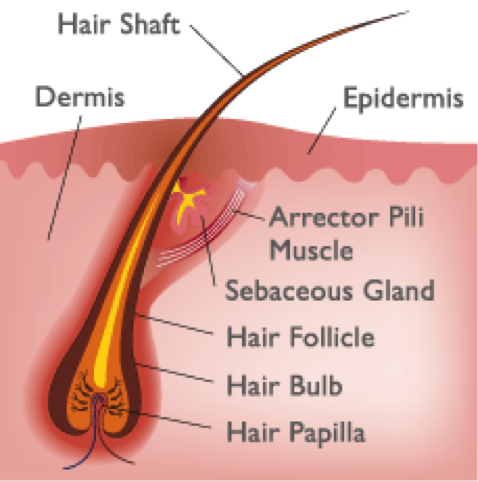
What are sebaceous glands and what do they produce? Where are they primarily found?
They are glands that are attached to the side of each hair, with a duct that opens into the hair follicle, and which produce an oily type of sweat called sebum that coats each hair. They are primarily found on the scalp, face, back, and chest. The only mature and become productive at puberty. The purpose of sebum is to keep the skin lubricated and hydrated.
What is another name for sweat glands?
Sudiferous glands
What two groups can sweat (aka sudiferous) glands be classified into?
1) Eccrine glands - The most numerous and widespread glands in the body; with few exceptions, they are spread over the total surface of the body. The produce a watery, transparent fluid called perspiration or sweat. Sweat assists in the elimination of waste products like ammonia and uric acid, and it plays a crucial role in body temperature regulation.
2) Apocrine glands - are localized in the armpits and groin; bigger than eccrine glands, they produce a thick, milky secretion. The odour associated with the secretion is not due to the secretion itself, but rather to the byproducts of the bacteria that feed on it.
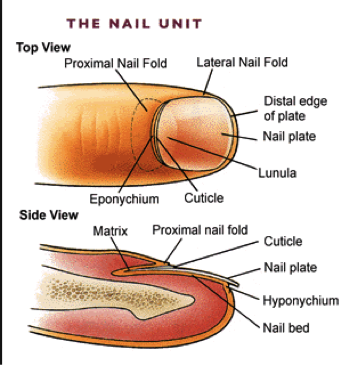
How are nails classified and what are they produced by?
Nails are classified as accessory organs of the skin and are produced by cells of the epidermis. They form when epidermal cells covering the terminal ends of the fingers and toes fill with keratin and becomes hard and plate-like
Describe the different anatomy features of a fingernail.
What are the four basic skin types?
1) Normal
2) Oily
3) Dry
4) Combination
Describe the characteristics of “normal skin”. What are the (4) aromatherapy considerations for normal skin?
Normal skin is characterized as healthy skin that is smooth, blemish free, and glowing. It has excellent hydration, muscle tone, and resilience. The surface of the skin has a fine texture, is soft, and has small pores.
Aromatherapy Considerations:
- a gentle aromatherapy cleanser should be used morning and night
- essential oils can be used in sweet almond, apricot kernel, and jojoba carrier oils to moisturize normal skin during the day - essential oils in the hydrating cream should be used every night
- essential oils in an exfoliator should be used twice per week
- appropriate eo’s
OILS FOR NORMAL SKIN Name 5 middle notes and 4 base note essential oils that are helpful to use on normal skin

Describe the characteristics of “oily skin”. What are the (3) general aromatherapy considerations for oily skin?
Oily skin is characterized by it’s shiny, thick, and firm appearance. Pores look enlarged due to oil trapped in the hair follicles, and skin is often blemished.
Aromatherapy Considerations:
- hot, humid conditions tend to make the skin oilier
- oily skin benefits from regular use of clay masks and steam treatments to unblock pores and to prevent blackheads and pimples from forming
- essential oils can help reduce the amount of sebum produced and control the bacteria responsible for infections
What are the (6) aromatherapy considerations for oily skin?
- essential oils to control production of sebum
- essential oils to control bacteria
- essential oils to unclog pores
- hydrosols balance pH levels of the skin
- hydrosols appropriate for oily skin
- essential oils to balance the endocrine system
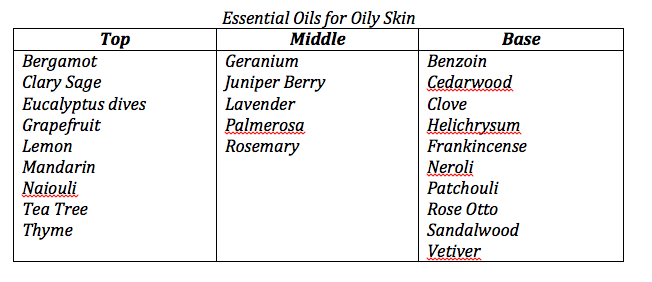
OILS FOR OILY SKIN Name 9 top note oils, 5 middle notes, and 10 base note oils appropriate for oily skin
Name 7 hydrosols that are appropriate for oily skin
1) Citrus aurantium var. amara (Neroli)
2) Chamamaelum nobile (Roman chamomile)
3) Citrus clementine (clementine)
4) Hamamaelis virginiana (witch hazel)
5) Juniperis communis (Juniper Berry)
6) Pelargonium x asperum/graveolens (geranium)
7) Santalum album (sandalwood)
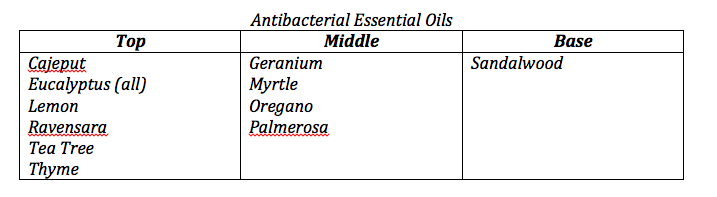
ANTIBACTERIAL OILS Name 6 top note oils and 4 middle note oils that are antibacterial
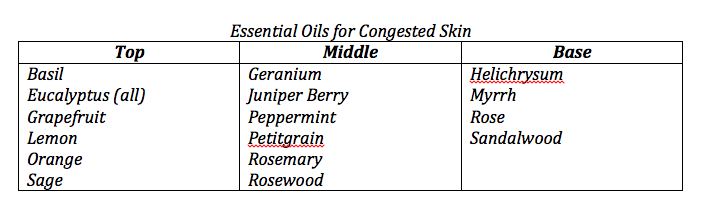
OILS FOR CONGESTED SKIN Name 6 top note oils, 6 middle note oils, and 4 base note oils that are helpful for congested skin.
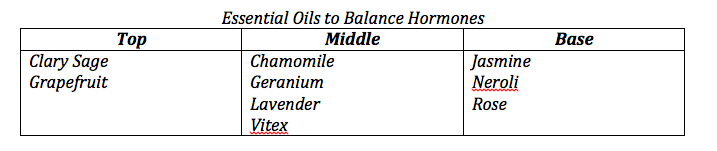
OILS FOR BALANCING HORMONES Name 2 top note oils, 4 middle note oils, and three base oils that are helpful for balancing hormones.
List up to 10 therapeutic strategies for oily skin
- oily skin needs cleansing with very warm water and cleanser to prevent the pores from becoming clogged
- avoid harsh products that strip the skin of oils and encourage flakiness
- they can cause a reaction known as reactive seborrhea, where the oil glands work overtime to compensate for the loss of natural oils
- avoid products that leave the skin feeling taut and dehydrated
- this literally shrinks the upper layers of the skin, which restricts oil flow through the pores and causes blockages and breakouts
- limit washing of the face to 2–3 times a day; washing too much will also stimulate production of oil
- tone skin with one or more hydrosols that are appropriate for oily skin
- when cleansing, massage skin well with fingertips
- after cleansing, apply a natural moisturizer with jojoba or apricot kernel oil to keep skin supple
- if skin is scaly, use an exfoliant on alternate nights and follow the treatment with a light coating of moisturizer - apply Clay or mud mask twice per week; blend the mask with one or more of the hydrosols that are good for oily skin, and 1–2 drops of essential oils that are good for oily skin.
- Weekly facial saunas using lemongrass, basil, or rose essential oils
Describe the characteristics of dry skin.
Dry skin has a low level of sebum and can be prone to sensitivity. The skin has a parched look caused by it its inability to retain moisture. It may feel tight and uncomfortable after washing, unless some type of moisturizer is applied. Chapping and cracking are signs that it is extremely dry and dehydrated. Dryness can be exacerbated by wind, extremes in temperature and air conditioning, all of which can further desiccate the skin. Looks dull, and may have tiny expression lines around eyes and mouth.