What is pathologic calcification?
- Abnormal deposition of Ca++ salts usually in form of phosphates and carbonates.
What is Dystrophic calcification?
When the deposition of abnormal calcium salts occur locally in dying tissue.
What causes Metastatic calcification?
Almost always result of hypercalcemia secondary to some disturbance in calcium metabolism.
What is the cause of this kind of calcification? Which is the abnormal lesion A or B?
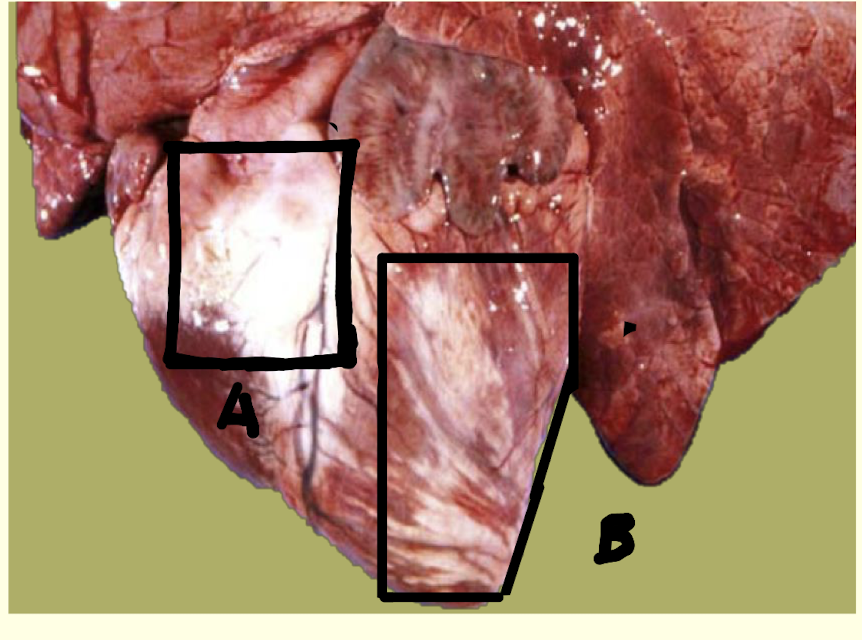
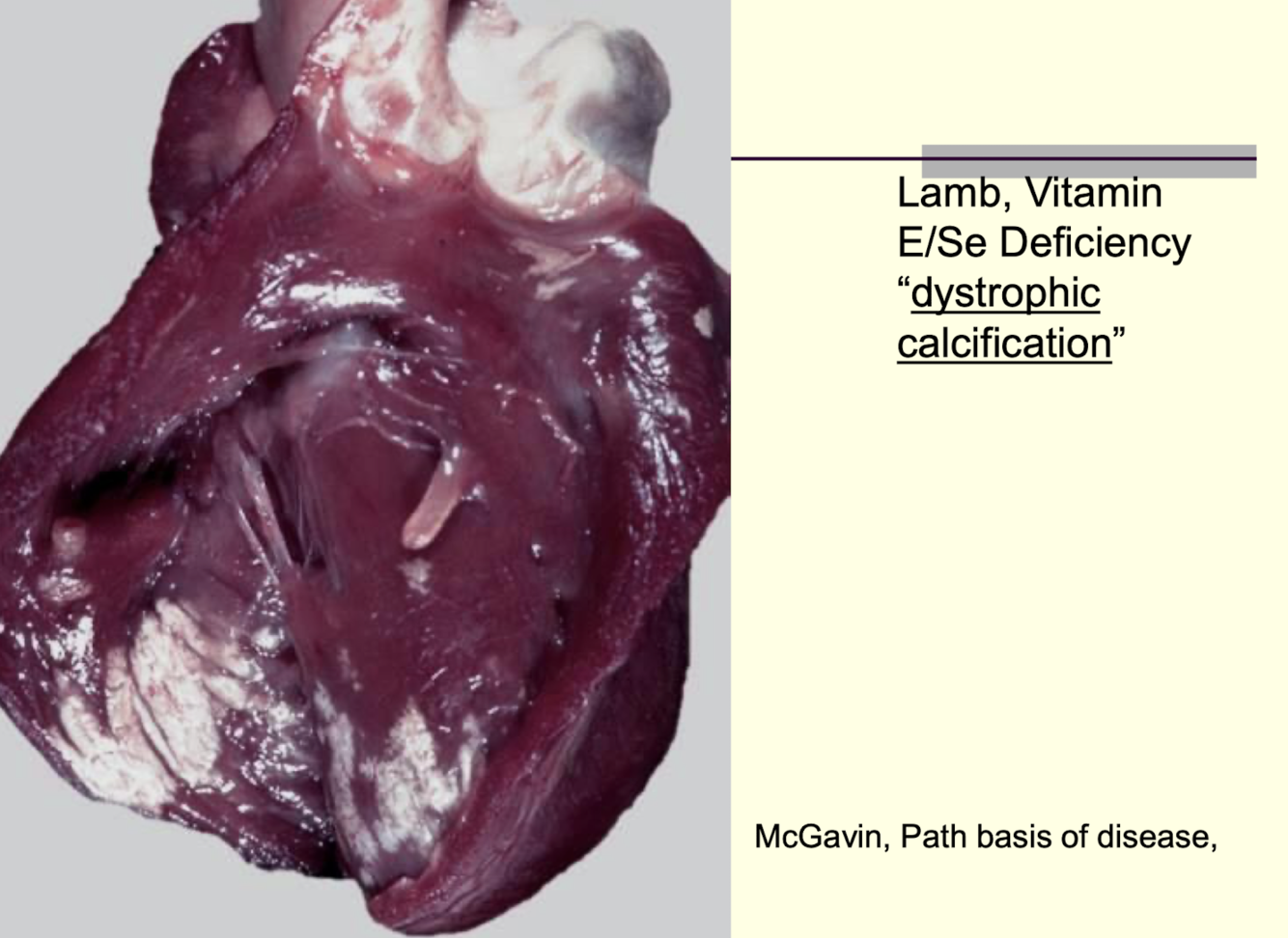
Causes can be vitamin E / Selenium deficiency
There will be areas of normal adipose tissue (labeled A) and abnormal calcification ( usually on left ventricle (labeled b)
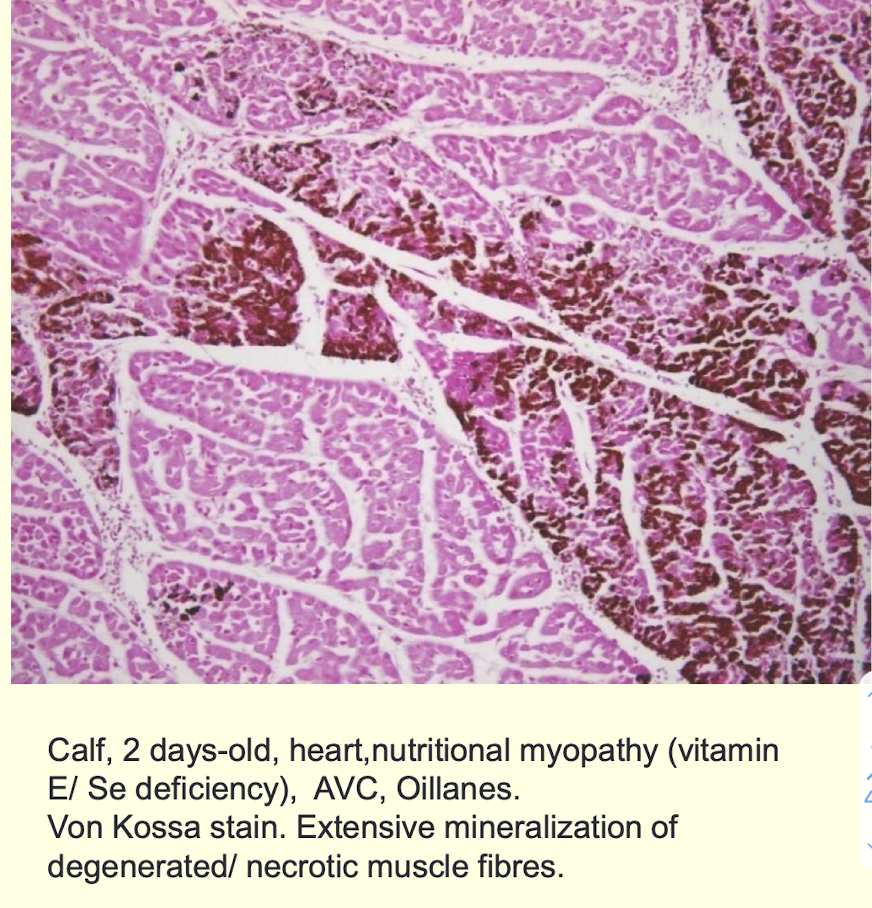
How can you tell if there is calcification when you make your incision? Where is the calcification in this histology slide?
You can tell when making your incision if there are calcium deposits because it will feel gritty in comparison to other areas.
The calcium deposits are the dark red areas in this slide.
What is occuring in these images? What is the causes of the lesions? Where can it be seen most commonly?
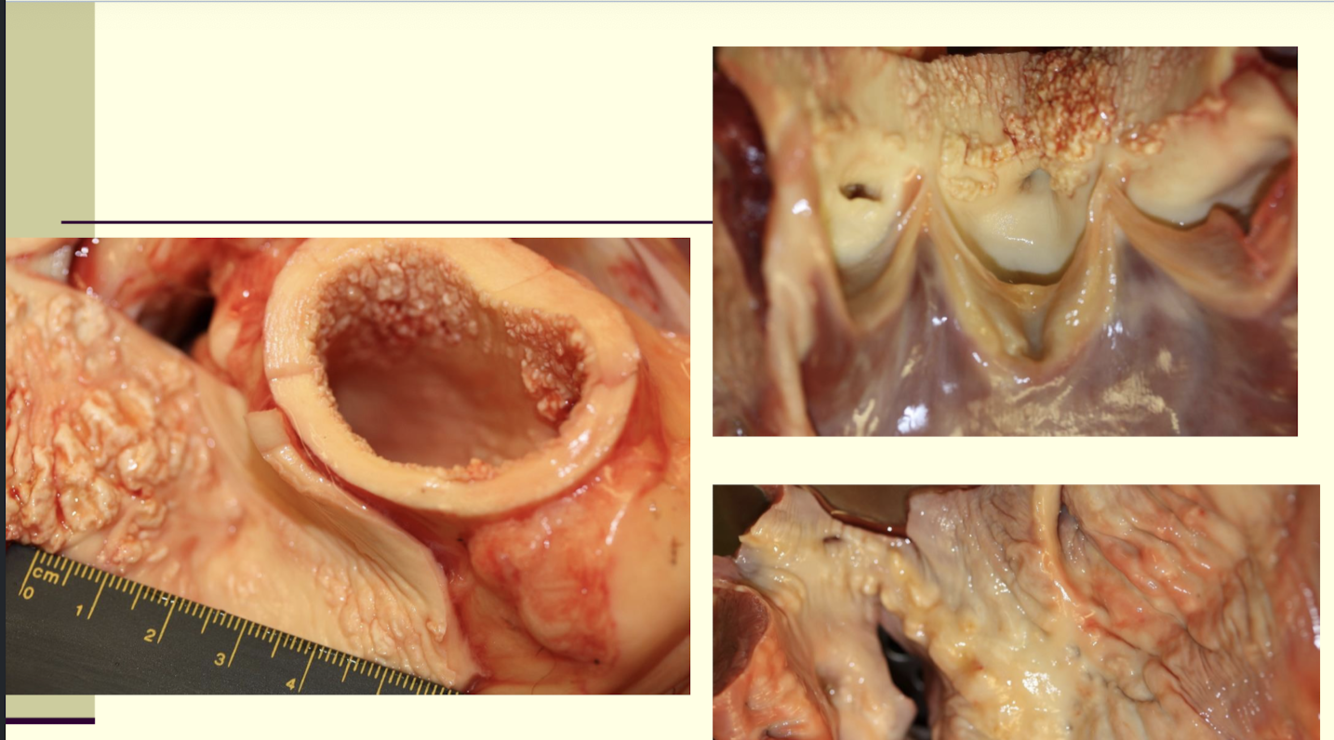
This is Metastatic calcification. Cases of Vitamin D toxicity can cause calcium deposition in organs causing metastatic calcification. You will see it most commonly in the intima of major vessels, and you will see raised, granular mineralization.
What can cause vitamin D toxicity?
Vitamin D toxicity, access to plants that are carcinogenic, that contains vitamin D analogs which can cause hypercalcemia due to excessive vitamin D.
Is Uremic gastritis Dystrophic or metastatic calcification?
Metastatic Caclification.
What is Uremic gastritis? What are causes of uremic gastritis?
- Renal failure -> Secondary Hyperparathyroidism -> Hypercalcemia.
- Uremia induces vasculitis -> this causes thrombosis in different tissues, including GI tract. This is called uremic gastritis. Sometimes this is the cause of lesions such as this in patients with renal failure.
- This accumulation of urea, nitrogen products in blood of individual with renal failure will cause vasculitis in the mucosa of the stomach, mucosa of intestine, can lead to thrombosis/ ischemic damage to the tissue, which will cause degeneration/ necrosis and then dystrophic calcification.
- Can also develop secondary hyperparathyroidism (which would lead to metastatic calcification.
What occurs with renal failure?
• Renal Failure:
◦ Retention of phosphates-> increased stimulation of parathyroid gland -> increase in parathyroid hormone -> stimulation of osteoclasts -> increased calcium absorption ( increased calcium level (aka hypercalcemia))
This can lead to dystrophic/ metastatic calcification
What is occuring in this image?
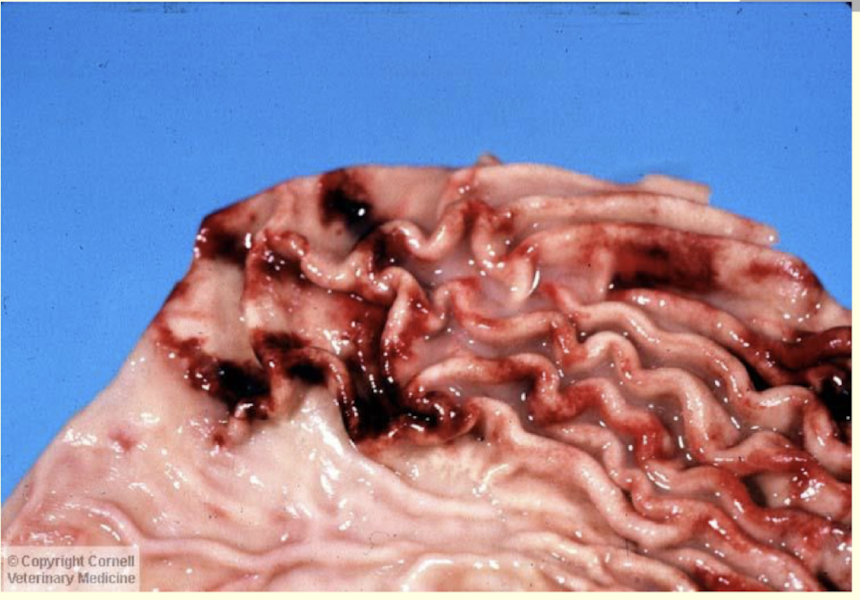
Uremic Gastritis
What is occuring in this image? What will you feel when palpating this area?
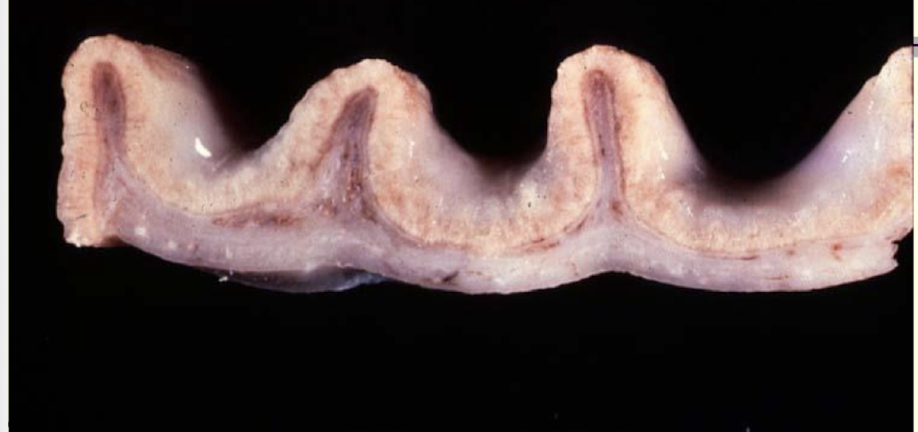
Uremic gastritis leading to gastric mineralization.
In this image you can see the mineralization of the mucosa of the intestines.
• You will feel hard tissue in the intestines, this would be deposition of calcium w/in intestinal lumen.
When can familial renal disease show signs
Familial renal disease can show signs at 2 years old.
What will you see with familial renal disease? What will you see on histology segments?
You can see congestion and hemorrhage, and inflammation. When the stain (von Koda) is done you can see increased calcium deposits within the mucosa. Could be dystrophic due to vasculitis and ischemia which leads to necrosis, or it could be metastatic due to secondary hyperparathyroidism.
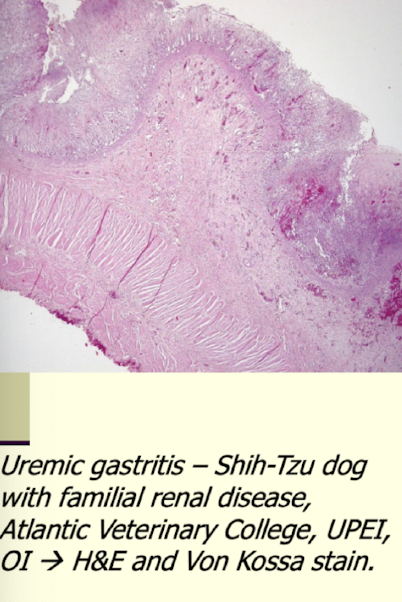
What would a histological slide like the one below be showing?
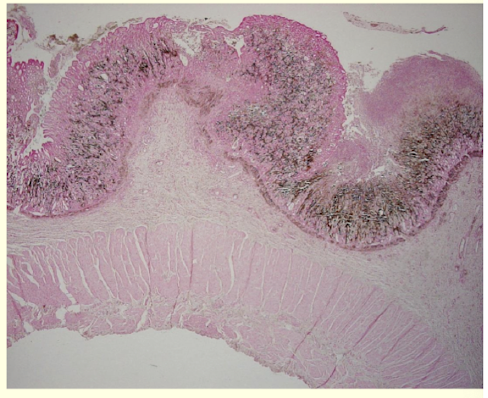
Metastatic calcification
What is subpleural mineralization and where can this be seen? What is this a consequence of?
Y ou can see this sometimes in patients with renal failure,. Their could be areas of subpleurital mineralization. This is considered to be both metastatic/ dystrophic depending on the cause. Can be found on the inside of the ribs
What are the three categories of pigments and where are they formed?
Exogenous (formed outside the body)
Endogenous (formed inside the body)
Hematogenous (blood origin)
What are examples of exogenous pigments?
- Carbon
- Tattoos
- Dusts
- Carotenoids
- Tetracyclin
What is anthracosis? What is its cause? Where can it be found? Is it clinically significant?
- position of carbon particles is called anthrocosis
- most common in lungs, bronchi, regional lymph nodes, ect.
- From carbon deposition within these areas. Can be seen in areas with high air pollution. Can be seen on pleural surface.
- Not clinically significant, but can be an indication of exposure to air pollution.
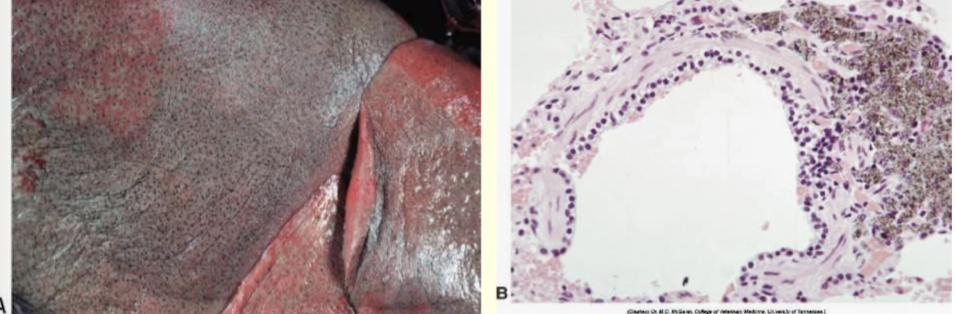
What is the most exogenous pigment and what can it lead to?
Carbon is the most exogenous pigment. Portal entry is usually by inhalation and can lead to black lungs. This is common in areas with substantial air polution.
What are tattoos used for in animals and what occurs to them after they are introduced to the body?
- tattoos used to identify animals.
- these pigments are phagocytized by macrophages while others remain free in the Dermis without eliciting an inflammatory response.

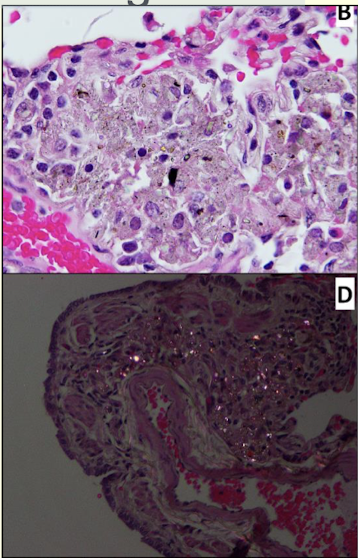
What are dusts? What are the conditions associated with it ?
Dusts. The condition associated with the inhalation and
retention inorganic dusts within the lungs is known as Pneumoconiosis
When the term dust is used, what are the stains that are typically used? What are the concerns with inhaling these substances?
This term is usually applied to the inhalation of silica
or asbestos (asbestosis) that may lead to significant
pulmonary fibrosis.
- Silica crystals are birefringent under
polarized light. Mild will not show any clinical significance.
You don’t see it often. (Sometimes when there is exposure of volcanic ash.
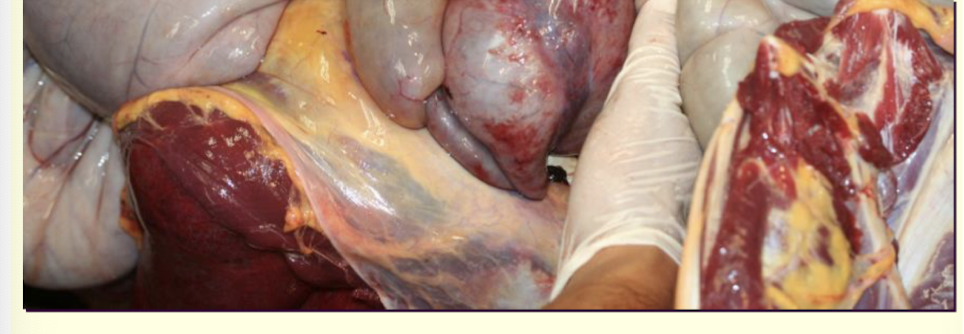
What are carotenoid pigments?
- Fat soluable pigements of plant origin
- Can be seen by over abundance of certain vitamin A precursors.
- Can be seen in the adipose tissue. Due to consumption of feed with high level of pigment. Seen in horses and cattle.


-
Cell Injury- Week 165
-
Cell Adaptations & Accumulations32
-
Irreversible Cell Injury and Cell Death30
-
Exam # 1148
-
Post Mortem Changes28
-
Irreversible Cell Injury and Cell death70
-
Pathologic Calcification64
-
Circulatory Disturbances - Part 166
-
Circulatory Disturbances - Part 294
-
Exam # 2224
-
Acute Inflammation94
-
Chronic Inflammation70
-
Morphologic Diagnosis77
-
Mechanism of Disease - Introduction to microbial pathogenesis45
-
Neoplasia Part 154
-
Neoplasia Part 240
-
Morphologic Diagnosis 289
-
Exam # 3 - Final184


