quality of evidence
SIGN guideline 118, feb 2010
1++ High quality meta-analyses, systematic reviews of RCTs, or RCTs with a very low risk of bias
1+ Well conducted meta analyses, systematic reviews or RCTs with a low risk of bias
1- Meta analyses, systematic reviews or RCTs with a high risk of bias
2++ High quality systematic review of case control or cohort studies
High quality case control or cohort studies with a very low risk of confounding or bias and a high probability that the relationship is causal
2+ Well conducted case control or cohort studies with a low risk of confounding or bias and a moderate probability that the relationship is causal
2- Case control or cohort studies with a high risk of confounding or bias and a significant risk that t he relationship is not causal
3 Non-analytic studies, e.g. case reports, case studies
4 Expert Opinion
anomalies in evidence can be due to
mistakes in survey gathering
describe
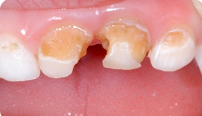
clinical photograph
4 or 5 years (deciduous)
3 incisors grossly carious
Pain, before non-vital
Likely bottle fed caries
what is Fluroide
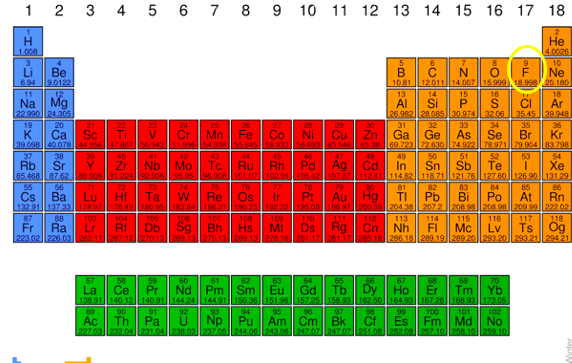
- Fluoride is the anion of the element fluorine.
- Atomic symbol F,
- atomic number 9 (similar size to oxygen)
- Fluorine ~ non metal.
- Halogen – they are found in the environment only in compounds or as ions
13th commonest element
- Halogen – they are found in the environment only in compounds or as ions
Hydroxyapatite -> fluoroxyapatite
Ca5(PO4)3OH + F → Ca5(PO4)3F + OH
intermediate CaF2
importance in mineral structure
Packs tighter into Hydroxyapatite – post eruption more effective
enamel formation
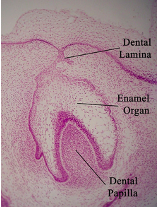
- Internal enamel epithelium induced by the dental papilla which was originally induced by the enamel organ or dental lamina – a migration of neural crest cells.
- Internal enamel epithelium produces ameloblasts for the enamel
- Dental papilla produces the odontoblasts for the dentine.
Preameloblasts initiated by dental papilla
- Elongate to become, secretory ameloblasts.
Ameloblasts stimulate dentinogenesis.
- Secretory stage, ameloblasts move from dentine.
Tomes’ processes angled, which gives differences in crystallite orientation and structure.
Differential movement leads to enamel rods.
Maturation stage, the ameloblasts mineralise the enamel – pre-eruptive fluoride action?
water fluoridation
adjustment of fluoride ion to the UK optimum of 1ppm (1mg/l);
- 1ppm in a temperate climate.
- Varies 0.5ppm ~ 1.2ppm;
- related to ambient air temperature; latitude
how is optimum level of fluoridation (1ppm F (1mg/l)) obtained in UK
- Hydrofluorosilicic acid or hexafluosilicic acid H2SiF6
- Sodium fluorosilicate or sodium silicofluoride, Na2SiF6
history of water fluoridation
1901 Dr Frederick McKay dentist moved from Philadelphia to Colorado Springs
During 1909 dental inspection of 2,945 children.
- 87.5% had stain, all native to the region.
Colorado Brown Stain
- Stained teeth – dental fluorosis
- Only in lifelong residents
- Distinct geographical areas
- No more likely to have caries – less like
1920s – Brown stain from the water
1930s – assay for fluoride developed
1931 – H Trendley Dean studies in USA
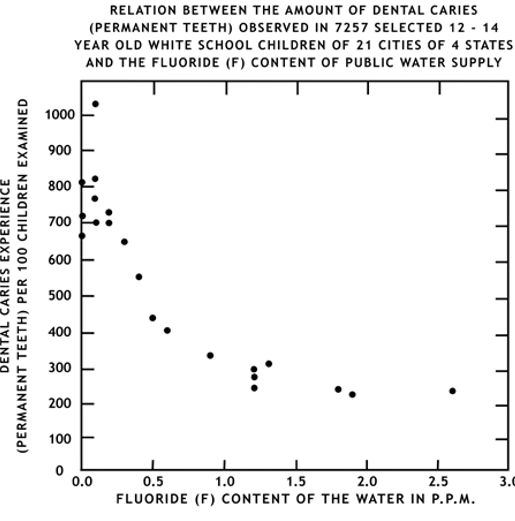
Dose response – fluorosis and caries 1ppm optimal dose to minimise both
first water fluoridation trial
1945
- Muskegon – negative control (source lake michigan)
- Grand Rapids – study town (source lake michigan)
- Aurora – positive control 1.2ppm
Results
- Grand Rapids – study town adjusted to 1ppm
- Muskegon – negative control (F < 0.2ppm)
- (fluoridated in 1951 - results were so good)
- Aurora – positive control 1.2ppm
50 – 63% reduction in DMFT of 12/14-year-olds
48 – 50% reduction in DMFT of 15/16-year-olds
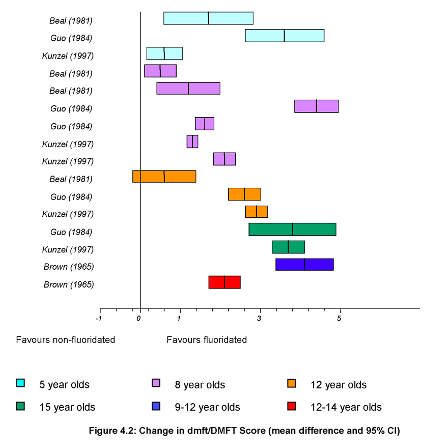
forrest plot for systematic review of water fluoridation
Vertical line is no difference and we can see they all favour fluoridation.
One crosses the line so the difference is not statistically significant from zero, I bet they wished they had seen a larger sample
Centre for NHS Reviews & Dissemination University of York, review of Water fluoridation
confimed
- 14.6% more children will be decay free mean reduction in dmft/DMFT of 2.25 teeth per child.
Confirms that fluoridation is effective.
review confirms that water fluoridation works -reduces tooth decay.
is water fluoridation safe?
- no evidence of a link with adverse health effects, specifically bone fractures or cancers.
- The review found that water fluoridation is safe.
confirms that water fluoridation and brushing with fluoride toothpaste are complementary.
The only other population-based measure they could consider was the introduction of fluoride toothpaste
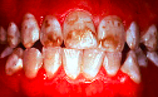
enamel mottling / dental fluorosis
At 1ppm
- overall 48% prevalence of fluorosis
- 12.5% fluorosis of aesthetic concern
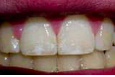
Enamel Mottling
- Staining, over 90 causes
- Later good UK studies (photographic)
- 1% Non F
- 4% with F – most mild or very mild
- Earlier possible publication / observer bias?
water fluoridation and healthl inequalities
review confirms fluoridation is likely to reduce differences in severity of tooth decay between social classes among 5-year-old children.
review confirms that fluoridation is beneficial in reducing differences in severity of tooth decay between social classes among 5-year-old children (water fluoridation reduces dental health inequalities for this age group)
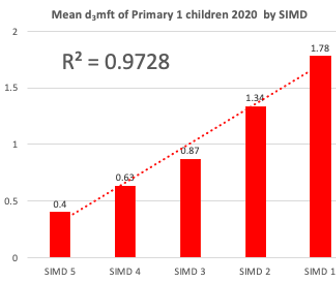
water fluoridation - good or bad at improving inequalities?
‘In the majority of studies water fluoridation reduced dental caries inequalities between high and low social groups; in no study did water fluoridation increase inequalities’. Medical Research Council 2002
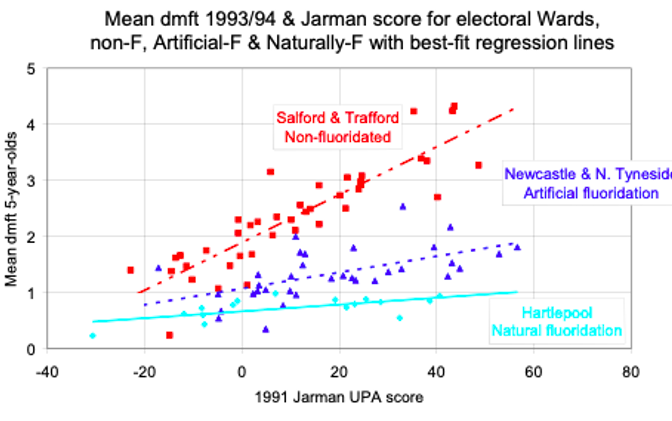
negative control - group that drinks fluoridated water
positive control - drinking slightly more
- see the steepness of the gradient showing the relationship between tooth decay and the Jarman score (just a measure of deprivation)
how water fluoridation reduces the steepness of the curve and levels the playing field when it comes to tooth decay
ethical issue of water fluoridation ?
- Beneficial
- Has no harmful consequences
- Not infringe any basic human right
- (no right to drink fluoride-free water – only a personal preference)
- Replicate a situation found naturally in some places
- Could be unethical not to fluoridate where practicable to do so
current water fluoridation
- Scotland - 0% Natural fluoride, 0.04 – 0.5ppm
- USA 73% - 207 million
- Canada 45% - 32 million
- England 10% - 6 million
- ire 67% - 3 million
- Israel 70% - 4.2 million
- Australia 65% - 11.5 million
- New Zealand 61% - 2.3 million
- Singapore & Hong Kong - 100%
act of water fluoridation
Water fluoridation is adjusting this natural fluoride concentration to 1ppm.
Scotland the level of fluoride in the water varies from 0.001 ppm to 1ppm.
current legislation of water fluoridation in scotland
- Water (Fluoridation) Act 1985 (now consolidated into the 1991 Water Industry Act)
- No new water fluoridation anywhere in the UK
- Water Act 2003, Section 58 (Fluoridation of Water supplies) Applies in E &W
UK study of water fluoridation effect
water fluoridation health monitioring report 2014
- Accounting for deprivation & ethnicity, 12-year olds in fluoride areas are 21% less likely to have had caries than in non-fluoride areas.
- The reduction in tooth decay in children in fluoridated areas appears greatest among those in the most deprived local authorities.
- study of fluoridated Newcastle and non-fluoridated Manchester found that of 12-year old children with moderate dental fluorosis or more (fluorosis score of TF4 and above) is very low, at around 1% in Newcastle and 0.2% in Manchester.
- No evidence of different cancer rates between fluoride and non-fluoride areas.
why not introduced water fluoridation?
Scottish Oral Health Improvement Plan 24th January 2018
- Although we recognise that water fluoridation could make a positive contribution to improvements in oral health, the practicalities of implementing this means we have taken the view that alternative solutions are more achievable.
health economics of water fluoridation
Southcentral SHA consultation 2008
- Estimated capital cost of plant £471,000 for 160,000 people.
- Revenue costs are estimated £59,000 a year.
- Estimated to prevent decay in 36,032 teeth over 20 years.
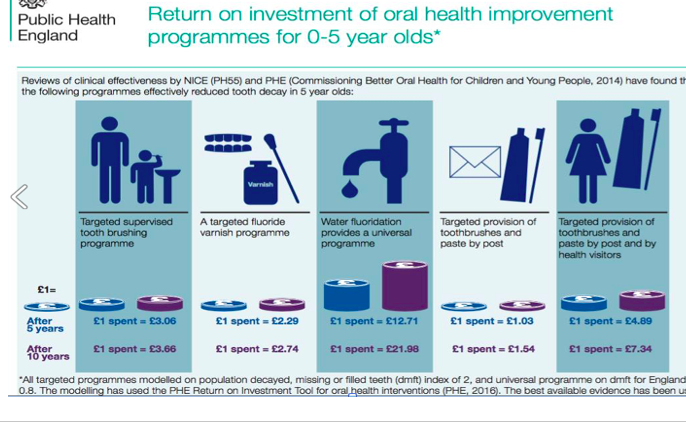
- The cost to prevent tooth decay; 32 pence per tooth.
- 1 surface amalgam @ £9 or composite £17.
- The cost to prevent tooth decay; 32 pence per tooth.
Cost benefit ratio of water fluoridation is 28:1 (900:32) for an amalgam filling or 53:1 (1700:32) for a composite
INVESTMENT

-
Communication 1 - Helping people change42
-
Smoking Cessation58
-
E Cigarettes30
-
Quit Your Way21
-
Health Inequalities94
-
Alcohol Advice111
-
Epidemiology III46
-
Community Based F delivery37
-
Water Fluoridation25
-
Human Factors16
-
Domestic Abuse53
-
Evidence Based dentistry33
-
epidemiology IV38
-
quality and safety43


