What is this?
What does this suggest (with signs)?
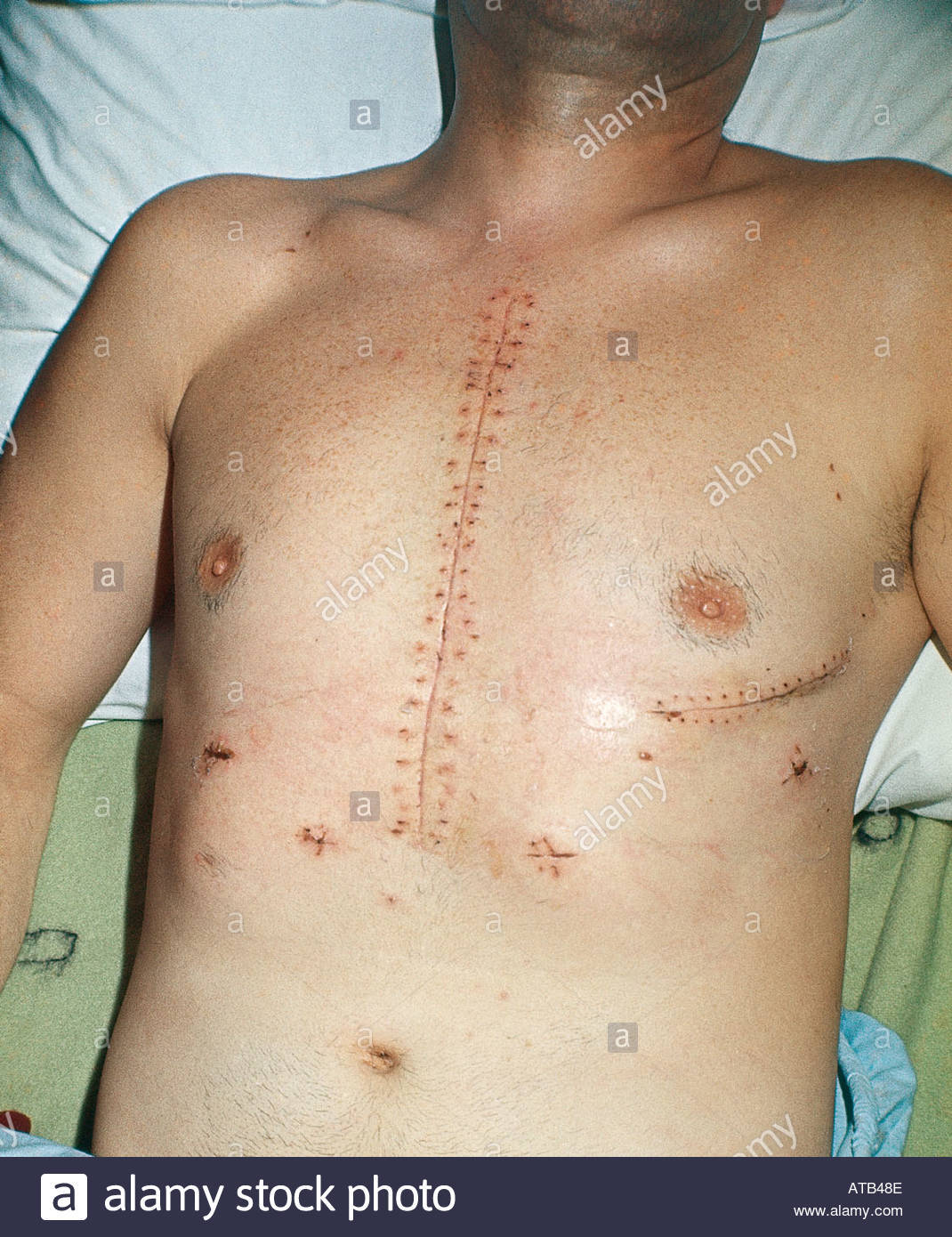
Median sternotomy -running from the suprasternal notch vertically in the midline to the xiphisternum (subtotal=incision from sternomanubrial junction to 5th/6th IC space)
(Description This is a photograph of the wounds after cardiac surgery The wound in the chest is called a sternotomy because the sternum has been divided The sutures used to close the wounds have been removed leaving classic train track scars Puncture wounds where chest drains have been left and subsequently removed can also been seen)
Anatomy enables access to the underlying structures; most commonly heart, also: pericardium, thoracic aorta, oestophagus, trachea, phrenic and cardiac nerves, thoracic duct, thymus and lymph nodes.
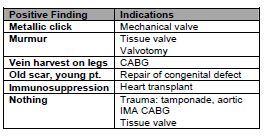
Indications; cardiac (see table), Aortic aneurysm/disection, ?rarely as an alternative approach to resection of lung cancer/oestophagus (the latter with extension), thymectomy (MS)
Define: Chronic heart failure
Definition: Cardiac output is inadequate for body’s requirements despite adequate filling pressures.
LVF
causes/Sx/signs
- *Causes**
1: IHD
2: Idiopathic dilated cardiomyopathy
3: Systemic HTN
4: Mitral and aortic valve disease
Symptoms
- Fatigue
- Exertional dyspnoea
- Orthopnoea + PND
- Nocturnal cough (± pink, frothy sputum)
- Wt. loss and muscle wasting
Signs
- Cold peripheries ± cyanosis
- Often in AF
- Cardiomegaly c¯ displaced apex
- S3 + tachycardia = gallop rhythm
- Wheeze (cardiac asthma)
- Bibasal creps
RVF
causes/Sx/signs
Causes
- LVF
- Cor pulmonale; an alteration in the structure and function of the right ventricle (RV) of the heart caused by a primary disorder of the respiratory system (pulmonary HTN)
- Tricuspid and pulmonary valve disease
Symptoms
- Anorexia and nausea
Signs
- ↑JVP + jugular venous distension
- Tender smooth hepatomegaly (may be pulsatile)
- Pitting oedema
- Ascites
Chronic heart failure classification
- *New York Classification**
1. No breathlessness
2. Breathless c¯ moderate exertion
3. Breathless c¯ mild exertion
4. Breathless at rest
Investigations for Chronic HF
Bloods: FBC, U+E, NT-proBNP, lipids, glucose
NT-proBNP
- Secreted from ventricles in response to ↑ stretch and ↑HR
- ↑ levels is most accurate diagnostic indicator of HF
- NICE recommends that heart failure is not Dx w/o ↑ BNP
- Used to;
- rule out a Dx of HF in pt with acute dyspnoea (if low v.unlikely HF, if raised Ix)
- Prognosis in pt with CHF
- guide Rx in pt with CHF (effective Rx lowers BNP)
CXR: ABCDEF
- Alveolar shadowing
- Kerley B lines
- Cardiomegaly (cardiothoracic ratio >50%)
- Upper lobe Diversion
- Effusions
- Fluid in the fissures
ECG
- Ischaemia
- Hypertrophy
- AF or other arrhythmia
Echo: the key investigation
- Global systolic and diastolic function
- Ejection fraction normally ~60%
- Focal / global hypokinesia
- Hypertrophy
- Valve lesions
CHF Management
(gen, spec, surg/other, trials)
General
- MDT: GP, cardiologist, physio, dietician, specialist nurses
- Optimise CV risk: statins, anti-HTN, DM, anti-plat
- Monitor: regular f/up and echo
offer annual influenza vaccine
offer one-off** pneumococcal vaccine
Specific
1st: β-B (bisoprolol, carvedilol, and nebivolol) + ACEi + loop diuretic (Bisoprolol/Lisinopril/Frusemide)
2nd: add Spironolactone OR hydralazine in combination with a nitrate
3rd: consider ?ivabradine or digoxin (not been proven to reduce mortality in patients with heart failure. It may however improve symptoms due to its inotropic properties. Digoxin is strongly indicated if there is coexistent atrial fibrillation)
4th: consider cardiac resynchronisation therapy
Surgery
LVAD
Heart transplant
Trials Showing Drug Benefit in Heart Failure
- β-B: CIBIS-2, MERIT-2
- ACE inhibitors (SAVE, SOLVD, CONSENSUS)
- spironolactone (RALES)
- beta-blockers (CIBIS/MERIT-2)
- hydralazine with nitrates (VHEFT-1)
- ARB = ACEi: ELITE-2
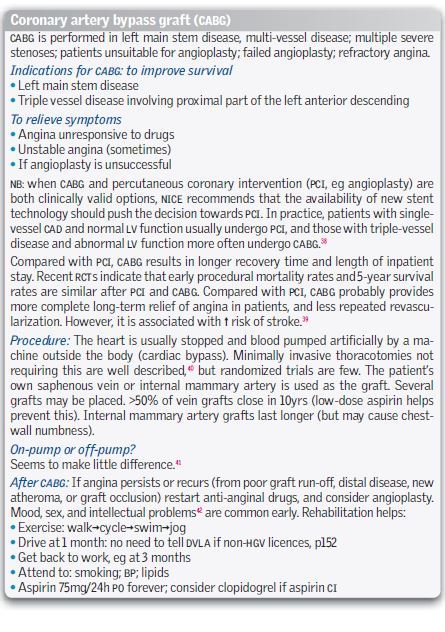
Tell me about CABG
Aortic stenosis Examination (and differentials)
peripheral/pulse/precordium
sig negatives
(differentials)
- *Peripheral Inspection**; Often nothing specific
- *Pulse**
- Slow-rising (anacrotic)
- Narrow pulse pressure (<30mmHg)
Precordium
- Pacemaker
- Aortic thrill
- Apex: Forceful, non-displaced (pressure overload)
- Heart Sounds
- Quiet A2
- Early syst. ejection click if pliable (young) valve
- S4 (forceful A contraction vs. hypertrophied V)
- Murmur
- ESM
- Right 2nd ICS
- Sitting forward in end-expiration
- Radiates to carotids
- Clinical Signs of Severe AS
- Quiet / absent A2
- S4
- Narrow pulse pressure
- Decompensation: LVF (may have loud P2 if PHTn due to CCF)
Significant Negatives
- Infective endocarditis
- LVF
- Indicators of severity; quiet/absent A2, S4, narrow pulse pressure, decompensation: LVF
Differential
- Aortic sclerosis: no radiation, normal pulse character
- MR
- HOCM: valsalva ↑s murmur, squatting ↓s murmur (in AS valsalva-decreases systemic venous return->softens AS)
- Right-sided: PS
Causes of AS
- Age-related senile calcification
- Bicuspid aortic valve
- Rheumatic heart disease
Viva AS Hx (clinical Sx of severe AS)
Hx: Clinical Symptoms of Severe AS
- Angina: 50% dead in 5yrs
- Syncope: 50% dead in 3yrs
- Dyspnoea: 50% dead in 2yrs
AS Ix
ECG
- LVH
- Arrhythmias
- *Blood**: FBC, U+E, NT-proBNP, lipids, glucose
- *CXR**
- Calcified AV
- LVH
- Pulmonary oedema
Echo + Doppler
- Severity
- Echo Features of Severe AS (AHA 2006)
- Valve area <1cm2
- Pressure gradient >40mmHg
- Jet velocity >4m/s
- Echo Features of Severe AS (AHA 2006)
- Cause: Bicuspid valve, thick calcified cusps
- LV function
- Other valve function
Cardiac Catheterisation
- Valve gradient
- Assess coronaries (needed if surgery planned)
AS Management
General
- MDT: GP, cardiologist, cardiothoracic surgeon, dietician, specialist nurses
- Optimise CV risk: statins, anti-HTN, DM, anti-plat
- Monitor: regular f/up and echo
Surgical: Valve Replacement ± CABG
- Indications
- Symptomatic AS
- Severe asymptomatic AS c¯ ↓ EF (<50%)
- Severe AS undergoing CABG or other valve op
- Mortality: 3-5% depending on pts. EuroSCORE
Other Options
- TAVI: Transcatheter Aortic Valve Implantation
- Balloon valvuloplasty
Atrial fibrillation
examination
(general, causes, pulse, precordium, completeion)
and negatives!
Peripheral Inspection
- General
- Warfarin alert bracelet
- Cause
- ↑T4: tremor, thin, palmar erythema, sweating, eye signs
- MS: mitral flush
Pulse
- Irregularly irregular
Precordium
- MS: MDM
- MR: PSM
- Other murmurs
Completion
- Respiratory examination: pneumonia
- Exercise pt. to bring out any murmur
Significant Negatives
- Murmur
- Evidence of thyrotoxicosis
- LVF
- Bruising from warfarin
Causes of AF
common/other
Common
- IHD
- Rheumatic heart disease
- Thyrotoxicosis
- Hypertension
Other
- Pneumonia
- PE
- Post-op
- Hypokalaemia
- Alcohol
- RA
AF Viva Hx
Symptoms: palpitations, dyspnoea, chest pain
- Aware of specific onset
Causes
Warfarin: look @ yellow book
Investigation of AF
ECG
- Confirm Dx: irregularly irregular, no P waves
- Cause: ischaemia, P-mitrale
Bloods
- FBC: pneumonia, sepsis
- U+E: ↓K
- TFTs: ↓TSH, ↑fT4
- Troponin
- D-dimer: PE
CXR
- Pulmonary oedema
- Calcified mitral valve
- Pneumonia
Echo
- Valve pathology
- LV function
- TOE: left atrial thrombus
Differential Dx for Irregularly irregular pulse
…and clinical distinction
Differential of Irregularly Irregular Pulse
- AF
- Multiple ventricular ectopics
Clinical Distinction
- Exercise pt.
- AF: pulse stays irregularly irregular
- VE: ↑ HR → regular pulse
- ↓ diastole time closes window for ectopics
AF
what is pulse deficit
Pulse Deficit
- Difference in HR @ wrist and @ apex
- Rapid ventricular rate → ↓ diastolic filling → ↓CO
Management of AF
(not risk strat etc)
Acute AF ≤48hrs
- Haemodynamically unstable → cardioversion
- Stable
- Rate control: diltiazem or metoprolol
- Start LMWH
- Cardiovert: DC or medical (flec or amiodarone)
Paroxysmal AF
- Recurrent episodes lasting <7d
- Pill in pocket: flecainide or amiodarone
- Prevention: β-B or sotalol
Persistent AF
- Lasting >7d
- Rhythm control*
- Younger pts., treated precipitants
- ≥3wks anticoagulation c¯ Warfarin first or TOE to exclude mural thrombus
- Cardioversion: DC or medical
- May need maintenance anti-arrhythmic
- Rate control*
1st: β-B or rate-limiting CCB
2nd: add digoxin (not monotherapy) - Permanent AF (*Failed cardioversion / unlikely to succeed) =Rate control
- Other options:
- Radiofrequency ablation of AV node
- Maze procedure
- Pacing
Anticoagulation scoring system
CHA2-DS2-VAS Score
- Determines necessity of anticoagulation in AF
- Dabigatran >warfarin (unless metal valve/CI etc)
- Aspirin is no longer recommended for reducing stroke risk in patients with AF
CHA2-DS2
- CCF
- HTN
- Age≥75 (2 points) 65-74 (1 point)
- DM
- Stroke or TIA (2 points)
VS
- Vascular disease
- Sex: female
HAS BLED
- HHypertension, uncontrolled, systolic BP > 160 mmHg 1
- AAbnormal renal function (dialysis or creatinine > 200) Or Abnormal liver function (cirrhosis, bilirubin > 2 times normal, ALT/AST/ALP > 3 times normal=1 for any renal OR liver abnormalities
- SStroke, history of 1
- BBleeding, history of bleeding or tendency to bleed 1
- LLabile INRs (unstable/high INRs, time in therapeutic range < 60%) 1
- EElderly (> 65 years) 1
- DDrugs Predisposing to Bleeding (Antiplatelet agents, NSAIDs) Or Alcohol Use (>8 drinks/week) 1 for drugs OR alcohol
AF anticoagulation options
NICE recommend that we offer patients a choice of anticoagulation, including warfarin and the direct oral anticoagulants (DOACs). There are complicated rules surrounding which DOAC is licensed for which risk factor - these can be found in the NICE guidelines. Aspirin is no longer recommended for reducing stroke risk in patients with AF
- *Warfarin**
- Contraindications*
- Bleeding diathesis
- Compliance issues: dosing, monitoring
- Risk of falls
- PUD
- Pregnancy
- Pt. choice
Complications
- Bleeding
- Osteoporosis
Advice
- Requires regular monitoring and titration of dose
- Avoid certain foods: e.g. grapefruit
- Care starting new meds
- Wear medic alert bracelet
- Come to hospital if uncontrolled bleeding
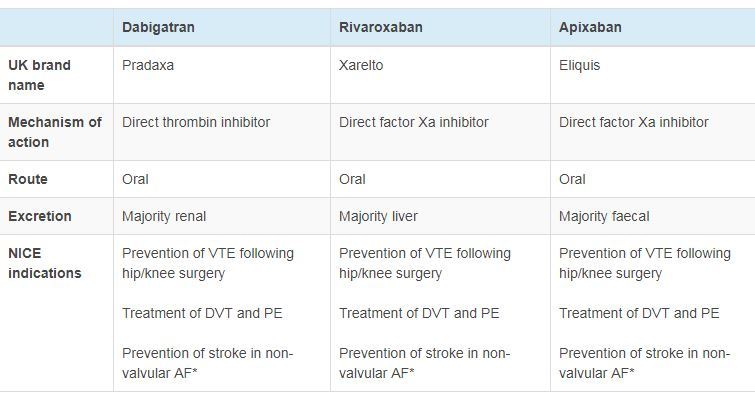
DOAC The table below summaries the three DOACs: dabigatran, rivaroxaban and apixaban.
MS
examination
(peripheral inspection, pulse, precordium, clinical signs of severe MS sig negatives!)
Peripheral inspection
- middle aged female
- warfarin medical alert bracelet
- Malar Flush: CO->back pessure + vasoconstriction
Pulse: AF
Precordium
- LEft parasternal heave: RVH 2ndary to PHT
- Apex: tapping (palpable S1), non-displaced
- Heart sounds:
- Rumbling MDM
- Loudest at Apex…in Left lateral position in end expiration…with the bell
- Radiates to the axilla
- Pre-systolic accentuation if pt in sinus rythm-due to atrial contraction
- ?! possible additional murmus e.g. Graham steel murmur- Pulmonary Regurgitation - EDM (PHT->PR)
clinical signs of severe MS:
- Malar flush
- longer murmur
- LVF
significant negatives
- infective endocarditis
- severity: LVF, malar flush, long murmur
- PHT:
- Malar flush
- raised JVP with large V waves
- Left parasternal heave
- loud P2
MS
main differentials (i.e. other diastolic murmurs)
AR
R sided: PR, TS


-
Neurology153
-
Neuro (Imperial Jan Revision Course)13
-
Resp (Imperial Jan Revision Course)27
-
Abdo (Imperial Jan Revision Course)23
-
Vascular (Imperial Jan Revision Course)12
-
Vascular101
-
Cardiology73
-
Respiratory98
-
Random viva Qs61
-
Ortho/Msk81
-
Acute153
-
Surgical abdomen115
-
Vascular quick pics22
-
Superficial lesions77
-
Breast29
-
Medical Abdomen160
-
Medical Shorts (->find cards in Imperial Revision course)1
-
Images and Instruments (->find in Images & Instruments HAWTHORNE)1


