Quintessential … indefatigable … the vibrant embodiment of evasive frameworks.
If those words hurt your brain, you’re not alone! They aren’t easy to make sense of, even for a native speaker, but they are good TOEFL reading practice, and you could possibly expect to see them on the TOEFL exam.
So, if you’re going to get through the TOEFL iBT Reading section, you’re going to need practice: not just reading practice, but practice answering TOEFL exam-style questions.
In this guide, you’ll get a full breakdown of the test format, insider strategies for studying smarter, an explanation of the 10 types of exam questions, and a free TOEFL Reading Practice Question Bank to test your skills.
By the end, you'll have a better understanding of how to transform complex words into confident comprehension.
What Is The TOEFL Reading Section Like?
The Reading Section of the TOEFL iBT mirrors the kind of reading you’ll do in college. Each passage is based on real-world academic content. Some of it is simplified slightly for clarity, but none of it is fabricated from scratch for the exam. That’s good news! That means that all of your real-world reading supports your preparation for this section.
Here’s what you can expect:
- 2 passages, about 700 words each
- 10 questions per passage
- 35 minutes total
Every question tests your ability to extract meaning from university-level textbooks on a variety of subjects.
Why Is TOEFL Reading Practice Essential?
Reading is one of the most important language skills you’ll need for academic and professional success. In fact, many universities set higher score requirements for the Reading section than for other parts of the TOEFL, because they trust that it accurately shows your ability to operate within an academic context.
That’s because this section reflects how well you can handle real academic texts: the kind you’ll read in university courses.
When you read effectively, you connect new information with what you already know. Skilled readers constantly access previous knowledge, linking new ideas to familiar concepts. That’s what turns reading into true comprehension.
To improve that skill, you need consistent, structured practice. Here’s why TOEFL reading practice matters so much:
- It builds background knowledge. TOEFL passages are drawn from university-level textbooks across many subjects, from psychology and ecology to art history and astrophysics. You’ll need to be comfortable reading about unfamiliar topics.
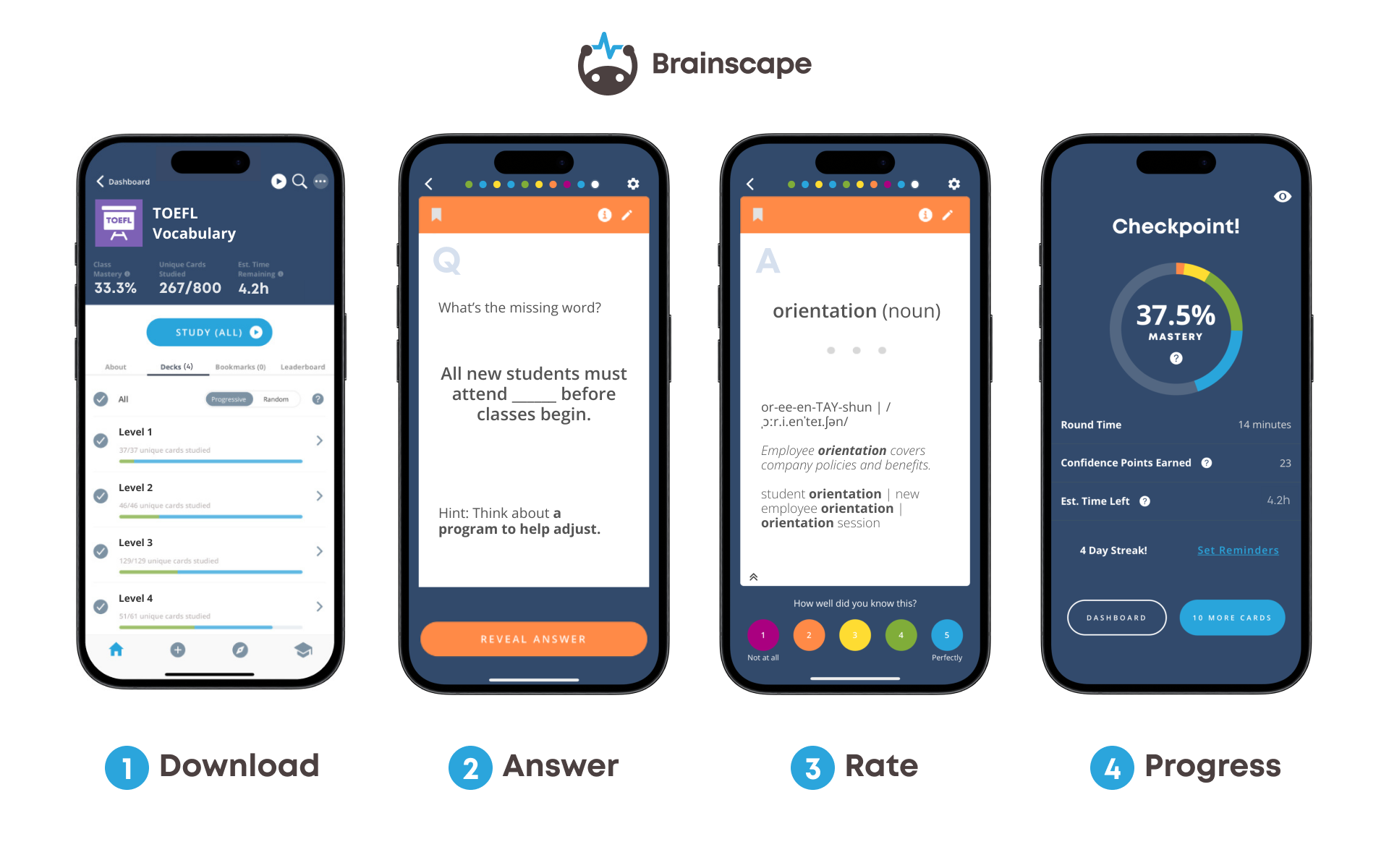
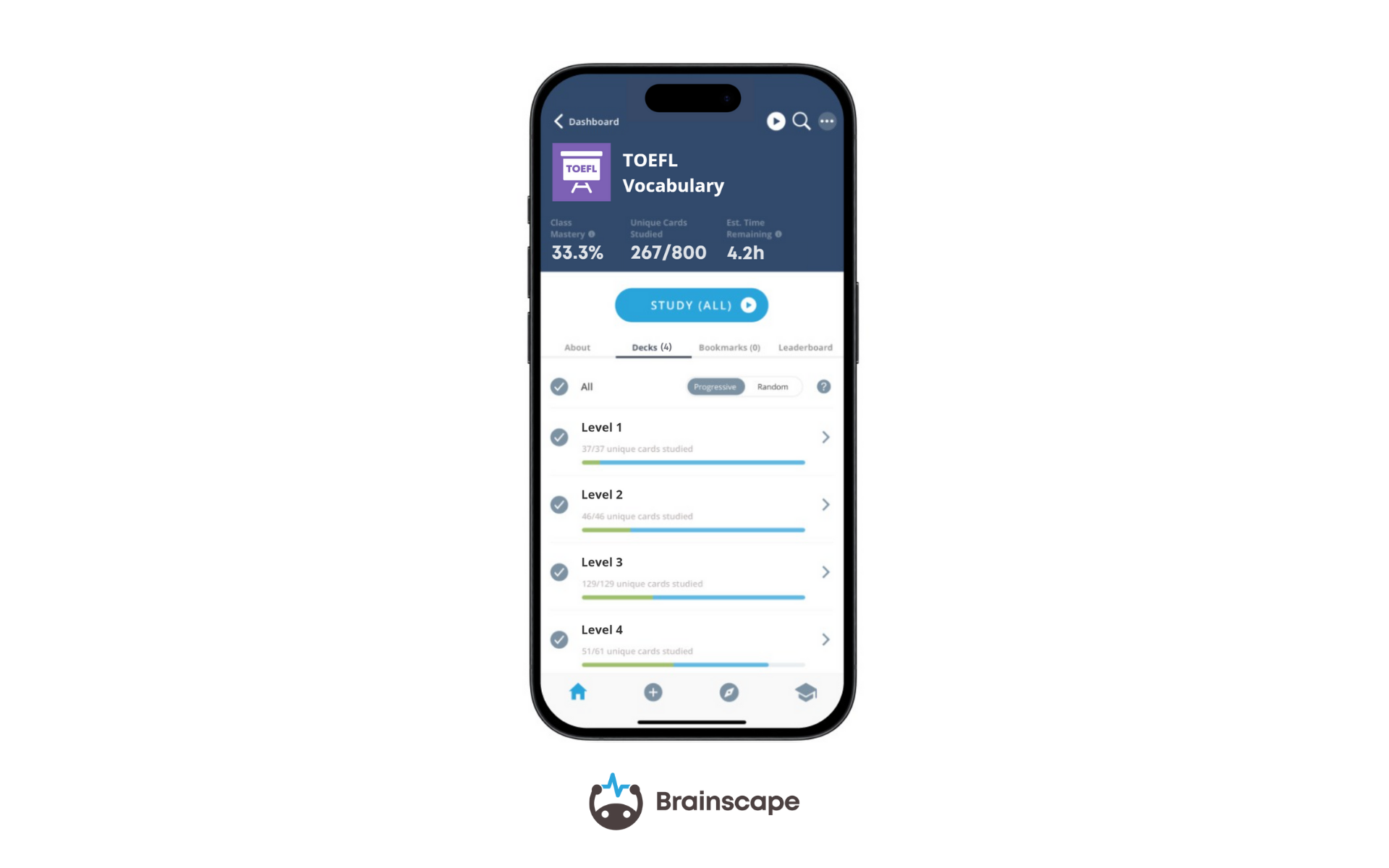
- It strengthens vocabulary. Your understanding depends on how many words you recognize. A strong vocabulary is one of the best predictors of a high TOEFL Reading score. (You can use TOEFL flashcards like these to drill yourself on the kind of vocabulary you can expect to see in the test.)
- It develops academic focus. TOEFL passages are dense and formal, not like reading casual articles online. You’ll need practice to stay focused and absorb information at this level.
- It improves reading speed. The more you read, the faster your brain processes complex structures and vocabulary, helping you finish the section within the time limit.
So don’t worry about reading too widely. The more variety you expose yourself to (science, history, literature, politics, etc.), the faster your vocabulary will grow.
Regular TOEFL reading practice trains your brain to handle the style, structure, and pace of academic English, so when test day comes, you’ll be ready for anything the passage throws at you. (This is why we created this free TOEFL reading practice question bank!)
What Types Of Questions Are On The TOEFL Reading Section?
You’ll find ten types of questions, each with its own purpose:
- Vocabulary: determine the meaning of a word or phrase as used in the passage.
- Reference: identify what a pronoun or reference word (like "this" or "those") refers to in the passage.
- Factual information: identify facts or details that are explicitly stated in the passage.
- Negative factual information: find which option is NOT mentioned or is false according to the passage.
- Inference: identify information that is implied but not directly stated in the passage. Look for clues and use logic to connect ideas that are not stated directly.
- Rhetorical purpose: identify why the author included a particular piece of information or example. What role does it play in supporting the overall argument or idea?
- Sentence simplification: choose a sentence that best expresses the essential meaning of a highlighted sentence. (Tip: there might not be a perfect match! You are looking for the closest option.)
- Insert text: decide where a new sentence best fits within the passage to maintain logical flow and coherence between ideas.
- Prose summary: select statements that best summarize the main ideas of the passage. (Important: the best summary might not include every fact, but it definitely does not include any false information.)
- Fill in a table: group information or statements into the correct categories based on the passage.
How Should You Prepare For TOEFL Reading At Home?
Here’s how to structure your TOEFL exam reading practice without losing your mind:
Step 1: Read Widely: Get comfortable with different writing styles by reading news outlets, academic texts, and any writing that builds your knowledge.
Step 2: Summarize In Your Own Words: After each article, write one-sentence summaries per paragraph. This builds comprehension and paraphrasing skills, both of which are tested on the exam.
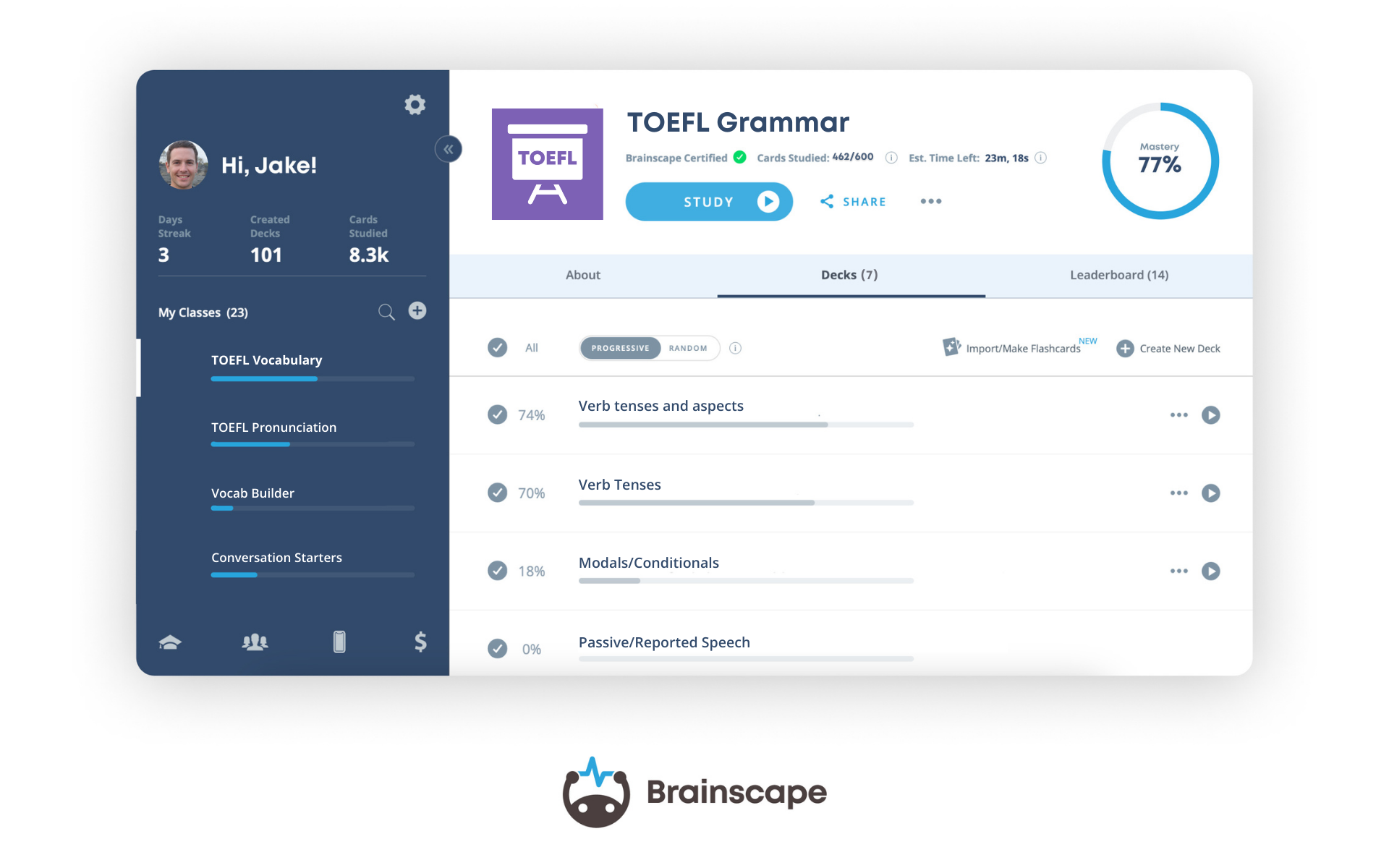
Step 3: Build Vocabulary Decks: Instead of passively reading and skimming past any words you don’t know, make a note of them. Search for their definition, and make an active plan to learn them. Use digital flashcard apps such as Brainscape or Anki to create your own decks for the new words you encounter. Flashcards resurface words at just the right intervals in a process called spaced repetition that helps you memorize faster.
Step 4: Complete TOEFL Reading Practice Questions Under Exam Conditions: Study free from distractions and get used to answering 20 questions in 35 minutes.
TOEFL Reading Practice Questions
You’ve learned the strategies. Now it’s show time! Let’s put your reading skills to the test.
Our free TOEFL Reading Practice Question Bank includes dozens of realistic questions covering every major type found on the exam. Each one is designed to sharpen your comprehension and pacing under real exam conditions.
Before starting, remember these tips to get the most out of your practice:
- Find a quiet space and set a timer to mimic real test pacing.
- Track which question types take you the longest to answer.
- Review the explanations after finishing in order to understand your mistakes and reinforce learning.
When you’re ready, head over to the full TOEFL Reading Practice Question Bank (with answers included) to keep building momentum.
And when you’ve mastered this section, check out our TOEFL Listening Videos, Speaking Practice Prompts, and Writing Practice Questions for a complete prep workout.
What Are The Best TOEFL Reading Strategies?

Smart strategy is half the battle. Here’s how to navigate the Reading Section of the TOEFL iBT efficiently:
Strategy #1: Skim The Passage FirstRead the introduction and first sentence of each paragraph to get the main idea and structure. This helps you predict where answers might appear later.
Strategy #2: Don’t Read Line-By-LineReading every word wastes time. Focus on the paragraph gist first. What’s the point? What’s being explained or argued? Then, you can go back in and read the relevant paragraph for the question you’re answering.
Strategy #3: Recognize Question TypesIs the question asking for a fact, an inference, or a purpose? Identifying the type saves time and points you to the right part of the text. (More on that in our next section.)
Strategy #4: Answer Easy Questions FirstBuild momentum. If a question stumps you, mark it and move on. You can return later if time allows.
Strategy #5: Manage Your TimeDon’t spend more than 90 seconds on a single question. Keep one eye on the clock so you have a chance to answer all available questions.
What Are The Biggest Challenges In TOEFL Reading?
Even strong English speakers get tripped up by these common hurdles:
Challenge #1: Vocabulary Density
TOEFL passages are packed with academic words rarely used in casual conversation. Understanding words like photosynthesis, proliferation, or sedimentation in context takes deliberate practice. Digital flashcards are the most efficient way to drill yourself on this vocabulary.
Challenge #2: Distractors
Many answer choices sound right but twist key details or overstate ideas. Spotting these traps requires careful reading and logic.
Challenge #3: Time Pressure
You have to read quickly but still understand the text. That balance is tough, especially when passages get complicated. The more reading practice you do, the faster you’ll become. (Try our free TOEFL Reading Practice Question Bank so that you can get that practice!)
It’s important to practice with realistic exam-style questions in order to get used to overcoming these challenges.
FAQ Section
How Many Passages Are In The TOEFL Reading Section?
There are 2 passages of around 700 words each in the TOEFL Reading section.
How Many Questions Are In The TOEFL Reading Section?
There are 20 questions in total in the TOEFL Reading section, with 10 per passage.
Do You Get Extra Time For TOEFL Reading?
No, you do not get extra time for the TOEFL reading section. You must complete all questions within 35 minutes.
How Long Is The TOEFL Reading Section?
The TOEFL Reading section gives you around 35 minutes to read 2 texts and answer 20 questions in total.
What’s The Hardest Part Of The TOEFL Reading Section?
Most test-takers struggle with vocabulary density and time management in the TOEFL Reading section.
Can I Improve TOEFL Reading Quickly?
Yes, you can improve your TOEFL Reading skills quickly. With regular reading practice, timed exam-style question practice, and regular vocabulary study using flashcards, you can see measurable progress within a few weeks.
Conclusion: Read, Read, Then Read Some More
The TOEFL Reading section can feel challenging, but every passage you practice makes you stronger. Each time you read, you build your language skills and your confidence for university-level English.
On test day, you won’t be starting from zero. You’ll be using everything you’ve already learned: the vocabulary, grammar, and reading strategies you’ve practiced before.
The more you read, the more ready you’ll be. Use TOEFL reading practice questions (like Brainscape’s) to get used to the different question types, and study new words with flashcards to grow your vocabulary. Our sample questions are much shorter than the exam questions, so you can efficiently practice a variety of skills and question types.
With enough practice, you’ll be able to read and understand any text the TOEFL gives you!
Additional Practice Resources For The TOEFL
- How To Practice Your TOEFL Speaking Skills
- How To Practice TOEFL Listening Skills (With Free Videos)
- 5 Tips For TOEFL Writing Practice (Plus Question Bank)
References
Akram, M. et al. (2025). Vocabulary development through reading: A Study of College Students’ performance in Sukkur. The Critical Review of Social Sciences Studies, 3(3), 562–581. https://doi.org/10.59075/z1jpx225
Aliponga, J. (2013). Reading journal: its benefits for extensive reading. International Journal of Humanities and Social Science, 3(12), 73–80.
Ardiyanto, F. R. (2024). The influence of students’ vocabulary mastery toward their TOEFL reading comprehension achievement. Edudikara: Jurnal Pendidikan Dan Pembelajaran, 9(1), 37–44. https://doi.org/10.32585/edudikara.v9i1.357
Kang, S. H. (2016). Spaced repetition promotes efficient and effective learning. Policy Insights from the Behavioral and Brain Sciences, 3(1), 12–19. https://doi.org/10.1177/2372732215624708
Sullivan, A., & Brown, M. (2015). Reading for pleasure and progress in vocabulary and Mathematics. British Educational Research Journal, 41(6), 971–991. https://doi.org/10.1002/berj.3180
TOEFL IBT reading section. (n.d.). https://www.ets.org/india/toefl/test-takers/ibt/about/content/reading.html
Vaughn, S., & Thompson, S. L. (2007). Research-Based Methods of Reading Instruction for English Language Learners. ASCD.