What’s proximal DVT?
DVT in popliteal vein or above
What’s Virchow’s Triad?
Virchow’s triad → three broad categories of factors that are thought to contribute to thrombosis

General risk factors associated with VTE
- increased risk with advancing age
- obesity
- family history of VTE
- pregnancy (especially puerperium)
- immobility
- hospitalisation
- anaesthesia
- central venous catheter: femoral >> subclavian
Underlying conditions that may predispose to VTE
Underlying conditions
- malignancy
- thrombophilia: e.g. Activated protein C resistance, protein C and S deficiency
- heart failure
- antiphospholipid syndrome
- Behcet’s
- polycythaemia
- nephrotic syndrome
- sickle cell disease
- paroxysmal nocturnal haemoglobinuria
- hyperviscosity syndrome
- homocystinuria
Medications that may put a person at risk of developing VTE
Medication
- combined oral contraceptive pill: 3rd generation more than 2nd generation
- hormone replacement therapy: the risk of VTE is higher in women taking oestrogen + progestogen preparations compared to those taking oestrogen only preparations
- raloxifene and tamoxifen
- antipsychotics (especially olanzapine)
Clinical presentation of DVT
- Pain
- Swelling
- Pitting oedema
- Tenderness
- Discolouration (redness)
- Heat
Clinical presentation of PE
- Shortness of breath
- Cough
- Chest pain (pleuritic)
- Tachycardia
- Hypotension
- Low-grade fever
- Haemoptysis
Complications of VTE
- Post-thrombotic syndrome (PTS) of the leg post DVT
- can occur within 1 - 2 years after DVT in 20% to 50% of all patients
- can lead to deep vein insufficiency and leg ulcers
- Death from PE
- Chronic thromboembolic pulmonary hypertension (CTPH)
- Secondary pulmonary hypertension can occur with right sided heart failure in the long-term post pulmonary emboli
- can occur after PE and is associated with
How to reduce risk of VTE in in-patient patients?
- All patients admitted to hospital should be individually assessed to identify risk factors for VTE development and bleeding risk
- For medical and surgical patients the recommended risk proforma is the department of healths VTE risk assessment tool
- BALANCE risk of bleeding vs VTE
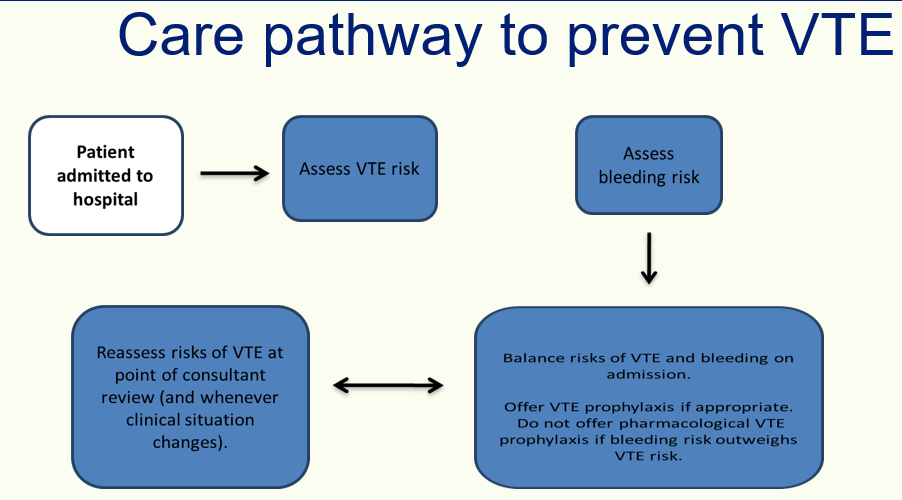
General risk factors of VTE for the patients admitted
General risk factors:
- active cancer/chemotherapy
- aged over 60
- known blood clotting disorder (e.g. thrombophilia)
- BMI over 35
- dehydration
- one or more significant medical comorbidities (e.g. heart disease; metabolic/endocrine pathologies; respiratory disease; acute infectious disease and inflammatory conditions)
- critical care admission
- use of hormone replacement therapy (HRT)
- use of the combined oral contraceptive pill
- varicose veins
- pregnant or less than 6 weeks post-partum
Risk factors of VTE specific for medical and surgical patients
Medical patients:
- significant reduction in mobility for 3 days or more (or anticipated to have significantly reduced mobility)
Surgical/trauma patients:
- hip/knee replacement
- hip fracture
- general anaesthetic and a surgical duration of over 90 minutes
- surgery of the pelvis or lower limb with a general anaesthetic and a surgical duration of over 60 minutes
- acute surgical admission with an inflammatory/intra-abdominal condition
- surgery with a significant reduction in mobility
Patient-related risk factors for bleeding
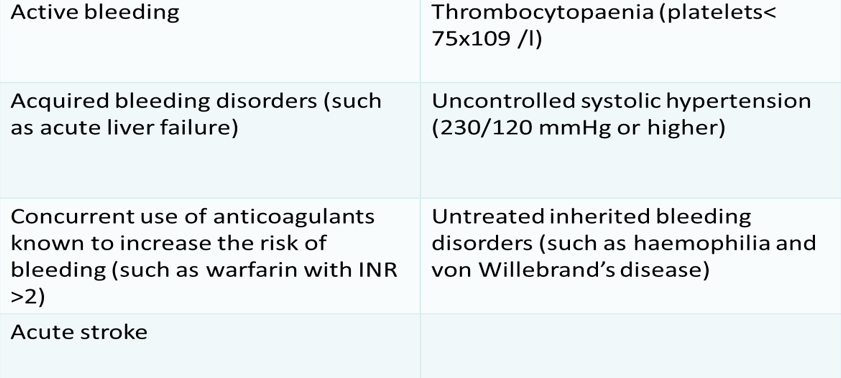
What causes of patient’s admission would increase their risk of bleeding?
- neurosurgery
- spinal surgery
- eye surgery
- LP/epidural/spinal anaesthesia within next 12 hours or previous 4 hours
- other procedures with high bleeding risks
Types (2) of VTE prophylaxis
Types of VTE prophylaxis
Mechanical:
- Correctly fitted anti-embolism (aka compression) stockings (thigh or knee height)
- An Intermittent pneumatic compression device
Pharmacological:
- Fondaparinux sodium (SC injection)
- Low molecular weight heparin (LMWH) - e.g. enoxaparin (brand name = Clexane)
- Unfractionated heparin (UFH) - used in patients with chronic kidney disease
What medical anti-thrombotic prophylaxis can be used in a patient with CKD?
Unfractionated heparin (UFH)
How to reduce risk of VTE in hospital patient?
- Encourage patients to mobilise as soon as possible
- Do not allow patients to become dehydrated unless clinically indicated
- Consider VTE prophylaxis for people who are having antiplatelet agents for other conditions and whose risk of VTE outweighs their risk of bleeding
- Consider VTE prophylaxis for people at increased risk of VTE who are interrupting anticoagulant therapy
Advice re COCP/HRT pre-surgery
Advise women to stop taking their combined oral contraceptive pill/hormone replacement therapy 4 weeks before surgery
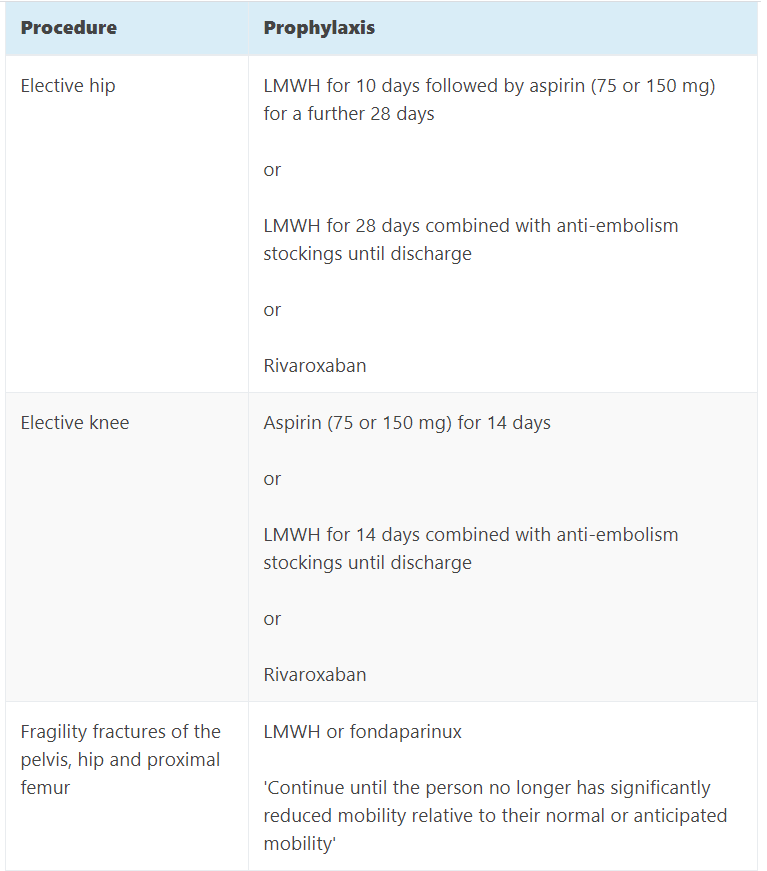
Examples of procedures where post- surgical prophylaxis is indicated
For certain surgical procedures (hip and knee replacements) pharmacological VTE prophylaxis is recommended for all patients to reduce the risk of a VTE developing post-surgery
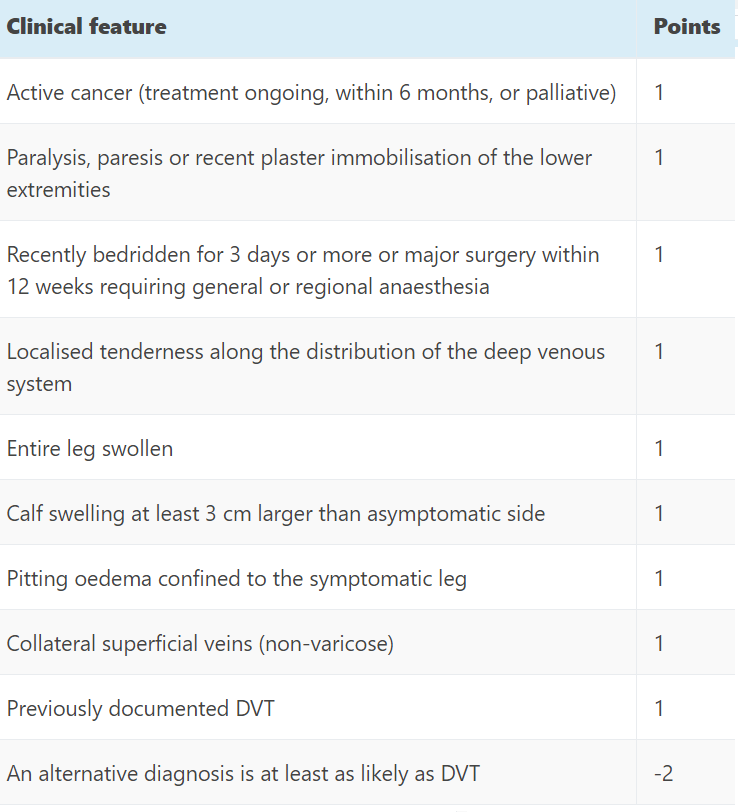
Wells score components and results
Clinical probability simplified score
- DVT likely: 2 points or more
- DVT unlikely: 1 point or less
What to do if:
- DVT is ‘likely’
If a DVT is ‘likely’ (2 points or more)
- a proximal leg vein ultrasound scan should be carried out within 4 hours and, if the result is negative, a D-dimer test
- if a proximal leg vein ultrasound scan cannot be carried out within 4 hours a D-dimer test should be performed and low-molecular weight heparin administered whilst waiting for the proximal leg vein ultrasound scan (which should be performed within 24 hours)
*Repeat proximal leg vein ultrasound scan 6 - 8 days later for all patients with positive D-dimer test and negative proximal leg vein ultrasound scan
What to do if ‘DVT is unlikely’?
If a DVT is ‘unlikely’ (1 point or less)
- perform a D-dimer test and if it is positive arrange:
- a proximal leg vein ultrasound scan within 4 hours
- if a proximal leg vein ultrasound scan cannot be carried out within 4 hours low-molecular weight heparin should be administered whilst waiting for the proximal leg vein ultrasound scan (which should be performed within 24 hours)
Management of DVT
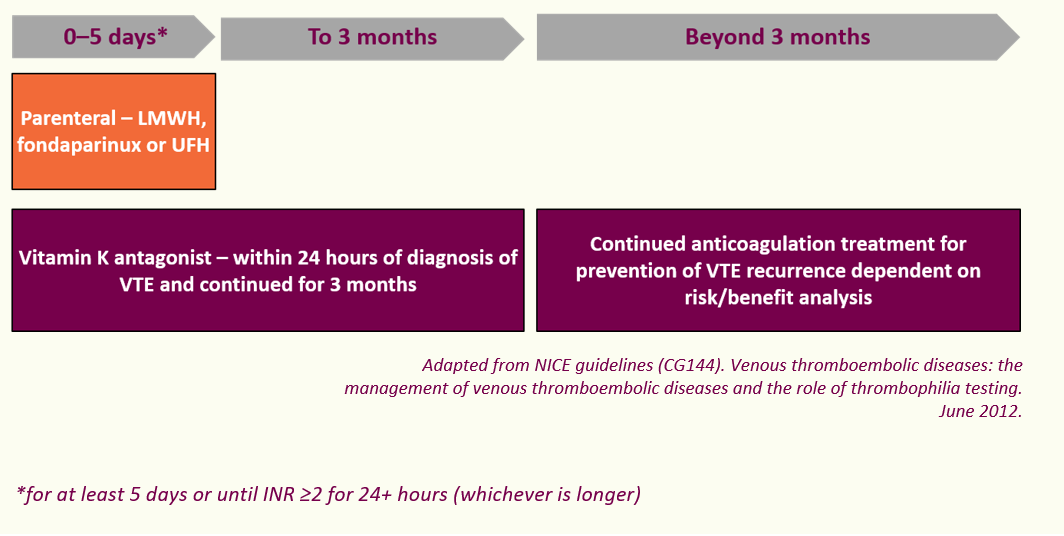
Low molecular weight heparin (LMWH) or fondaparinux should be given initially after a DVT is diagnosed.
- a vitamin K antagonist (i.e. warfarin) should be given within 24 hours of the diagnosis
- the LMWH or fondaparinux should be continued for at least 5 days or until the international normalised ratio (INR) is 2.0 or above for at least 24 hours, whichever is longer, i.e. LMWH or fondaparinux is given at the same time as warfarin until the INR is in the therapeutic range
- warfarin should be continued for at least 3 months. At 3 months, NICE advise that clinicians should ‘assess the risks and benefits of extending treatment’
- NICE add ‘consider extending warfarin beyond 3 months for patients with unprovoked proximal DVT if their risk of VTE recurrence is high and there is no additional risk of major bleeding’.
*In practice most clinicians give 6 months of warfarin for patients with an unprovoked DVT/PE
- for patients with active cancer NICE recommend using LMWH for 6 months
Further Ix in patients with ‘unprovoked’ DVT
Offer all patients diagnosed with unprovoked DVT or PE who are not already known to have cancer the following investigations for cancer:
- a physical examination (guided by the patient’s full history) and
- a chest X-ray and
- blood tests (full blood count, serum calcium and liver function tests) and urinalysis.
Consider further investigations for cancer with an abdomino-pelvic CT scan (and a mammogram for women) in all patients aged over 40 years with a first unprovoked DVT or PE
Do we offer a thrombophilia screen in patients with DVT?
Thrombophilia screening
- not offered if patients will be on lifelong warfarin (i.e. won’t alter management)
- consider testing for antiphospholipid antibodies if unprovoked DVT or PE
- consider testing for hereditary thrombophilia in patients who have had unprovoked DVT or PE and who have a first-degree relative who has had DVT or PE


-
Surgery: Opthalmology74
-
Surgery: Upper Limb (Orthopedics)72
-
Surgery: Benign Breast Disease61
-
Surgery: Breast Cancer45
-
Surgery: ENT95
-
Surgery: Lower Limb (orthopedics)55
-
Surgery: Ortho_extra notes19
-
Surgery: BPH and Prostate Cancer57
-
Surgery: Scrotal lumps61
-
Medicine: AKI and CKD47
-
Medicine: Imaging and investigations22
-
Medicine: Restrictive lung diseases, Pulmonary hypertension and O2 therapy30
-
Medicine: ECG interpreatation35
-
Medicine: Cerebrovascular disease37
-
Medicine: VTE48
-
Obs&Gyn: Infertility40
-
Obs&Gyn: Gyn malignancies45
-
Obs&gyn: Obesity42
-
Obs&Gyn Urinary incontinence36
-
Paeds: Mental Health (1)35
-
Paeds: Mental Health (2)28
-
Paeds: Endocrinology (1)30
-
Paeds: Endocrinology (2)35
-
Mental Health: Schizophrenia (1)56
-
Paeds: The Limping Child (1)30
-
Paeds: The Limping Child (2)32
-
Paeds: The Limping Child (3)30
-
Mental Health: depression34
-
Mental Heatlh: Mental Health Act40
-
Peads: Diabetes in children45
-
Mental Health: Substance Abuse65
-
Radiology 130


