Identify the three different ways in which DNA can be analysed
- At nucleotide level
- At gene level
- At the chromosome level
Which two techniques can be used to analyse DNA at nucleotide level?
- DNA sequencing
- PCR (+ restriction analysis)
Which five techniques can be used to analyse DNA at gene level?
- Southern hybridisation
- Northern hybridisation
- RT-PCR
- Microarray
- DNA fingerprinting/ DNA profiling
Which two techniques can be used to analyse DNA at chromosomal level?
- Karyotyping
- FISH/Chromosome painting
Identify the 4 questions which revolve around the ethics of DNA sequencing
- Who would be interested in your genome information?
I. Family/potential spouse
II. Doctor
III. Government
IV. Police
IV. Insurance companies
- Can the knowledge help prevent illness later in life?
- Does it open up areas for discrimination?
- Who owns DNA sequence?
What is the reverse transcription polymerase chain reaction?
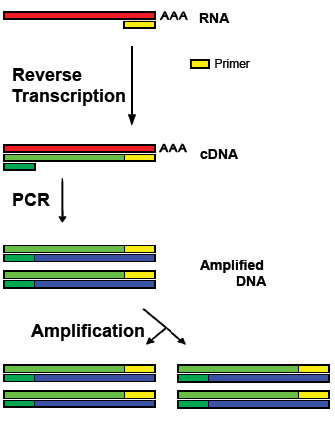
RT-PCR, a variant of polymerase chain reaction, is a technique commonly used to detect RNA expression by producing multiple copies of particular DNA isolates through amplification
Traditional PCR is used to exponentially amplify target DNA sequences.
How does RT-PCR differ from this?
- RT-PCR clones expressed genes by reverse transcribing the target RNA into its DNA complement using a reverse transcriptase
- Thereafter, the newly synthesised cDNA is amplified using traditional PCR
What is DNA profiling?
DNA profiling (aka DNA fingerprinting) is a forensic technique used to identify individuals by characteristics of their DNA
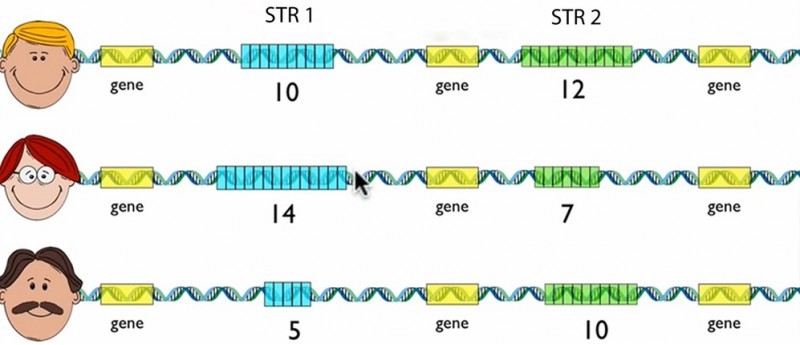
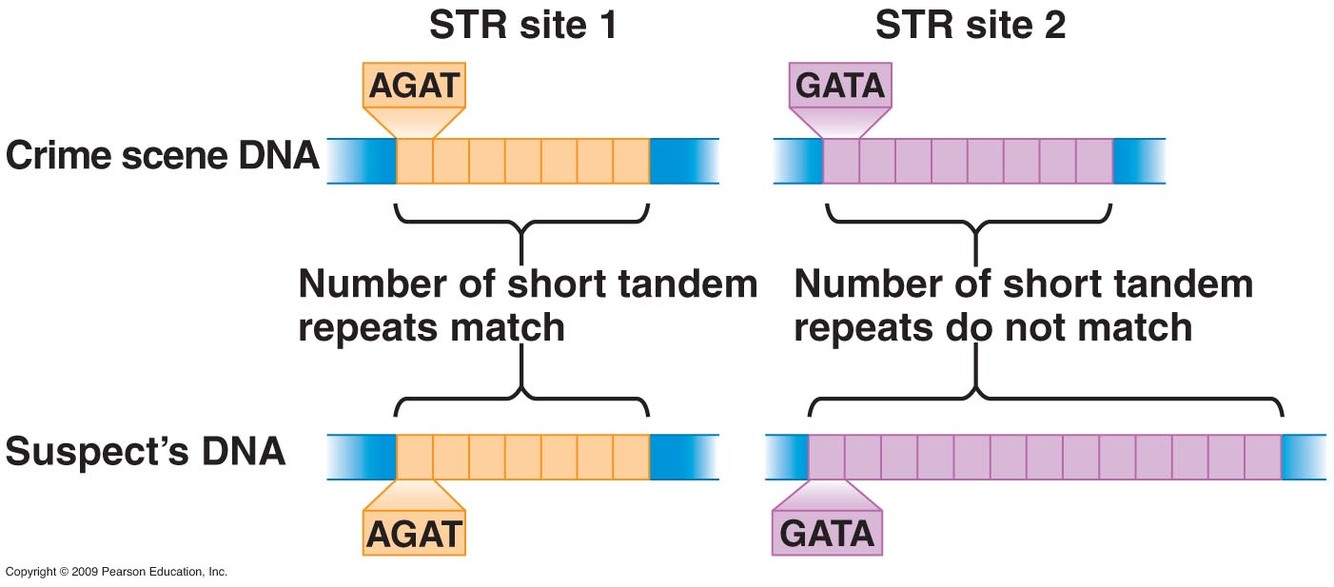
DNA profiling uses short tandem repeats.
What are these and what is their benefit?
- Short tandem repeats are highly variable repetitive sequences
- The STR loci are very similar between closely related humans, but are so variable that unrelated individuals are extremely unlikely to have the same
Identify 3 circumstances where DNA profiling is used
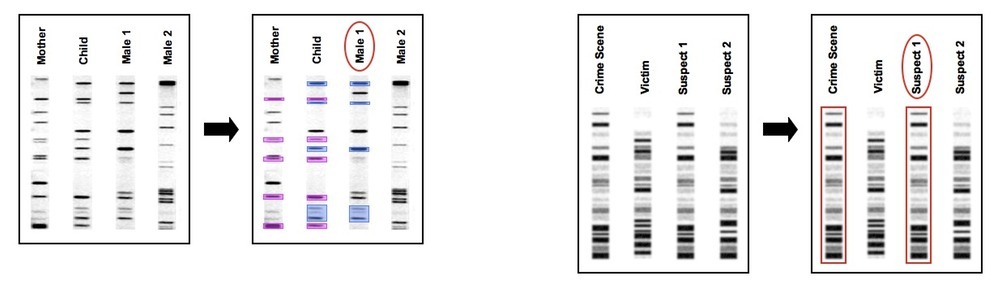
- Paternity testing
- Immigration disputes
- Criminal investigations
In 6 steps, outline the procedure for creating a DNA fingerprint
⇒ DNA is extracted from sample cells e.g. skin, hair, blood and purified
⇒ DNA cut into fragments using restriction enzymes
⇒ Gel electrophoresis of dsDNA fragments (distributes according to length)
⇒ dsDNA fragments are blotted & ssDNA fragments are transferred to a nylon sheet
⇒ Autoradiography using DNA probes
⇒ Develop, visualise and analyse DNA fingerprint
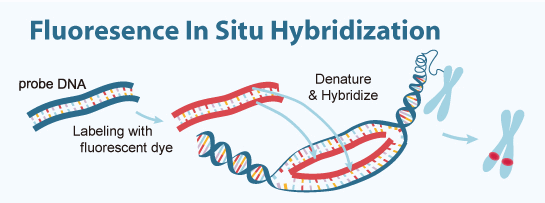
What is Fluorescence in situ hybridization?
FISH is a cytogenic technique that uses fluorescent probes which bind only to the parts of the chromosome with a high degree of sequence complementarity
What is DNA hybridisation?
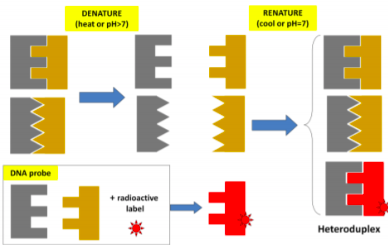
DNA–DNA hybridisation is a molecular biology technique that measures the degree of genetic similarity between pools of DNA sequences
In 5 steps, describe the process of DNA hybridisation
⇒ dsDNA is denatured (heated / treated with an alkaline solution)
⇒ H2 bonds break & ssDNA is released
⇒ Add identical ssDNA labelled with a radioactive/fluorescent marker
⇒ Anneal DNA
⇒ Identify labelled DNA using photographic film
Identify and describe the two different types of hybridisation techniques
- Southern blotting uses DNA probes to identify complementary DNA sequences after gel electrophoresis
- Northern blotting uses DNA to detect RNA sequences after gel electrophoresis
In 5 steps, outline the process of Southern blotting
⇒ Digest DNA with restriction enzymes
⇒ Gel electrophoresis to separate DNA fragments
⇒ Transfer to a nylon membrane
⇒ Hybridisation of a probe to detect target DNA
⇒ Use X-ray film to visualise labelled probe & target DNA
Why do we use Southern hybridisation?
- To investigate gene structure e.g. large deletions/duplications
- To investigate gene expansions e.g. Huntington’s disease
- To investigate mutations in genetic tests e.g. Sickle cell disease
- To investigate variation & genetic relationships e.g. DNA fingerprinting
What are the characteristics of DNA probes in blotting?
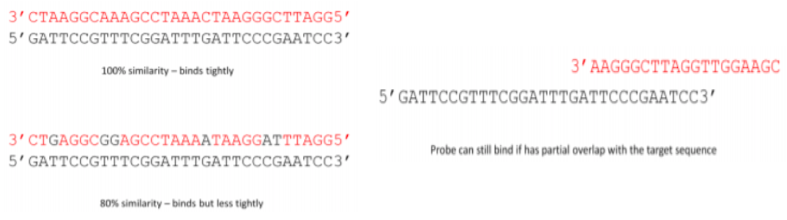
- Probes don’t have to have 100% similarity to the target sequence.
- Probes don’t have to completely align with the target sequence
- Probes don’t affect position of the target sequence on a gel
Western blotting is not a DNA hybridisation technique.
What is it?
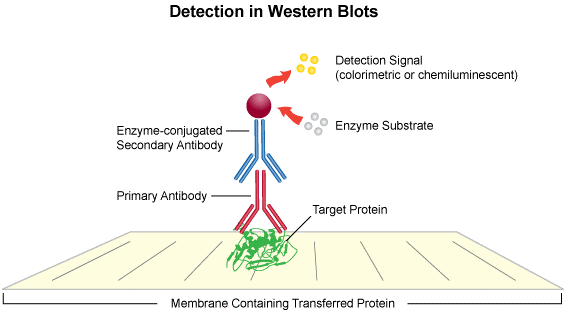
Western blotting involves the detection of proteins by antibodies after protein gel electrophoresis

-
S1) Basic Cell Structure26
-
S1) Introduction to DNA30
-
S2) Mitosis and Meiosis44
-
S3) DNA Repair & Cancer18
-
S4-5) Protein Structure45
-
S4) Enzymes40
-
S6) Genotype, Phenotype, Inheritance44
-
S7) Gene Expression32
-
S8) Post-translational Modifications25
-
S9) Introduction to DNA Mutation15
-
S9) Protein Targeting and Collagen Biosynthesis24
-
S10) Protein Function — Oxygen Transport15
-
S10) Regulation of Protein Function30
-
S11) Introduction to Molecular Diagnosis30
-
S12) Advanced Molecular Techniques19
-
S13) DNA Mutations15
-
S14) Chromosomal Mutations34
-
S15) Epigenetics18
-
S16) Nutrition, Diet and Body Weight50
-
S17) Energy Production — Carbohydrates50
-
S18) Energy Production — TCA Cycle & ETC30
-
S18) Energy Production III — Lipids, β-Oxidation & Ketone Bodies34
-
Clinical Conditions19


