What are the 4 things that must be present in the clinical diagnosis of stroke?
- Sudden onset
- Focal neurological deficit
- Of presumed vascular origin
- Symptoms lasting more than 24 hours or leading to death
excludes lesions associated with trauma, infection or tumour, retinal infarction and most cases of SAH
What is the main difference between stroke and TIA?
In a TIA, symptoms are lasting less than 24 hours
What aspect of stroke care is the most expensive?
Community care
this is looking after the disabled following a stroke
this is the largest proportion of the cost of caring for a stroke patient
How is the number of strokes likely to change in the future?
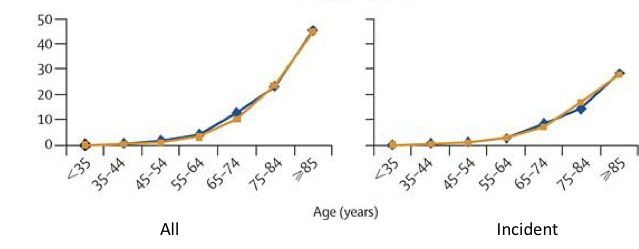
There has been progress in primary prevention, although the number of strokes is likely to increase in the future
this is due to the ageing population and greater proportion of the population being elderly
there is an exponential increase in stroke incidence in the elderly
What are the 2 different types of stroke?
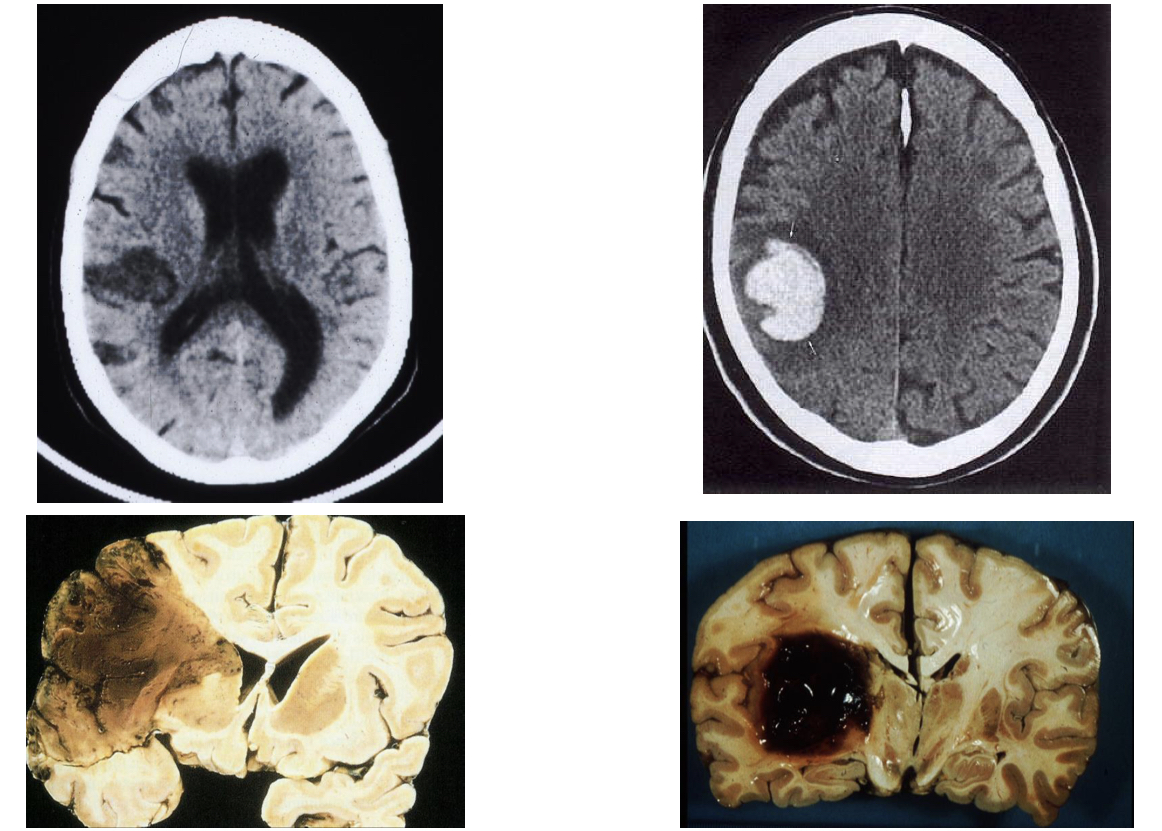
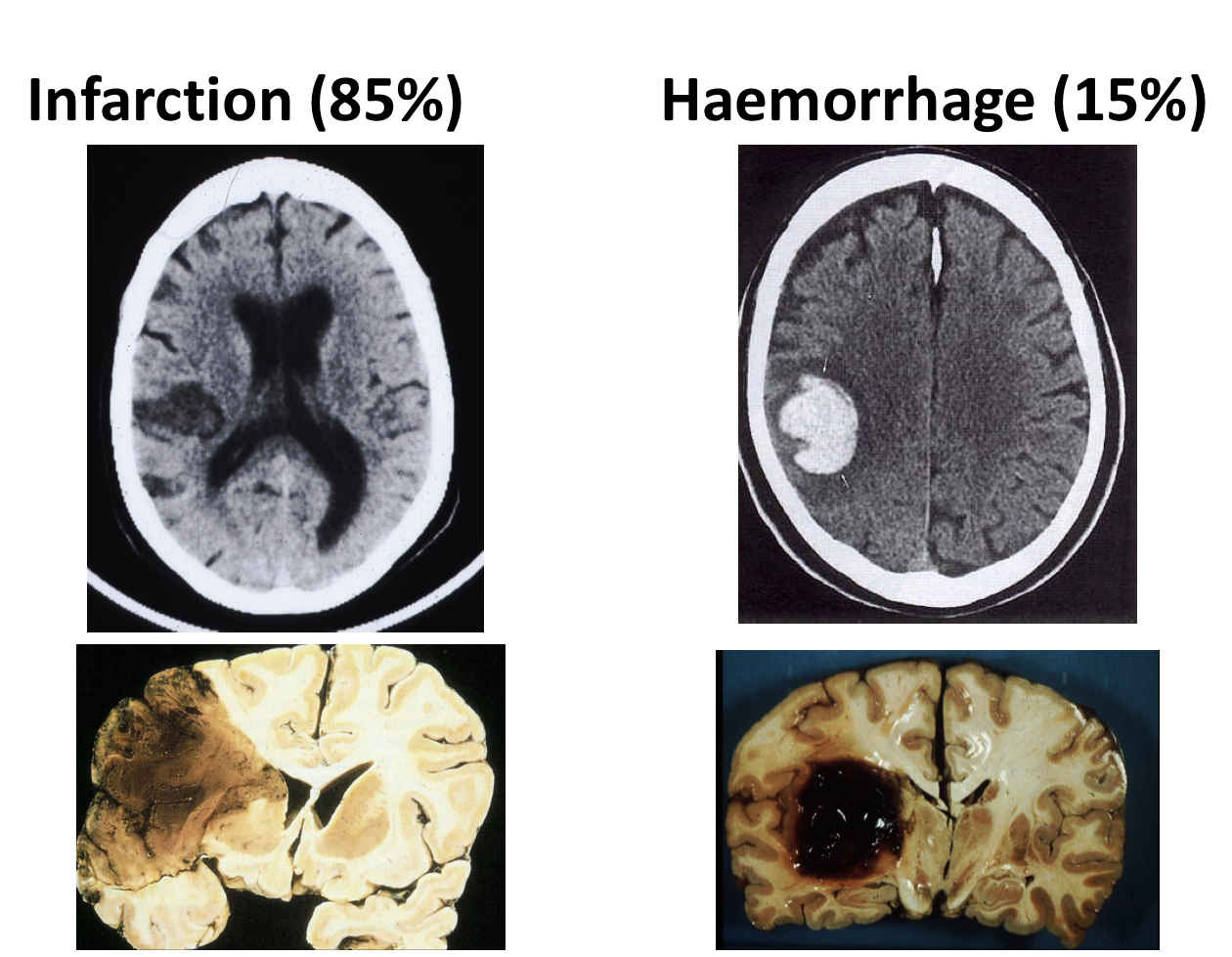
Haemorrhagic or infarction
What types of stroke are shown in the images?
What are the two different causes of ischaemic stroke?
Thrombosis:
- large arteries (mainly extra-cranial e.g. vertebral, carotid)
- small arteries (mainly intra-cranial)
Embolism:
- a clot travels to the brain from elsewhere in the body
- from the heart - cardiogenic embolism
- from proximal arteries - artery to artery embolism
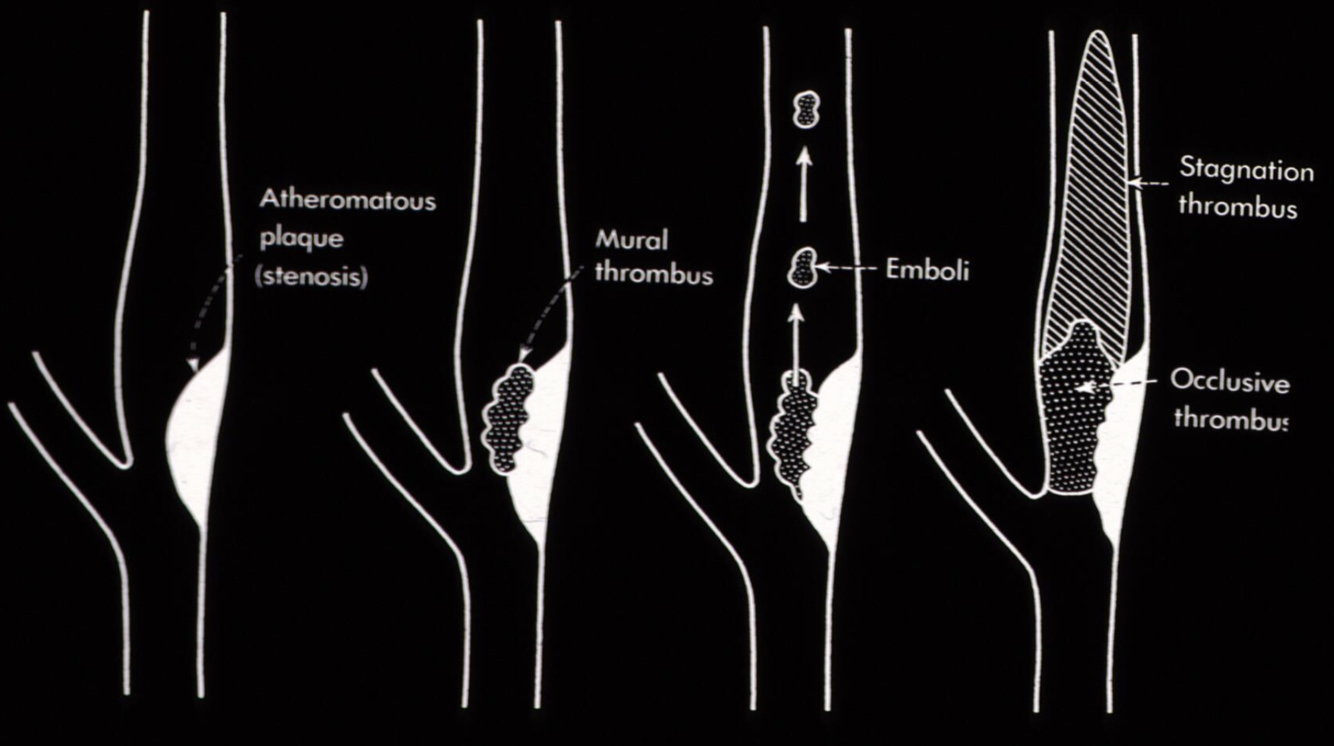
What are the stages involved in atheromatous-thrombo-embolism?
- Atheromatous plaque forms as the result of stenosis
This occurs due to sheer stresses on the artery wall at the point of bifurcation
- This leads to mural thrombus
- Part of the thrombus may break off and form an embolus
or
the artery can be occluded entirely by an occlusive thrombus
What arteries are most commonly implicated in ischaemic stroke?
Large arteries in the neck
e.g. Internal carotid artery
How do emboli form from a cardiac source?
- Atrial fibrillation is the main source of blood clots
- the atria contract at a different rate to the ventricles, leading to stasis of blood in the left atrium and clot formation
- clots dislodge, leading to ischaemic stroke
What are other cardiac sources of embolism?
- Endocarditis - an infection on the heart valve
- Tumours within the ventricles
- Thrombus may form at a site of previous MI
What vessel tends to be implicated in small vessel disease and how can it be identified?
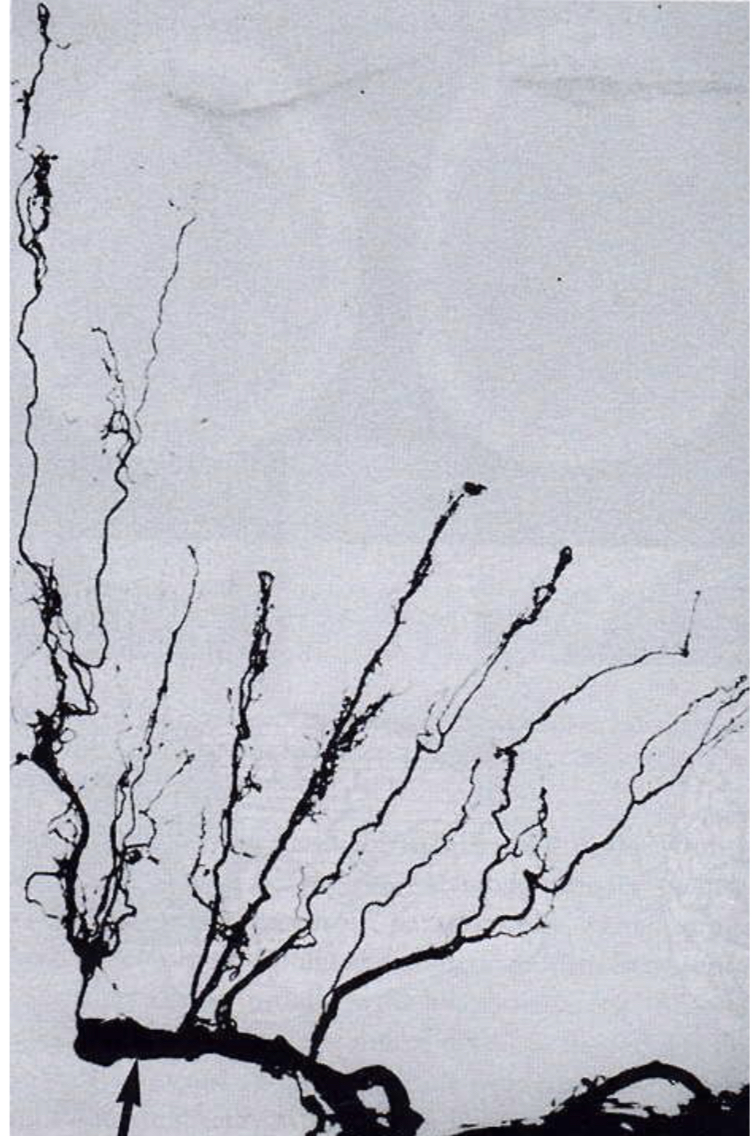
The middle cerebral artery is injected with contrast
the arteries affected are the lenticular striate arteries which take blood to the internal capsule
even a small ischaemic stroke (lacunar stroke) can interrupt the motor pathway and lead to loss of function
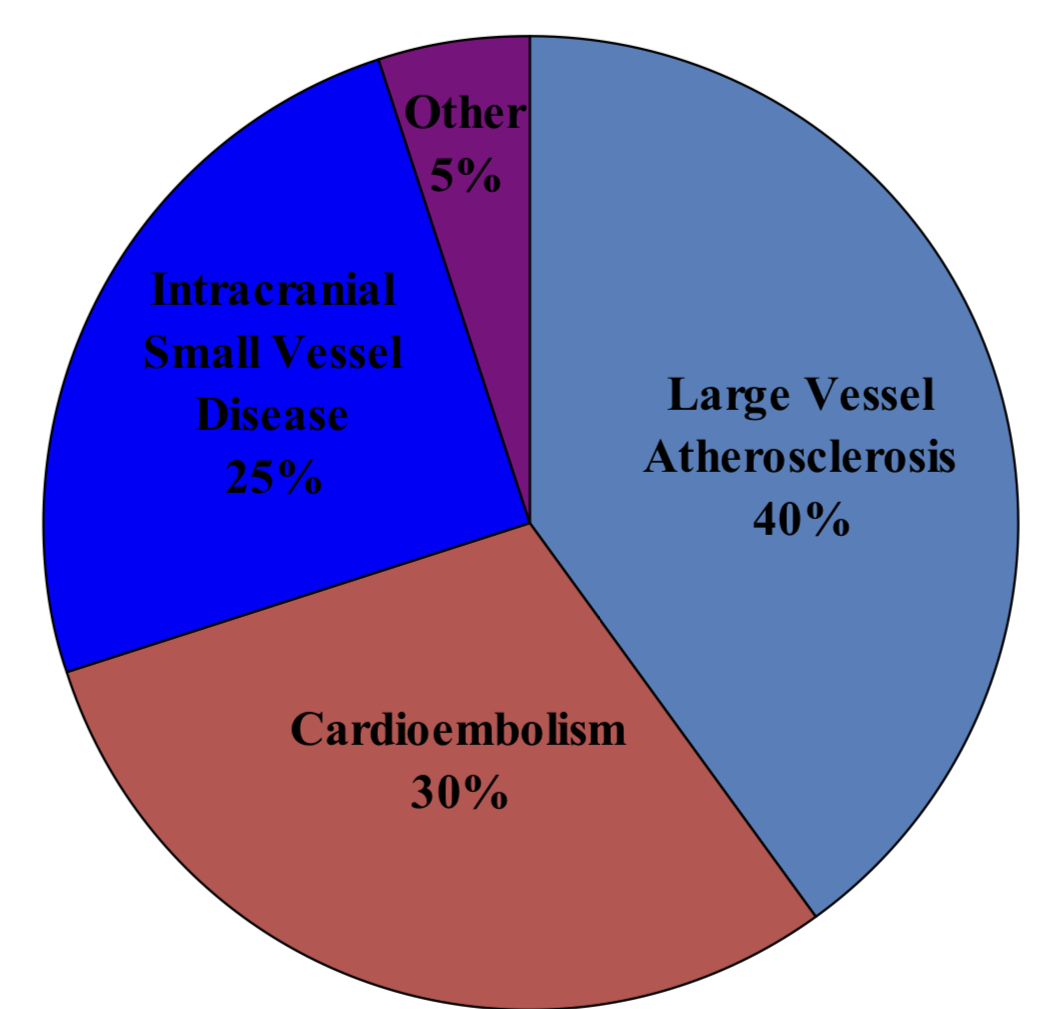
What are the % of cases caused by different mechanisms of ischaemic stroke?
Large vessel atherosclerosis - 40%
cardioembolism - 30%
intracranial small vessel disease - 25%
other - 5%
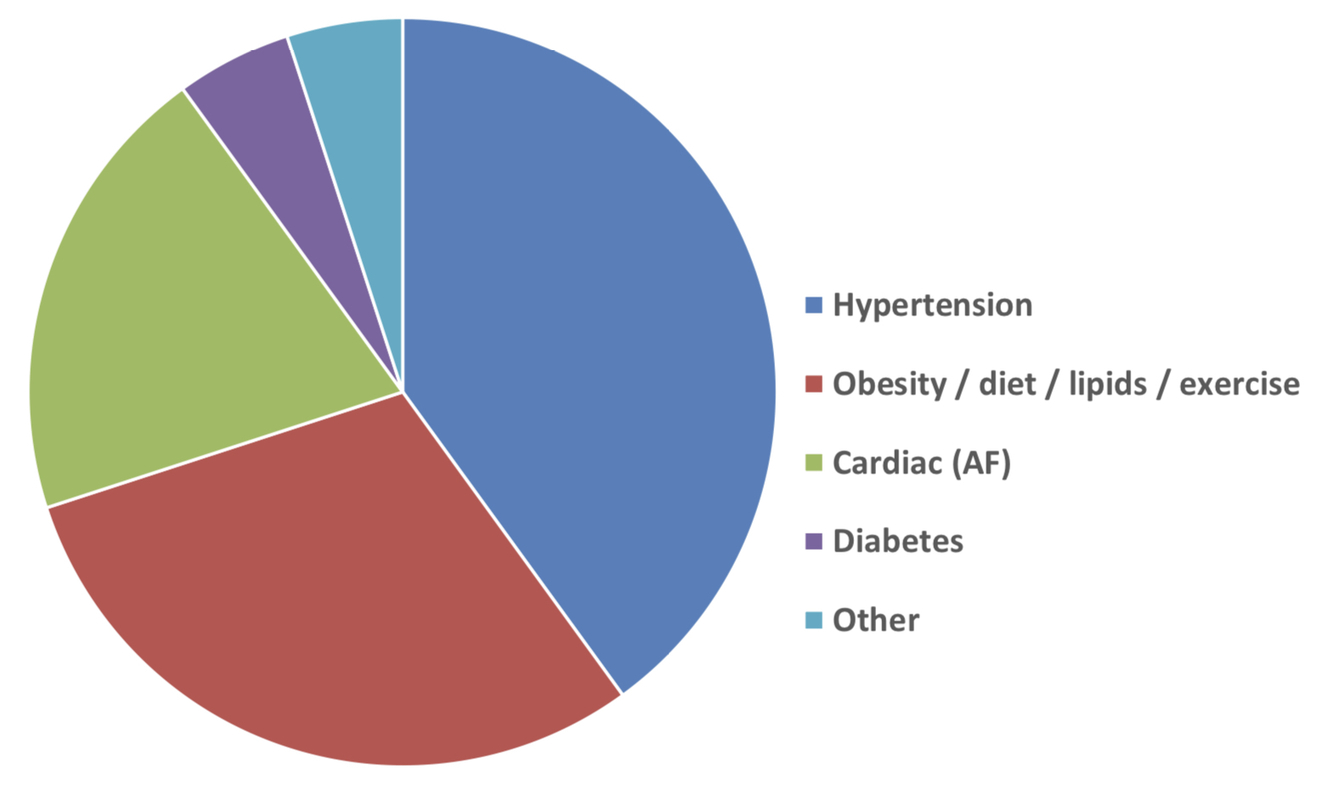
What is the population attributable risk for stroke (modifiable factors)?
- Hypertension
- lifestyle factors - obesity, diet, lipids, exercise, smoking
- cardiac (AF)
- diabetes
- other
all of these risk factors can be modified
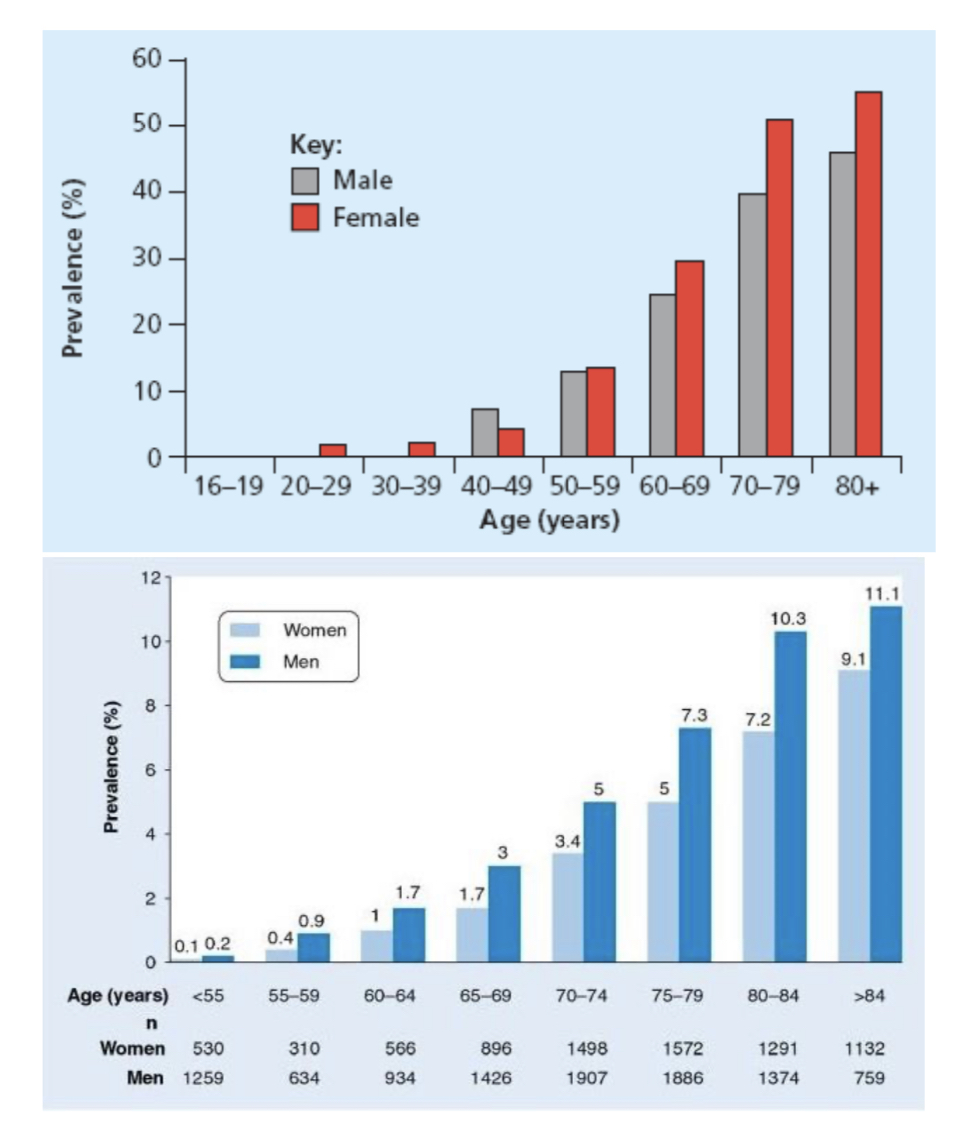
How does hypertension and atrial fibrillation change with age?
They both increase in prevalence with increasing age
ageing population in the country means that these will be seen more often in the future
if they are not controlled, the downstream effect will get worse i.e. development of atheromatous disease
What is meant by secondary stroke prevention?
Preventing any further events from occurring after a patient has already had a stroke
What does an odds ratio of 1 mean?
There is no benefit to one treatment over another
What does this diagram show about the effect of aspirin on treating stroke?
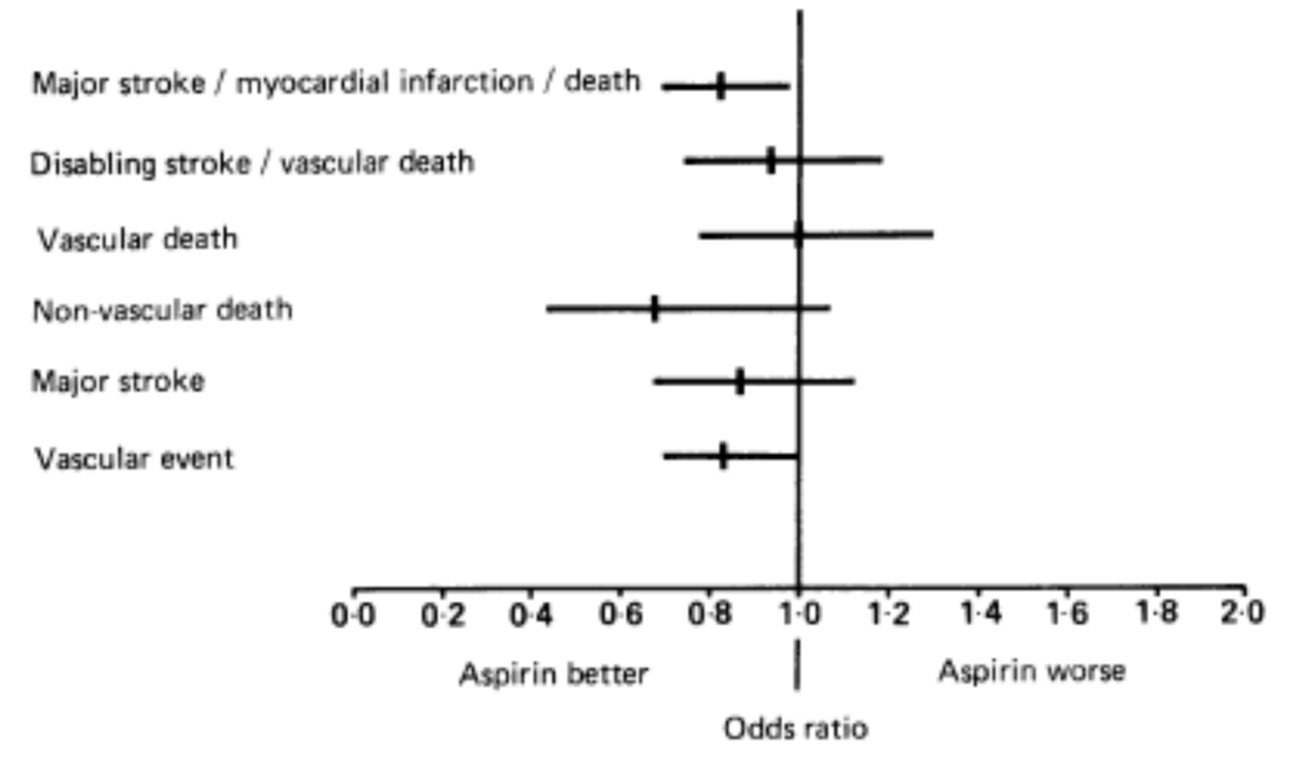
To the left:
this shows that there is a benefit in taking aspirin
even if there is a small benefit to an individual e.g. preventing vascular death, this may have large population benefits when given to lots of people
What does this graph show about the benefits of taking aspirin to prevent the early risk of recurrent ischaemic stroke?
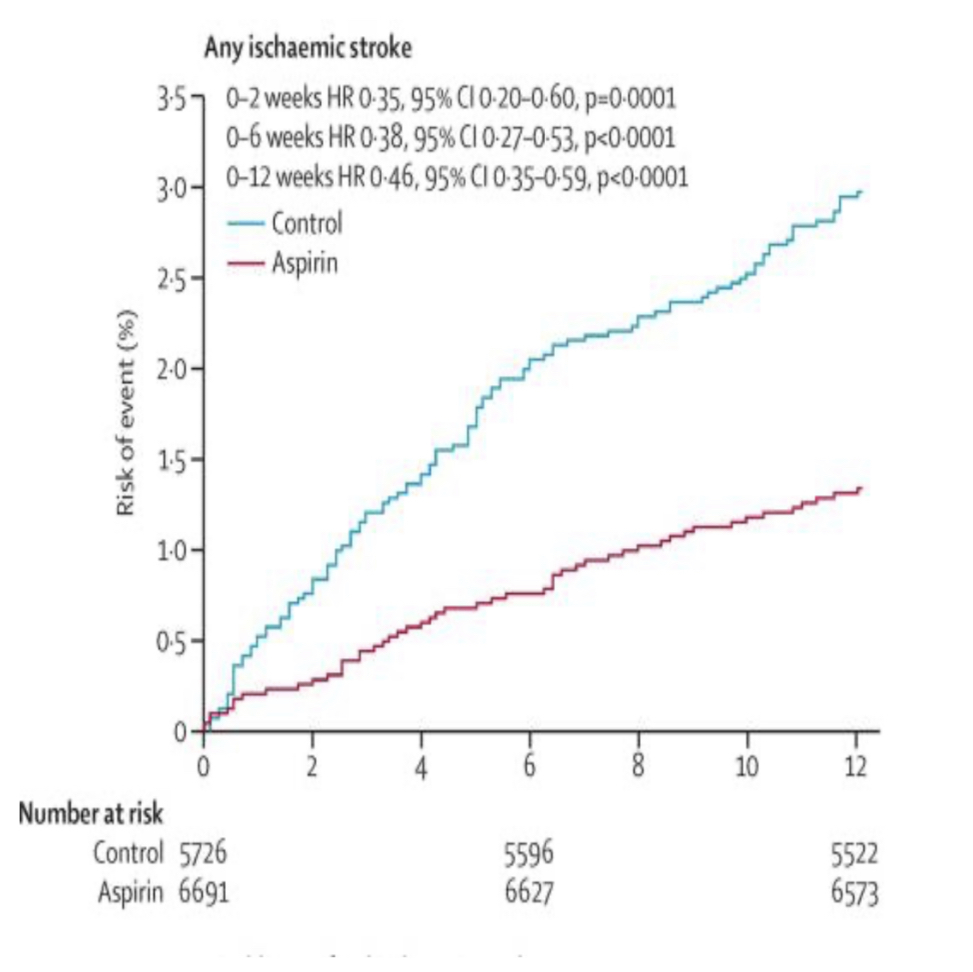
- The benefit of taking aspirin is visible within the first few weeks following the initial stroke
- as endothelium forms over the embolus, the chance of recurrence is higher in the first 12 weeks
- the early use of aspirin is effective
- if symptoms have resolved within a few hours (TIA), this will never be due to haemorrhage
What does this diagram show?
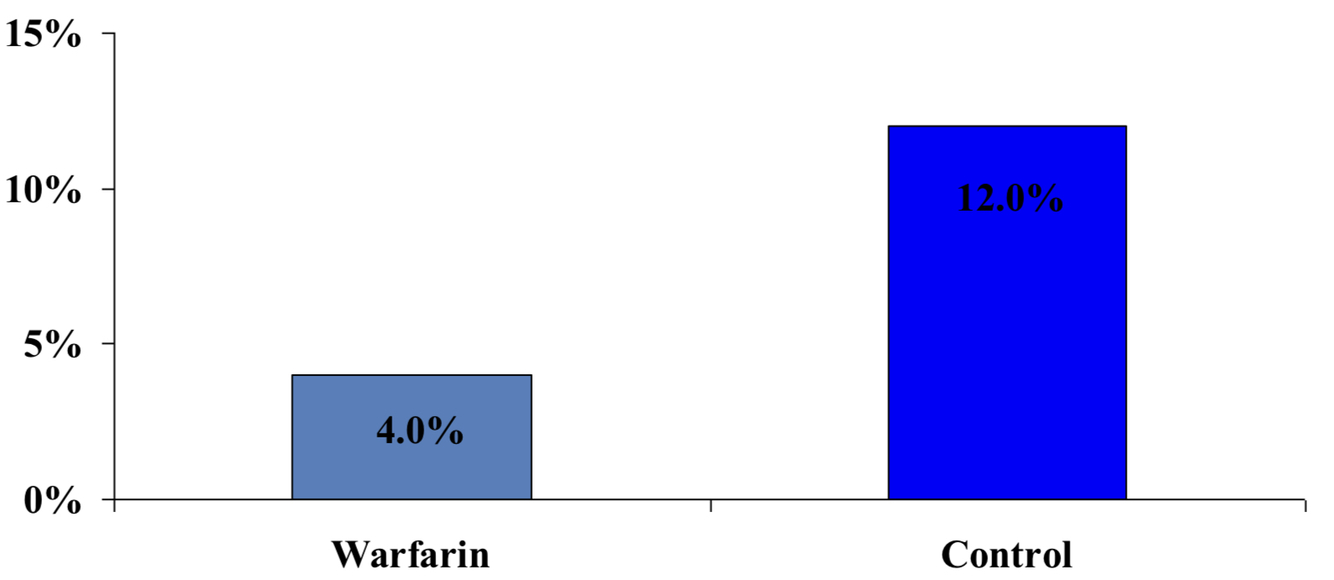
It shows the annual risk of recurrent stroke in patients who are in atrial fibrillation
the clot forming on atheromatous plaque mainly consists of platelets
clot forming in the heart is more fibrin and more likely to respond to anticoagulants
12% risk of recurrence can be reduced to 4% through anticoagulantion
What does this graph show?
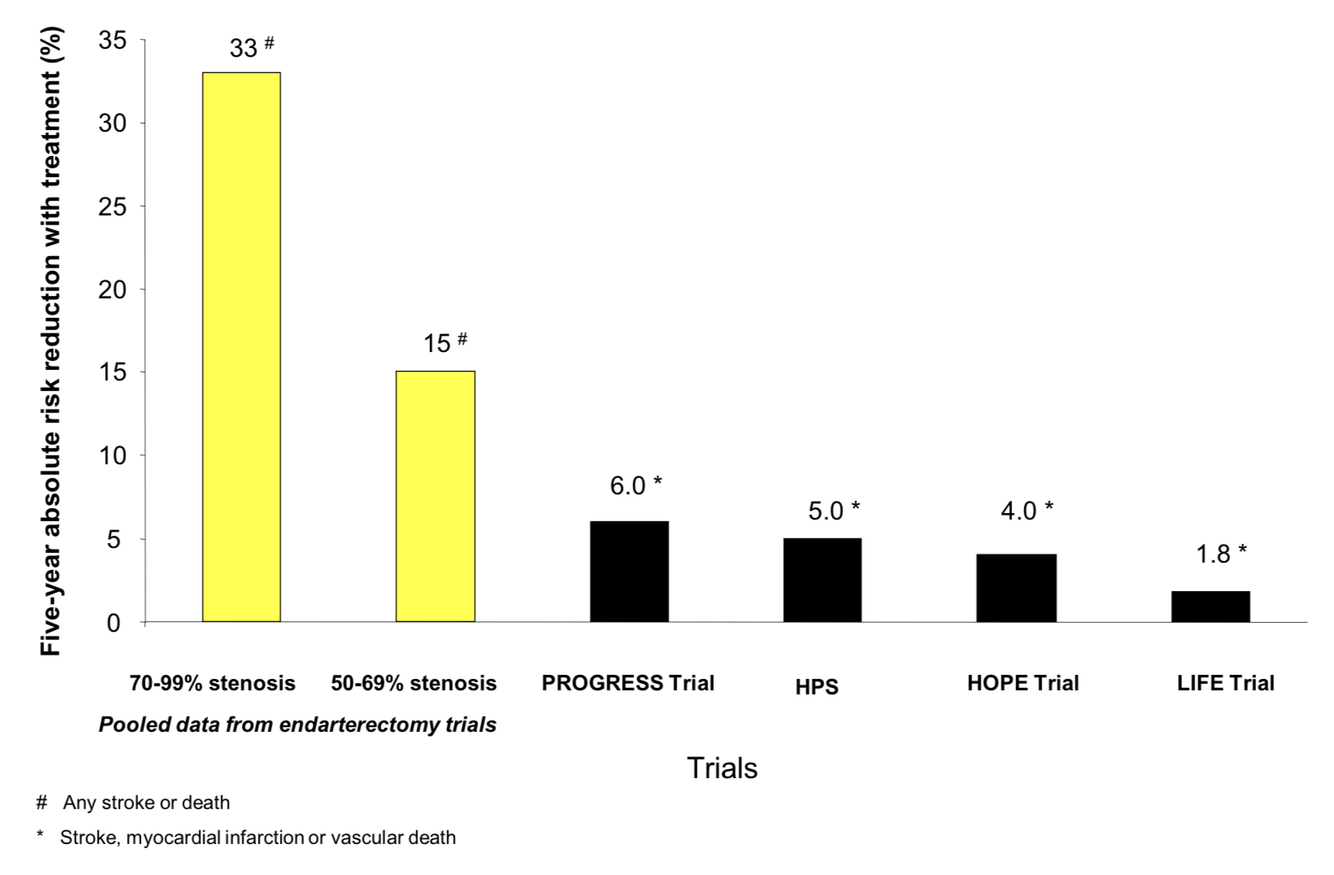
Treating patients early with “urgent” endarterectomy leads to a greater benefit
This procedure is given to a smaller population but has a large benefit
statins and blood pressure tablets can be given to a larger population but have a smaller overall benefit
What is meant F.A.S.T. Campaign for public education about stroke?
Face:
- has their face fallen on one side?
- can they smile?
Arms:
- can they raise both arms and keep them there?
Speech:
- is their speech slurred?
Time:
- it’s time to call 999 if you see any of these signs
*
What are the stages involved in the pathophysiology of acute ischaemic stroke?
When does intervention need to occur?
- Initial reduction in cerebral blood flow
- alterations in cellular chemistry caused by the ischaemia
- cellular necrosis
intervention needs to occur before cellular necrosis


-
Arthritis58
-
A1 - Pectoral Girdle & Shoulder102
-
A2 - Upper Arm & Elbow94
-
Peripheral Nerve Lesions - Brachial Plexus Injuries34
-
Upper Limb Ultrasound17
-
A3 - Forearm92
-
A4 - Wrist & Hand82
-
L1 - Anatomy of the Vertebral Column94
-
Back Pain51
-
Hip Fracture43
-
L2 - Pelvis & Hip Joint76
-
Gluteal Region & Hip58
-
The Knee Joint72
-
The Thigh & Knee Anatomy68
-
Posterior Thigh & Knee74
-
Leg & Ankle58
-
Vessels of the Lower Limb49
-
The Leg & Ankle Anatomy74
-
The Foot60
-
Lower Limb Radiology36
-
LL Ultrasound and Cases25
-
Lower Limb Muscles100
-
Muscles of the Upper Limb69
-
SDL 1 - FRONT OF NECK67
-
Introduction to the Brain41
-
The Skull22
-
Blood Supply to Brain & Meninges74
-
SDL 2 - Face & Skull89
-
SDL 3 - Brain, Meninges & Blood Supply44
-
Front of Neck Surface Anatomy10
-
Brainstem & Cerebellum65
-
SDL 4 - Brainstem, Cerebellum & Cranial Nerves65
-
Cranial Nerves67
-
Forebrain & Ventricles56
-
Localisation60
-
SDL 5 - FOREBRAIN, VENTRICLES & CSF39
-
Local Anaesthetics43
-
Spinal Cord & Spinal Nerves66
-
Ascending Pathways68
-
Descending Motor Pathways53
-
Transient Ischaemic Attack (TIA)35
-
Stroke37
-
SDL - Vertebral Column & Spinal Cord70
-
SDL 7 - SPINAL CORD & SPINAL NERVES18
-
Parkinson’s Disease58
-
Basal Ganglia55
-
Somatosensory Physiology57
-
Patterns of Sensory Loss40
-
Skin Histology45
-
Epilepsy75
-
Headache - Diagnosis & Management72
-
Radiotherapy & Chemotherapy for CNS Tumours66
-
Dementia84
-
Multiple Sclerosis43
-
Pain 152
-
Clinical Aspects of Pain75
-
General Anaesthesia77
-
The Auditory Pathway48
-
The Visual Pathway55
-
Visual Defects72
-
Cerebellum50
-
The Auditory System78
-
Physiology of Vision54
-
Limbic System49
-
Balance, Posture & Vestibular System0
-
Upper & Lower Motor Neurone Disorders27
-
Gait and Posture41
-
Pharmacology of Movement37
-
Diagnosing Weakness23


